Colorectal Cancer Screening ICD 10: Complete Guide to Codes, Diagnosis, Prevention, and Care
Colorectal cancer is one of the most common cancers worldwide, yet it is also one of the most preventable when detected early. Regular screening plays a critical role in identifying precancerous polyps or early-stage cancer before symptoms appear. For healthcare providers, insurers, and patients alike, accurate medical coding ensures that screening, diagnosis, and treatment are properly documented and reimbursed.
This is where colorectal cancer screening ICD 10 codes become essential. These standardized codes help classify screening encounters, risk factors, and confirmed diagnoses in a consistent way. In this article, we will walk you through everything you need to know, from ICD-10 codes and screening types to prevention strategies, prognosis, and patient support, so you can better understand both the medical and administrative sides of colorectal cancer care.
Overview
Colorectal cancer screening ICD 10 refers to the set of ICD-10-CM codes used to document preventive screening, abnormal findings, and confirmed colorectal cancer diagnoses. These codes are widely used in hospitals, clinics, and insurance claims to ensure clarity, accuracy, and compliance with healthcare regulations.
Screening is recommended for average-risk adults starting at age 45, and earlier for those with higher risk factors. Correct ICD-10 coding supports early detection efforts and reduces barriers to accessing preventive care.
Types
Colorectal cancer screening involves different ICD-10 codes depending on the purpose and outcome of the visit. The table below highlights commonly used codes.
| ICD-10 Code | Description |
|---|---|
| Z12.11 | Encounter for screening for malignant neoplasm of colon |
| Z12.12 | Encounter for screening for malignant neoplasm of rectum |
| Z80.0 | Family history of malignant neoplasm of digestive organs |
| D12.0–D12.9 | Benign neoplasm (polyps) of colon and rectum |
| C18.0–C18.9 | Malignant neoplasm of colon |
| C20 | Malignant neoplasm of rectum |
Using the correct colorectal cancer screening ICD 10 code ensures that preventive screenings are clearly distinguished from diagnostic or treatment-related visits.
Causes and Risk Factors
Colorectal cancer develops due to a combination of genetic, environmental, and lifestyle-related factors. Key risk factors include:
-
Age over 45
-
Family history of colorectal cancer or polyps
-
Inflammatory bowel diseases such as ulcerative colitis or Crohn’s disease
-
Diet high in red or processed meats
-
Obesity and physical inactivity
-
Smoking and excessive alcohol consumption
Patients with known risk factors often require additional ICD-10 codes alongside colorectal cancer screening ICD 10 to reflect increased risk status.
Symptoms and Early Warning Signs
In early stages, colorectal cancer may not cause noticeable symptoms, which is why screening is so important. As the disease progresses, symptoms may include:
-
Changes in bowel habits (diarrhea or constipation)
-
Blood in the stool or rectal bleeding
-
Persistent abdominal pain or cramping
-
Unexplained weight loss
-
Fatigue or weakness
If symptoms are present, the visit may shift from screening to diagnostic evaluation, requiring different ICD-10 coding.
Diagnosis
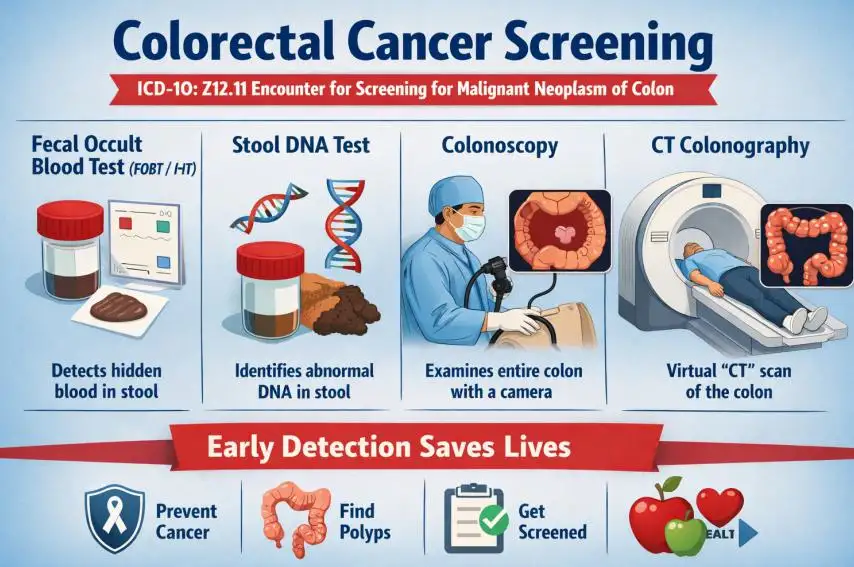
Diagnosis typically begins with screening tests and progresses to confirmatory procedures if abnormalities are found. Common diagnostic steps include:
-
Colonoscopy with biopsy
-
Fecal immunochemical test (FIT)
-
Stool DNA tests
-
CT colonography
-
Pathology examination of tissue samples
Once cancer is confirmed, screening codes such as Z12.11 are replaced with malignant neoplasm codes (C18 or C20), ensuring accurate medical records.
Treatment Options
Treatment depends on the stage of colorectal cancer and the patient’s overall health. Options may include:
-
Surgery to remove tumors or affected sections of the colon
-
Chemotherapy to destroy cancer cells
-
Radiation therapy, especially for rectal cancer
-
Targeted therapy and immunotherapy for advanced cases
While treatment codes differ from colorectal cancer screening ICD 10 codes, accurate screening documentation supports timely diagnosis and better outcomes.
Prevention and Lifestyle Recommendations
Prevention focuses on reducing risk factors and maintaining regular screenings. Practical steps include:
-
Following recommended screening schedules
-
Eating a fiber-rich diet with fruits and vegetables
-
Limiting red and processed meats
-
Maintaining a healthy weight
-
Exercising regularly
-
Avoiding tobacco and excessive alcohol
Preventive visits documented with colorectal cancer screening ICD 10 codes help promote long-term health and cost-effective care.
Prognosis and Survival Rates
When detected early through screening, colorectal cancer has a favorable prognosis. Survival rates decrease as the disease advances, highlighting the value of early detection.
| Stage | Approximate 5-Year Survival Rate |
|---|---|
| Localized | Around 90% |
| Regional | Around 70% |
| Distant | Around 15% |
Consistent screening and correct ICD-10 documentation play a vital role in improving these outcomes.
Latest Research and Innovations
Ongoing research continues to improve colorectal cancer screening and treatment. Innovations include:
-
Blood-based screening tests
-
Advanced imaging techniques
-
Genetic and molecular profiling
-
Personalized treatment plans based on tumor biology
As screening methods evolve, ICD-10 coding guidelines are also updated to reflect new practices.
Coping and Support for Patients
A colorectal cancer diagnosis can be emotionally challenging. Patients benefit from:
-
Clear communication with healthcare providers
-
Access to counseling or mental health support
-
Patient advocacy and support groups
-
Educational resources on treatment and recovery
Understanding the purpose of colorectal cancer screening ICD 10 codes can also help patients navigate insurance coverage and medical records with confidence.
Conclusion
Colorectal cancer screening saves lives, and accurate documentation is a crucial part of that process. Colorectal cancer screening ICD 10 codes ensure clarity in preventive care, risk assessment, diagnosis, and reimbursement. By combining regular screening, healthy lifestyle choices, and proper medical coding, patients and providers can work together to detect colorectal cancer early and improve long-term outcomes.
FAQ
1. What is the main colorectal cancer screening ICD 10 code?
The most commonly used code is Z12.11 for screening for malignant neoplasm of the colon.
2. Are screening codes different from diagnosis codes?
Yes. Screening codes apply when no symptoms or diagnosis exist, while diagnosis codes are used once abnormalities or cancer are confirmed.
3. When should colorectal cancer screening begin?
For average-risk adults, screening typically starts at age 45, or earlier for those with higher risk factors.
4. Why is accurate ICD-10 coding important for screening?
Correct coding supports insurance coverage, reduces claim denials, and ensures proper tracking of preventive care.
5. Can lifestyle changes reduce colorectal cancer risk?
Yes. A healthy diet, regular exercise, avoiding smoking, and routine screening significantly reduce risk.