Prostate Cancer ICD 10: Complete Guide to Diagnosis, Coding, Treatment, and Prognosis
Understanding prostate cancer ICD 10 coding is essential not only for healthcare professionals but also for patients who want clarity about their diagnosis and medical records. The ICD-10 code for prostate cancer plays a vital role in clinical documentation, insurance claims, epidemiological tracking, and treatment planning. When you see a specific code on your pathology report or billing statement, it represents much more than just numbers, it reflects a confirmed medical condition that requires proper management.
If you or a loved one has been diagnosed with prostate cancer, knowing how ICD-10 classification works can help you better understand the healthcare system. In this comprehensive guide, we’ll explore everything you need to know about prostate cancer ICD 10, including diagnosis, staging, treatment options, survival rates, and the latest medical advancements.
Overview of Prostate Cancer ICD 10
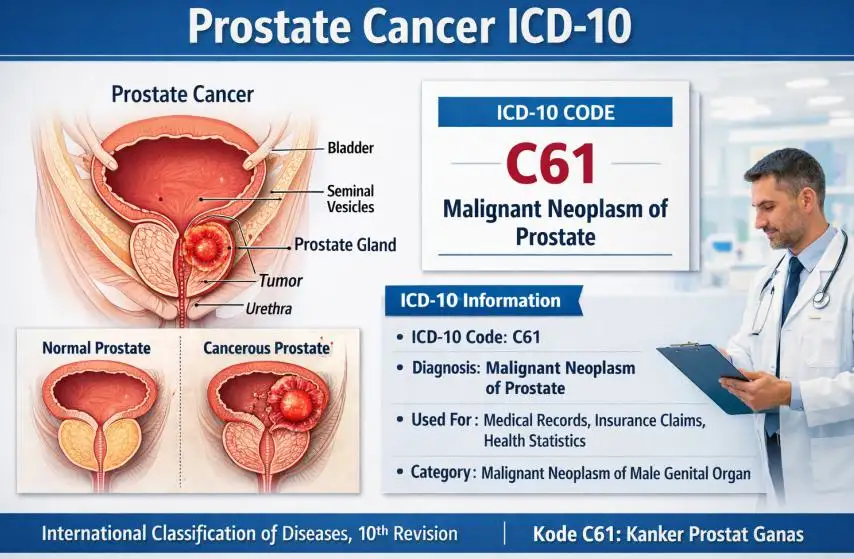
Prostate cancer is classified under the ICD-10 system maintained by the World Health Organization. The primary ICD-10 code for prostate cancer is:
| Condition | ICD-10 Code | Description |
|---|---|---|
| Malignant neoplasm of prostate | C61 | Primary prostate cancer |
The code C61 is used when a malignant tumor originates in the prostate gland. This code is applied once the diagnosis is confirmed through histopathological examination, typically following a biopsy.
ICD-10 coding ensures:
-
Accurate medical documentation
-
Standardized communication between healthcare providers
-
Proper insurance reimbursement
-
National and global cancer statistics reporting
Understanding the prostate cancer ICD 10 classification helps ensure transparency in medical care.
Types of Prostate Cancer
Although ICD-10 groups prostate cancer under C61, clinically there are several types based on histology.
1. Adenocarcinoma
The most common type (over 90% of cases), arising from glandular cells.
2. Small Cell Carcinoma
A rare and aggressive neuroendocrine tumor.
3. Transitional Cell Carcinoma
Originates from cells lining the urethra and may extend to the prostate.
4. Sarcoma
Develops from connective tissue and is extremely rare.
While all these fall under ICD-10 code C61, treatment strategies may vary depending on the specific histological type.
Causes and Risk Factors
The exact cause of prostate cancer remains unclear, but several risk factors significantly increase susceptibility.
Major Risk Factors
| Risk Factor | Explanation |
|---|---|
| Age | Risk increases significantly after age 50 |
| Family history | Genetic predisposition raises risk |
| Ethnicity | Higher incidence in men of African descent |
| Hormonal factors | Testosterone influences tumor growth |
| Diet & lifestyle | High-fat diet and obesity may contribute |
If you have one or more of these risk factors, proactive screening becomes especially important.
Symptoms and Early Warning Signs
Early-stage prostate cancer often has no symptoms. This is why regular screening is crucial.
As the disease progresses, symptoms may include:
-
Difficulty urinating
-
Weak urine flow
-
Blood in urine or semen
-
Pelvic discomfort
-
Erectile dysfunction
-
Bone pain (advanced stage)
If you notice persistent urinary changes, consult your healthcare provider promptly. Early detection significantly improves outcomes.
Diagnosis of Prostate Cancer
Diagnosis involves several clinical steps:
1. PSA Blood Test
Measures prostate-specific antigen levels.
2. Digital Rectal Examination (DRE)
Physician checks for abnormal prostate enlargement or nodules.
3. Prostate Biopsy
Confirms malignancy and determines Gleason score.
4. Imaging Tests
MRI, CT scan, or bone scan to evaluate spread.
Once confirmed, the physician assigns ICD-10 code C61 for documentation and billing purposes.
Treatment Options
Treatment depends on stage, tumor grade, age, and overall health.
Localized Prostate Cancer
-
Active surveillance
-
Radical prostatectomy
-
Radiation therapy
Advanced or Metastatic Cancer
-
Hormone therapy (androgen deprivation therapy)
-
Chemotherapy
-
Targeted therapy
-
Immunotherapy
Each treatment plan is personalized. Discuss benefits and side effects thoroughly with your oncologist.
Prevention and Lifestyle Recommendations
While you cannot completely prevent prostate cancer, you can reduce risk by adopting healthy habits:
-
Maintain a balanced diet rich in vegetables and fruits
-
Exercise regularly
-
Maintain a healthy weight
-
Limit red meat and processed foods
-
Avoid smoking
Routine PSA screening after age 50, or earlier if high risk, can help detect cancer early.
Prognosis and Survival Rates
Prognosis depends heavily on stage at diagnosis.
| Stage | 5-Year Relative Survival Rate |
|---|---|
| Localized | Nearly 100% |
| Regional | Nearly 100% |
| Distant (metastatic) | Approximately 30–35% |
Early-stage prostate cancer has an excellent prognosis. This highlights the importance of screening and early intervention.
Latest Research and Innovations
Medical science continues advancing rapidly in prostate cancer treatment.
Emerging innovations include:
-
PSMA-targeted radioligand therapy
-
Precision genomic testing
-
Advanced robotic-assisted surgery
-
Next-generation hormonal agents
Research organizations worldwide are exploring ways to personalize treatment and improve long-term outcomes.
Coping and Support for Patients
A prostate cancer diagnosis can be emotionally overwhelming. Beyond physical treatment, emotional and psychological support is crucial.
Consider:
-
Joining prostate cancer support groups
-
Speaking with a counselor
-
Involving family in treatment discussions
-
Maintaining open communication with your care team
You are not alone. Support networks significantly improve quality of life during treatment and recovery.
Conclusion
Understanding prostate cancer ICD 10 coding provides clarity about diagnosis, medical documentation, and healthcare management. The ICD-10 code C61 specifically identifies malignant neoplasm of the prostate and ensures standardized communication across medical systems worldwide.
More importantly, prostate cancer is highly treatable, especially when detected early. Through regular screening, healthy lifestyle choices, and modern treatment options, many patients live long and fulfilling lives. Stay informed, stay proactive, and consult your healthcare provider for personalized guidance.
FAQ About Prostate Cancer ICD 10
1. What is the ICD-10 code for prostate cancer?
The ICD-10 code for prostate cancer is C61, which represents malignant neoplasm of the prostate.
2. When is ICD-10 code C61 used?
It is used after a confirmed diagnosis of primary prostate cancer, typically following biopsy confirmation.
3. Does ICD-10 specify cancer stage?
No. ICD-10 code C61 identifies the cancer site but does not indicate stage. Staging is documented separately using TNM classification.
4. Is prostate cancer curable?
Yes, especially when detected early. Localized prostate cancer has nearly a 100% five-year survival rate.
5. Why is ICD-10 coding important?
It ensures accurate documentation, insurance processing, clinical research tracking, and global cancer statistics reporting.