Uterus Cancer ICD 10: Complete Guide to Codes, Diagnosis, Treatment, and Prognosis
Understanding medical coding is essential for accurate diagnosis, treatment planning, insurance claims, and healthcare reporting. If you are researching uterus cancer ICD 10, you are likely looking for precise information about how uterine cancer is classified and documented within the international coding system.
The International Classification of Diseases, 10th Revision (ICD-10), provides standardized codes for various medical conditions, including cancers of the uterus. In this comprehensive guide, we will explore uterus cancer ICD 10 codes, types of uterine cancer, causes, symptoms, diagnosis, treatment options, survival rates, and the latest innovations, presented in a clear and reader format.
Overview of Uterus Cancer ICD 10
The uterus cancer ICD 10 classification falls under the malignant neoplasm category of the female genital organs in the World Health Organization’s International Classification of Diseases system.
Uterine cancer primarily refers to malignancies that develop in the tissues of the uterus. The most common type is endometrial cancer, which begins in the lining of the uterus (endometrium).
Main ICD-10 Codes for Uterine Cancer
Below is a simplified reference table for uterus cancer ICD 10 coding:
| ICD-10 Code | Description |
|---|---|
| C54.0 | Malignant neoplasm of isthmus uteri |
| C54.1 | Malignant neoplasm of endometrium |
| C54.2 | Malignant neoplasm of myometrium |
| C54.3 | Malignant neoplasm of fundus uteri |
| C54.8 | Overlapping lesion of corpus uteri |
| C54.9 | Malignant neoplasm of corpus uteri, unspecified |
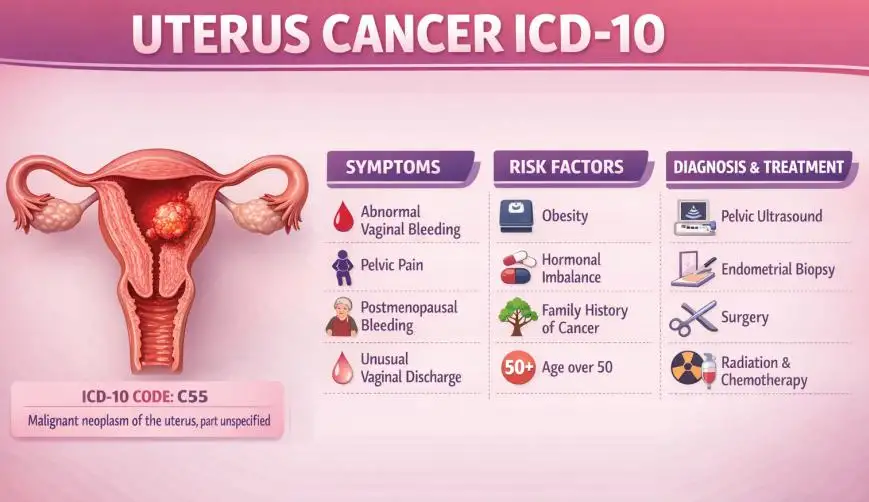
| C55 | Malignant neoplasm of uterus, part unspecified |
These codes are used by healthcare professionals for documentation, billing, epidemiological tracking, and research purposes.
Types of Uterine Cancer
Understanding the type of cancer is essential for correct uterus cancer ICD 10 classification and treatment planning.
1. Endometrial Cancer
The most common form, originating in the uterine lining.
2. Uterine Sarcoma
A rarer and more aggressive cancer that develops in the muscle or supporting tissues of the uterus.
3. Carcinosarcoma
A mixed tumor containing both carcinoma and sarcoma elements.
Each type may correspond to different pathological findings, although they are generally categorized within the broader ICD-10 C54 and C55 code range.
Causes and Risk Factors
While the exact cause of uterine cancer remains unclear, several risk factors significantly increase the likelihood of developing the disease.
Hormonal Imbalance
Excess estrogen without adequate progesterone exposure increases endometrial cell growth.
Age
Most cases occur in women over 50.
Obesity
Fat tissue produces estrogen, raising cancer risk.
Genetic Factors
Conditions such as Lynch syndrome elevate risk.
Other Risk Factors
-
Early menstruation or late menopause
-
Nulliparity (never being pregnant)
-
Diabetes
-
Hypertension
-
Tamoxifen use
Being aware of these factors empowers you to seek timely medical advice.
Symptoms and Early Warning Signs
Early detection significantly improves prognosis. Watch for the following symptoms:
-
Abnormal vaginal bleeding (especially after menopause)
-
Pelvic pain or pressure
-
Unusual vaginal discharge
-
Pain during intercourse
-
Unexplained weight loss (advanced cases)
Postmenopausal bleeding is the most common early sign and should never be ignored.
Diagnosis
Diagnosing uterine cancer involves multiple steps:
1. Medical History and Physical Examination
A pelvic exam may detect abnormalities.
2. Transvaginal Ultrasound
Measures endometrial thickness.
3. Endometrial Biopsy
Confirms cancer presence.
4. Imaging Tests
CT scans, MRI, or PET scans assess spread.
5. Staging
Cancer staging follows the FIGO system and determines severity and treatment approach.
Proper coding under uterus cancer ICD 10 is assigned after confirmed diagnosis and anatomical identification.
Treatment Options
Treatment depends on cancer type, stage, and overall health.
Common Treatment Modalities
| Treatment | Purpose |
|---|---|
| Surgery (Hysterectomy) | Removal of uterus and possibly ovaries |
| Radiation Therapy | Destroys cancer cells |
| Chemotherapy | Systemic cancer treatment |
| Hormone Therapy | Used in hormone-sensitive cancers |
| Targeted Therapy | Targets specific cancer cell pathways |
| Immunotherapy | Boosts immune response |
Surgery is often the primary treatment, especially in early-stage endometrial cancer.
Prevention and Lifestyle Recommendations
Although not all cases are preventable, certain lifestyle choices can reduce risk:
-
Maintain a healthy weight
-
Engage in regular physical activity
-
Manage diabetes and blood pressure
-
Consider hormonal balance strategies under medical supervision
-
Attend regular gynecological check-ups
Early consultation improves both coding accuracy and treatment outcomes.
Prognosis and Survival Rates
Prognosis depends largely on stage at diagnosis.
| Stage | 5-Year Survival Rate (Approximate) |
|---|---|
| Stage I | 80–95% |
| Stage II | 60–80% |
| Stage III | 30–60% |
| Stage IV | 10–20% |
Endometrial cancer diagnosed early generally has a favorable prognosis compared to uterine sarcoma.
Latest Research and Innovations
Advancements in uterine cancer care continue to improve outcomes:
-
Molecular profiling for personalized treatment
-
Minimally invasive robotic surgery
-
Immunotherapy for advanced cases
-
Genetic screening for high-risk patients
-
AI-assisted diagnostic imaging
These innovations are reshaping treatment strategies and improving survival rates worldwide.
Coping and Support for Patients
A cancer diagnosis affects more than just physical health. Emotional and psychological support is crucial.
Support Strategies
-
Join cancer support groups
-
Seek counseling or therapy
-
Maintain open communication with healthcare providers
-
Involve family and loved ones
-
Explore survivorship programs
Holistic care enhances recovery and quality of life.
Conclusion
Understanding uterus cancer ICD 10 codes is essential for accurate medical documentation, insurance processing, and epidemiological tracking. Beyond coding, knowing the types, symptoms, causes, diagnosis methods, and treatment options empowers patients and caregivers to take informed action.
Early detection significantly improves survival rates. If you or someone you care about experiences abnormal uterine bleeding or persistent pelvic symptoms, consult a healthcare professional promptly. Accurate diagnosis leads not only to correct ICD-10 classification but also to timely, life-saving treatment.
FAQ About Uterus Cancer ICD 10
1. What is the ICD-10 code for uterine cancer?
The primary codes are C54 (malignant neoplasm of corpus uteri) and C55 (uterus, unspecified).
2. What is the ICD-10 code for endometrial cancer?
C54.1 is used for malignant neoplasm of the endometrium.
3. Is uterus cancer the same as endometrial cancer?
Not exactly. Endometrial cancer is the most common type of uterine cancer, but uterine sarcoma is another form.
4. Why is correct ICD-10 coding important?
It ensures accurate diagnosis documentation, proper insurance billing, research tracking, and healthcare data reporting.
5. Can uterine cancer be detected early?
Yes. Early symptoms like postmenopausal bleeding often allow for early diagnosis and high survival rates.