Endometrial Cancer ICD 10: Complete Guide to Diagnosis, Coding, and Treatment

Endometrial cancer is one of the most common gynecologic malignancies, particularly affecting women after menopause. Accurate classification and documentation are essential not only for clinical care, but also for medical records, insurance claims, research, and public health reporting. This is where endometrial cancer ICD 10 coding plays a critical role in modern healthcare systems.
Understanding endometrial cancer ICD 10 codes helps patients, clinicians, and healthcare administrators communicate clearly about diagnosis and treatment. In this comprehensive guide, you’ll find a clear explanation of the ICD-10 classification, along with essential information about types, causes, symptoms, diagnosis, treatment options, prognosis, and ongoing research, all presented in an accessible and professional way.
Overview of Endometrial Cancer ICD 10
The ICD-10 (International Classification of Diseases, 10th Revision) is a standardized system maintained by the World Health Organization to classify diseases and health conditions worldwide.
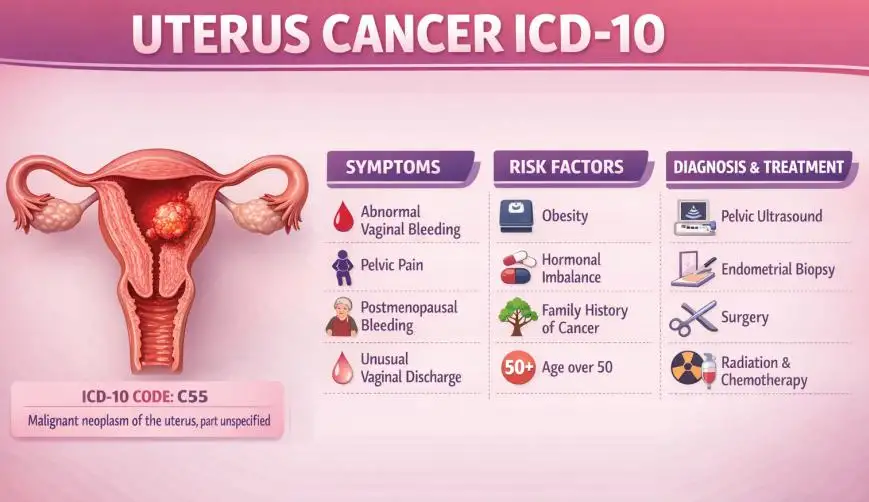
In ICD-10, endometrial cancer falls under the broader category of malignant neoplasms of the uterus.
Common ICD-10 Codes for Endometrial Cancer
| ICD-10 Code | Description |
|---|---|
| C54.0 | Malignant neoplasm of isthmus uteri |
| C54.1 | Malignant neoplasm of endometrium |
| C54.2 | Malignant neoplasm of myometrium |
| C54.3 | Malignant neoplasm of fundus uteri |
| C54.8 | Overlapping malignant neoplasm of corpus uteri |
| C54.9 | Malignant neoplasm of corpus uteri, unspecified |
Among these, C54.1 is the most frequently used endometrial cancer ICD 10 code in clinical practice.
Types of Endometrial Cancer
Endometrial cancer is not a single disease. It includes several histological subtypes, each with different behavior and prognosis.
| Type | Characteristics |
|---|---|
| Endometrioid carcinoma | Most common; often estrogen-related |
| Serous carcinoma | Aggressive, higher risk of spread |
| Clear cell carcinoma | Rare, aggressive subtype |
| Carcinosarcoma | Mixed tumor with epithelial and sarcomatous features |
| Undifferentiated carcinoma | Highly aggressive and rare |
Correct identification of the cancer type supports accurate ICD-10 coding and personalized treatment planning.
Causes and Risk Factors
While the exact cause of endometrial cancer is not always known, several risk factors are well established.
Major Risk Factors
-
Prolonged estrogen exposure without progesterone
-
Obesity and metabolic syndrome
-
Early menarche or late menopause
-
Polycystic ovary syndrome (PCOS)
-
Diabetes and hypertension
-
Family history of endometrial or colorectal cancer
-
Lynch syndrome (hereditary nonpolyposis colorectal cancer)
Recognizing these risks can help in early detection and prevention strategies.
Symptoms and Early Warning Signs
Early-stage endometrial cancer often presents with noticeable symptoms, making early diagnosis possible.
Common Symptoms
-
Abnormal uterine bleeding (especially after menopause)
-
Heavy or irregular menstrual bleeding
-
Pelvic pain or pressure
-
Unusual vaginal discharge
-
Pain during intercourse
Any postmenopausal bleeding should prompt immediate medical evaluation, as it is the most common early warning sign.
Diagnosis
Diagnosis typically involves a combination of clinical evaluation and diagnostic tests.
Diagnostic Methods
-
Pelvic examination
-
Transvaginal ultrasound
-
Endometrial biopsy
-
Hysteroscopy
-
MRI or CT scans for staging
Once confirmed, the appropriate endometrial cancer ICD 10 code is assigned based on tumor location and extent.
Treatment Options
Treatment depends on cancer stage, histological type, and the patient’s overall health.
Standard Treatments
-
Surgery: Total hysterectomy with bilateral salpingo-oophorectomy
-
Radiation therapy: External beam or brachytherapy
-
Chemotherapy: Often for advanced or high-risk cases
-
Hormone therapy: For selected estrogen-sensitive tumors
-
Targeted therapy and immunotherapy: Emerging options for advanced disease
Multidisciplinary care ensures the best outcomes.
Prevention and Lifestyle Recommendations
Although not all cases are preventable, certain measures can reduce risk.
Practical Prevention Tips
-
Maintain a healthy weight
-
Engage in regular physical activity
-
Manage diabetes and blood pressure
-
Use combined hormonal contraceptives when appropriate
-
Seek genetic counseling if there is a strong family history
Regular gynecological check-ups remain essential.
Prognosis and Survival Rates
Prognosis largely depends on the stage at diagnosis.
| Stage | Approximate 5-Year Survival Rate |
|---|---|
| Stage I | 80–90% |
| Stage II | 60–70% |
| Stage III | 30–50% |
| Stage IV | Below 20% |
Early detection significantly improves survival outcomes.
Latest Research and Innovations
Ongoing research continues to improve outcomes for patients with endometrial cancer.
Key Areas of Progress
-
Molecular classification for personalized therapy
-
Immunotherapy targeting mismatch repair deficiency
-
Minimally invasive surgical techniques
-
AI-assisted pathology and imaging
-
Novel hormone-based and targeted treatments
These advances are reshaping how endometrial cancer is diagnosed and treated.
Coping and Support for Patients
A cancer diagnosis affects both physical and emotional well-being.
Support Strategies
-
Psychological counseling and mental health support
-
Patient education programs
-
Support groups (in-person or online)
-
Nutritional and physical rehabilitation
-
Open communication with healthcare providers
Strong support systems can significantly improve quality of life during and after treatment.
Conclusion
Understanding endometrial cancer ICD 10 coding is essential for accurate diagnosis, treatment planning, and healthcare documentation. Beyond coding, awareness of symptoms, risk factors, and treatment options empowers patients to seek timely care. With advances in research and personalized medicine, outcomes for endometrial cancer continue to improve, especially when detected early.
Frequently Asked Questions (FAQ)
1. What is the most common endometrial cancer ICD 10 code?
The most commonly used code is C54.1, which refers to malignant neoplasm of the endometrium.
2. Is endometrial cancer the same as uterine cancer?
Endometrial cancer is the most common type of uterine cancer, but not all uterine cancers originate in the endometrium.
3. Can ICD-10 codes change over time?
Yes. ICD-10 codes may be updated periodically to reflect new medical knowledge or classifications.
4. Is endometrial cancer curable?
When detected early, endometrial cancer is often highly treatable and potentially curable.
5. Who is at highest risk for endometrial cancer?
Postmenopausal women, especially those with obesity, prolonged estrogen exposure, or genetic predisposition, are at higher risk.