Stage 2 Colon Cancer Life Expectancy: Prognosis, Treatment Options, and Survival Outlook

Understanding stage 2 colon cancer life expectancy is one of the most important concerns for patients and families after receiving a diagnosis. At this stage, cancer has grown deeper into the wall of the colon but has not spread to nearby lymph nodes or distant organs. This often means the disease is still highly treatable, with a generally favorable outlook compared to more advanced stages.
This article is designed to give you a clear, evidence-based, and reassuring overview of what stage 2 colon cancer means for life expectancy, treatment decisions, and long-term quality of life. By the end, you will have a solid understanding of prognosis, survival rates, and practical steps that can support better outcomes.
Overview of Stage 2 Colon Cancer
Stage 2 colon cancer indicates that the tumor has extended beyond the inner lining of the colon but remains localized. There is no evidence of cancer in the lymph nodes or distant metastasis, which is a key factor influencing survival.
Doctors often consider stage 2 colon cancer an intermediate stage, where surgical treatment alone may be sufficient for many patients, while others may benefit from additional therapy depending on risk factors.
Key Characteristics of Stage 2 Colon Cancer
| Feature | Description |
|---|---|
| Tumor spread | Extends into or through the colon wall |
| Lymph nodes | No lymph node involvement |
| Distant spread | No metastasis to other organs |
| Treatment focus | Surgery, sometimes followed by chemotherapy |
Types of Stage 2 Colon Cancer
Stage 2 colon cancer is further divided based on how deeply the tumor has grown:
| Substage | Description |
|---|---|
| Stage 2A | Tumor has grown into the outer layers of the colon wall |
| Stage 2B | Tumor has grown through the colon wall |
| Stage 2C | Tumor has grown into nearby tissues or organs |
These substages help doctors estimate stage 2 colon cancer life expectancy more accurately and determine whether additional treatments are recommended.
Causes and Risk Factors
Colon cancer develops due to genetic mutations that cause abnormal cell growth. While the exact cause is not always clear, several factors increase the risk.
Common Risk Factors
-
Age over 50
-
Family history of colon cancer or polyps
-
Inflammatory bowel disease
-
Diet high in red or processed meats
-
Smoking and excessive alcohol consumption
-
Obesity and physical inactivity
Understanding these factors can also guide prevention strategies after treatment.
Symptoms and Early Warning Signs
In many cases, early-stage colon cancer causes mild or no symptoms. However, some warning signs may appear as the disease progresses.
Symptoms to Watch For
-
Changes in bowel habits (diarrhea or constipation)
-
Blood in the stool
-
Persistent abdominal discomfort
-
Fatigue or unexplained weakness
-
Unintended weight loss
Early detection plays a crucial role in improving stage 2 colon cancer life expectancy.
Diagnosis
Diagnosis usually begins with screening or investigation of symptoms, followed by imaging and tissue analysis.
Common Diagnostic Methods
-
Colonoscopy with biopsy
-
CT scans of the abdomen and pelvis
-
Blood tests, including CEA tumor marker
-
Pathology analysis to determine cancer stage and grade
Accurate staging is essential for predicting survival and choosing the most effective treatment plan.
Treatment Options
Treatment for stage 2 colon cancer is highly individualized, based on tumor features and patient risk factors.
Standard Treatment Approaches
| Treatment | Purpose |
|---|---|
| Surgery | Removes the tumor and affected colon segment |
| Chemotherapy | Used selectively in high-risk cases |
| Targeted therapy | Rarely used in stage 2, mainly in trials |
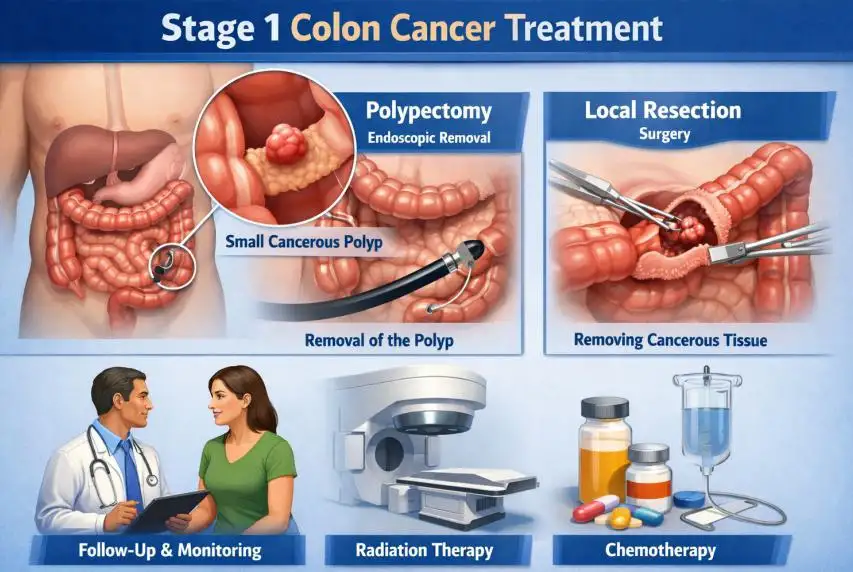
Most patients undergo surgery as the primary treatment, and many achieve long-term remission.
Prevention and Lifestyle Recommendations
Lifestyle choices can play a meaningful role in recovery and reducing recurrence risk.
Recommended Lifestyle Changes
-
Eat a fiber-rich diet with fruits and vegetables
-
Maintain a healthy weight
-
Engage in regular physical activity
-
Quit smoking and limit alcohol intake
-
Follow scheduled follow-up screenings
These steps support overall health and may positively influence long-term survival.
Prognosis and Survival Rates
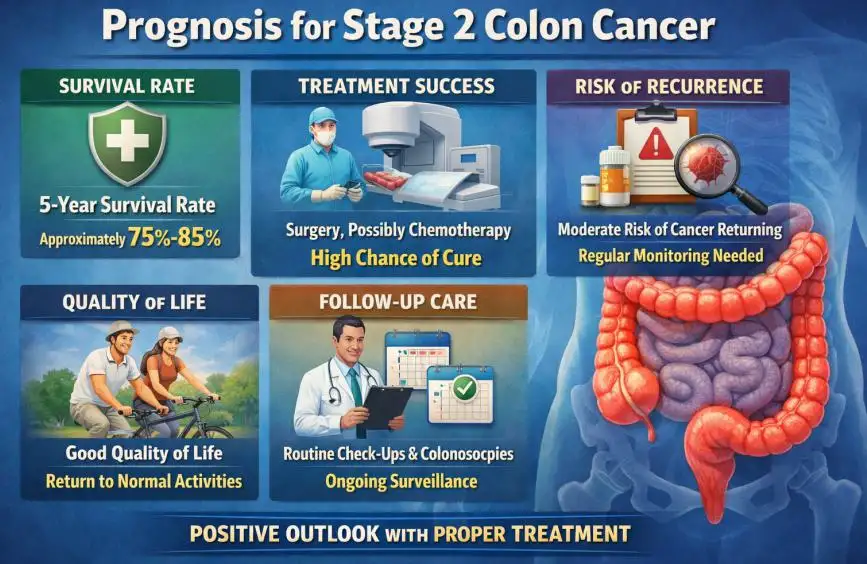
One of the most common questions patients ask is about stage 2 colon cancer life expectancy. Overall, the outlook is encouraging compared to advanced stages.
Five-Year Survival Rates
| Stage | Approximate 5-Year Survival Rate |
|---|---|
| Stage 2A | 87–90% |
| Stage 2B | 75–85% |
| Stage 2C | 60–70% |
These statistics are averages and cannot predict individual outcomes, but they highlight the generally favorable prognosis.
Latest Research and Innovations
Ongoing research continues to improve survival and quality of life for colon cancer patients.
Recent Advances
-
Molecular profiling to identify high-risk tumors
-
Immunotherapy trials for selected patients
-
Improved surgical techniques with faster recovery
-
Personalized treatment planning using genetic markers
These innovations may further enhance stage 2 colon cancer life expectancy in the coming years.
Coping and Support for Patients
A cancer diagnosis affects both physical and emotional well-being. Support systems are a vital part of recovery.
Helpful Support Options
-
Oncology counseling services
-
Patient support groups
-
Nutrition and rehabilitation programs
-
Family and caregiver involvement
Emotional resilience and mental health care can significantly improve quality of life during and after treatment.
Conclusion
Stage 2 colon cancer is a serious but highly treatable condition with a strong overall prognosis. Understanding stage 2 colon cancer life expectancy, treatment choices, and lifestyle strategies empowers patients to take an active role in their care. With early detection, appropriate treatment, and ongoing support, many individuals go on to live long and healthy lives.
FAQ
1. Is stage 2 colon cancer curable?
Yes, many patients are cured with surgery alone, especially when the cancer is detected early and has no high-risk features.
2. Does everyone with stage 2 colon cancer need chemotherapy?
No. Chemotherapy is usually recommended only for patients with higher-risk tumor characteristics.
3. How long can someone live with stage 2 colon cancer?
Life expectancy is generally high, with many patients living decades after successful treatment.
4. Can lifestyle changes improve survival?
Healthy lifestyle choices may reduce recurrence risk and support overall well-being, though they do not replace medical treatment.
5. How often should follow-up tests be done after treatment?
Follow-up schedules vary, but most patients undergo regular colonoscopies, blood tests, and imaging for several years after treatment.