Stage 1 Colon Cancer Treatment: Complete Guide to Early-Stage Care and Recovery
Receiving a diagnosis of Colon Cancer can feel overwhelming, but when detected at an early stage, the outlook is often highly positive. Stage 1 colon cancer is considered an early form of the disease, meaning the cancer has not spread beyond the inner layers of the colon. This early detection significantly improves treatment success rates and long-term survival.
Understanding stage 1 colon cancer treatment is crucial for making informed decisions. In this guide, you’ll learn about treatment options, risk factors, symptoms, and the latest medical advancements, helping you or your loved ones navigate this condition with confidence.
Overview
Stage 1 colon cancer occurs when cancer cells have grown into the inner lining and possibly the muscular layer of the Colon but have not spread to lymph nodes or distant organs.
At this stage, treatment is often less aggressive compared to advanced stages, and many patients achieve full recovery with proper care.
Types
Colon cancer can present in several forms, even at early stages:
| Type | Description |
|---|---|
| Adenocarcinoma | The most common type, originating in mucus-producing glands |
| Mucinous carcinoma | Contains mucus and may behave differently |
| Signet ring cell carcinoma | Rare and more aggressive form |
Causes and Risk Factors
While the exact cause of colon cancer isn’t always known, several factors can increase risk:
-
Age (typically over 50)
-
Family history of colon cancer
-
Genetic conditions like Lynch syndrome
-
Diet high in red or processed meats
-
Sedentary lifestyle
-
Smoking and alcohol use
-
Obesity
Understanding these risks helps in early detection and prevention.
Symptoms and Early Warning Signs
Stage 1 colon cancer may not always produce noticeable symptoms, but some early signs include:
-
Changes in bowel habits (diarrhea or constipation)
-
Blood in stool
-
Abdominal discomfort or cramping
-
Fatigue
-
Unexplained weight loss
Because symptoms can be subtle, routine screening is essential.
Diagnosis
Doctors use several methods to diagnose stage 1 colon cancer:
| Diagnostic Method | Purpose |
|---|---|
| Colonoscopy | Direct visualization and biopsy |
| Biopsy | Confirms cancer presence |
| CT scan | Checks for spread |
| Blood tests | Evaluate overall health |
A colonoscopy is the gold standard for early detection.
Treatment Options
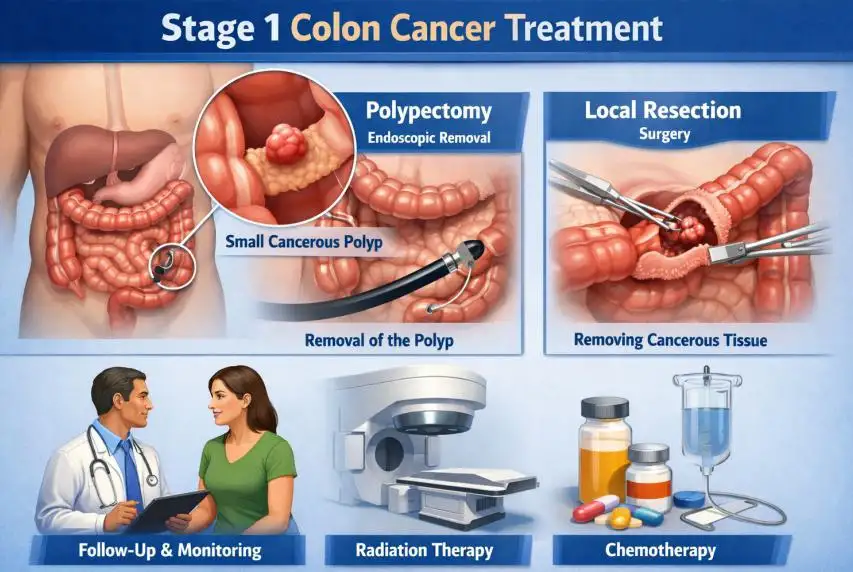
The primary focus of stage 1 colon cancer treatment is to remove the tumor completely.
1. Surgery (Main Treatment)
Surgery is usually the only treatment needed:
-
Polypectomy: Removal of small cancerous polyps during colonoscopy
-
Local excision: Removal of tumor and surrounding tissue
-
Partial colectomy: Removal of a section of the colon
2. Chemotherapy
Chemotherapy is generally not required for stage 1 colon cancer unless there are unusual high-risk features.
3. Follow-Up Care
After treatment, regular monitoring is essential:
-
Follow-up colonoscopies
-
Imaging tests if needed
-
Routine doctor visits
Prevention and Lifestyle Recommendations
Adopting healthy habits can reduce recurrence risk:
-
Eat a fiber-rich diet (fruits, vegetables, whole grains)
-
Limit processed and red meats
-
Exercise regularly
-
Maintain a healthy weight
-
Avoid smoking and excessive alcohol
-
Get regular screenings
Prognosis and Survival Rates
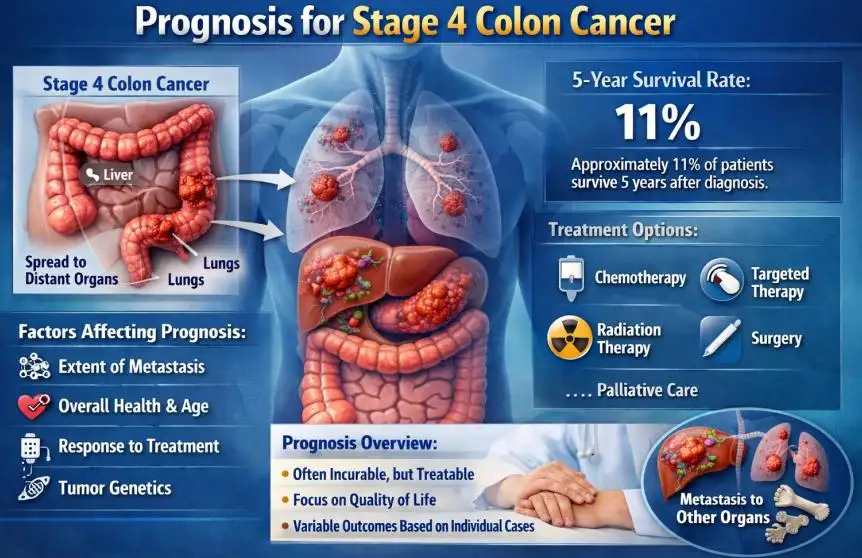
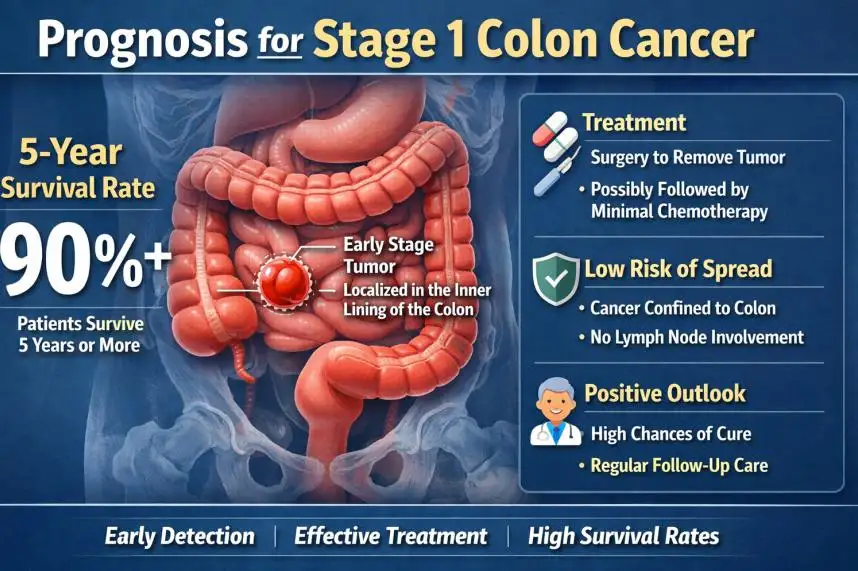
The prognosis for stage 1 colon cancer is excellent.
| Factor | Outcome |
|---|---|
| 5-year survival rate | About 90–95% |
| Recurrence risk | Low |
| Treatment success | Very high |
Early detection is the key reason for these favorable outcomes.
Latest Research and Innovations
Advancements in colon cancer care continue to improve outcomes:
-
Minimally invasive surgical techniques
-
Enhanced imaging for early detection
-
Genetic profiling for personalized treatment
-
Improved screening tools like stool DNA tests
Researchers are also exploring targeted therapies, even for early-stage cancers.
Coping and Support for Patients
A cancer diagnosis affects both physical and emotional well-being. Consider:
-
Joining support groups
-
Speaking with a mental health professional
-
Leaning on family and friends
-
Staying informed about your condition
Emotional support is just as important as medical treatment.
Conclusion
Stage 1 colon cancer is one of the most treatable forms of cancer when detected early. With effective stage 1 colon cancer treatment, most patients can expect a full recovery and a normal life expectancy. Surgery is typically sufficient, and ongoing monitoring ensures long-term health.
Taking proactive steps, like regular screenings and a healthy lifestyle, can make a significant difference in both prevention and recovery.
FAQ
1. What is the main treatment for stage 1 colon cancer?
The primary treatment is surgery to remove the tumor, often without the need for chemotherapy.
2. Can stage 1 colon cancer be cured?
Yes, it is highly curable, especially when treated early.
3. Is chemotherapy necessary for stage 1 colon cancer?
In most cases, chemotherapy is not required.
4. How often should follow-up screenings be done?
Typically, a colonoscopy is recommended within a year after surgery, then at regular intervals.
5. What lifestyle changes help recovery?
A healthy diet, regular exercise, and avoiding harmful habits like smoking can support recovery and prevent recurrence.