Prognosis for Stage 4 Colon Cancer: Survival Rates, Treatment Advances, and What Patients Should Know
The prognosis for stage 4 colon cancer is a topic that often raises many questions and concerns for patients and their families. At this advanced stage, cancer has spread beyond the colon to distant organs such as the liver or lungs, making treatment more complex. However, it’s important to understand that prognosis is not a fixed outcome, it varies widely depending on individual factors and evolving medical care.
In recent years, significant progress in treatments, including targeted therapies and immunotherapy, has improved outcomes for many patients. By understanding the disease, available treatments, and lifestyle factors, patients can make informed decisions and actively participate in their care journey.
Overview
Colon Cancer is classified into stages based on how far it has spread. Stage 4, also known as metastatic colon cancer, means cancer cells have traveled to distant organs.
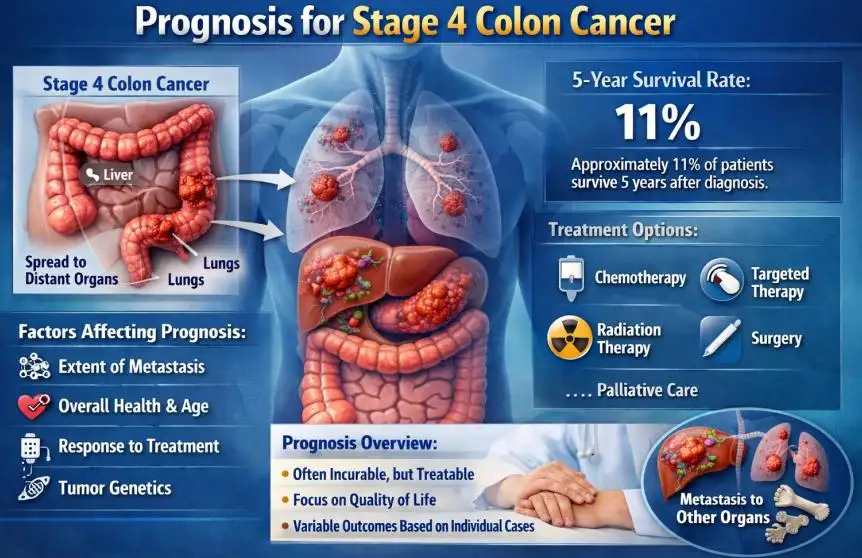
The prognosis for stage 4 colon cancer depends on factors such as:
-
Location and number of metastases
-
Patient’s overall health
-
Response to treatment
-
Genetic characteristics of the tumor
While stage 4 is considered advanced, some patients achieve long-term survival, especially with modern therapies.
Types
Stage 4 colon cancer can be categorized based on how it spreads:
| Type | Description |
|---|---|
| Stage 4A | Cancer spreads to one distant organ (e.g., liver) |
| Stage 4B | Cancer spreads to multiple organs |
| Stage 4C | Cancer spreads to the lining of the abdominal cavity (peritoneum) |
Each type influences the prognosis for stage 4 colon cancer and treatment strategy.
Causes and Risk Factors
Colon cancer develops due to genetic mutations, often influenced by lifestyle and environmental factors.
Common risk factors include:
-
Age over 50
-
Family history of colorectal cancer
-
Diet high in processed or red meat
-
Obesity and lack of physical activity
-
Smoking and excessive alcohol consumption
-
Conditions like inflammatory bowel disease
Understanding these risks helps in prevention and early detection.
Symptoms and Early Warning Signs
In stage 4, symptoms may be more severe or widespread:
-
Persistent abdominal pain or cramping
-
Changes in bowel habits (diarrhea or constipation)
-
Blood in stool
-
Unexplained weight loss
-
Fatigue and weakness
-
Symptoms related to metastasis (e.g., jaundice if liver is affected)
Early recognition can lead to faster diagnosis and improved management.
Diagnosis
Diagnosing stage 4 colon cancer involves several tests:
| Test | Purpose |
|---|---|
| Colonoscopy | Visualizes tumors in the colon |
| CT scan / MRI | Detects spread to organs |
| PET scan | Identifies active cancer cells |
| Biopsy | Confirms cancer type |
| Blood tests (CEA) | Monitors tumor markers |
Accurate staging is essential for determining the prognosis for stage 4 colon cancer and choosing the right treatment.
Treatment Options
Treatment for stage 4 colon cancer focuses on controlling the disease, extending survival, and improving quality of life.
Common Treatment Approaches
| Treatment | Description |
|---|---|
| Surgery | Removes primary tumor or metastases (in select cases) |
| Chemotherapy | Kills or slows cancer cells |
| Targeted Therapy | Attacks specific cancer pathways |
| Immunotherapy | Boosts immune response against cancer |
| Radiation Therapy | Controls symptoms or localized spread |
Combination therapies often provide better outcomes.
Prevention and Lifestyle Recommendations
While stage 4 cancer cannot be reversed through lifestyle alone, healthy habits can support treatment and overall well-being:
-
Maintain a balanced, nutrient-rich diet
-
Engage in regular physical activity
-
Avoid smoking and limit alcohol
-
Attend regular medical checkups
-
Manage stress through mindfulness or counseling
Preventive measures are especially important for those at high risk.
Prognosis and Survival Rates
The prognosis for stage 4 colon cancer varies widely. Survival statistics are often based on large population data and may not predict individual outcomes.
General Survival Rates
| Factor | Impact on Prognosis |
|---|---|
| 5-year survival rate | Approximately 10–15% |
| Limited metastasis | Better outcomes |
| Successful surgery | Improves survival |
| Good response to therapy | Extends life expectancy |
Some patients live significantly longer than average due to advances in treatment and personalized care.
Latest Research and Innovations
Medical research continues to improve the outlook for stage 4 colon cancer patients:
-
Precision medicine based on genetic profiling
-
New immunotherapy drugs for resistant cancers
-
Minimally invasive surgical techniques
-
Clinical trials exploring novel therapies
-
Liquid biopsies for early detection of recurrence
These innovations are gradually improving the prognosis for stage 4 colon cancer.
Coping and Support for Patients
A stage 4 diagnosis can be emotionally challenging. Support is essential for both patients and caregivers.
Helpful strategies include:
-
Joining cancer support groups
-
Seeking counseling or therapy
-
Staying informed about treatment options
-
Building a strong support network
-
Practicing self-care and maintaining hope
Emotional well-being plays a vital role in overall health and treatment outcomes.
Conclusion
The prognosis for stage 4 colon cancer may seem daunting, but it is not without hope. Advances in treatment, personalized medicine, and supportive care have significantly improved survival and quality of life for many patients. Each case is unique, and with the right medical team and support system, patients can navigate this journey with resilience and informed decision-making.
FAQ
1. What is the life expectancy for stage 4 colon cancer?
Life expectancy varies widely. While the average 5-year survival rate is around 10–15%, many patients live longer with modern treatments.
2. Can stage 4 colon cancer be cured?
In most cases, it is not considered curable, but it can often be managed as a chronic condition with treatment.
3. What affects the prognosis the most?
Key factors include the extent of spread, response to treatment, overall health, and tumor genetics.
4. Is treatment still effective at stage 4?
Yes. Treatments like chemotherapy, targeted therapy, and immunotherapy can significantly extend survival and improve quality of life.
5. Can lifestyle changes improve outcomes?
While not a cure, healthy lifestyle habits can support treatment, boost immunity, and enhance overall well-being.