Stage 2 Colon Cancer Treatment: Complete Guide to Options, Recovery, and Survival

Receiving a diagnosis of Stage 2 Colon Cancer can feel overwhelming, but understanding your treatment options is a powerful first step toward recovery. At this stage, cancer has grown through the wall of the colon but has not yet spread to nearby lymph nodes or distant organs, making it highly treatable in many cases.
This comprehensive guide to stage 2 colon cancer treatment will walk you through everything you need to know, from diagnosis and treatment options to prognosis and lifestyle recommendations. Whether you're a patient or supporting a loved one, this article aims to provide clear, reliable, and actionable information.
Overview
Stage 2 colon cancer is categorized as a localized cancer that has penetrated deeper layers of the colon wall. It is typically divided into sub-stages:
| Sub-Stage | Description |
|---|---|
| Stage 2A | Cancer has grown into the outer layers of the colon |
| Stage 2B | Cancer has penetrated through the colon wall |
| Stage 2C | Cancer has invaded nearby tissues or organs |
Early detection plays a crucial role in successful stage 2 colon cancer treatment, with surgery often being the primary approach.
Types
Colon cancer is a type of Colorectal Cancer and may vary based on cellular origin:
| Type | Description |
|---|---|
| Adenocarcinoma | Most common type, originating in glandular cells |
| Mucinous carcinoma | Produces mucus, may behave differently |
| Signet ring cell carcinoma | Rare and more aggressive |
Understanding the type helps guide personalized stage 2 colon cancer treatment strategies.
Causes and Risk Factors
While the exact cause is not always known, several factors increase the risk:
-
Age over 50
-
Family history of colon cancer
-
Genetic syndromes such as Lynch Syndrome
-
Diet high in red or processed meats
-
Sedentary lifestyle
-
Smoking and alcohol use
Being aware of these risks can help with prevention and early intervention.
Symptoms and Early Warning Signs
Stage 2 colon cancer may present subtle or noticeable symptoms:
-
Changes in bowel habits (diarrhea or constipation)
-
Blood in stool
-
Abdominal pain or cramping
-
Unexplained weight loss
-
Fatigue
Early recognition of these signs can lead to timely stage 2 colon cancer treatment, improving outcomes significantly.
Diagnosis
Doctors use several methods to diagnose colon cancer:
| Diagnostic Method | Purpose |
|---|---|
| Colonoscopy | Visualizes the colon and allows biopsy |
| CT Scan | Detects spread and staging |
| Biopsy | Confirms cancer type |
| Blood Tests | Checks for markers like CEA |
Organizations like the American Cancer Society recommend routine screening for early detection.
Treatment Options
The cornerstone of stage 2 colon cancer treatment is surgery, sometimes combined with additional therapies.
1. Surgery
-
Colectomy (removal of part of the colon)
-
Often curative in stage 2 cases
2. Chemotherapy
Not always required but may be recommended in high-risk cases:
-
Tumor perforation
-
Poor differentiation
-
Fewer lymph nodes examined
Common drugs include Fluorouracil and Capecitabine.
3. Targeted Therapy
Used in select cases to attack specific cancer cells with fewer side effects.
4. Clinical Trials
Patients may explore new treatments through clinical trials for advanced care options.
| Treatment Type | When Used |
|---|---|
| Surgery | Primary treatment |
| Chemotherapy | High-risk cases |
| Targeted therapy | Specific tumor profiles |
| Clinical trials | Experimental options |
Prevention and Lifestyle Recommendations
While not all cases are preventable, lifestyle changes can reduce risk and improve recovery:
-
Eat a high-fiber diet rich in fruits and vegetables
-
Maintain a healthy weight
-
Exercise regularly
-
Limit alcohol and avoid smoking
-
Schedule routine screenings
Adopting these habits supports both prevention and long-term success after stage 2 colon cancer treatment.
Prognosis and Survival Rates
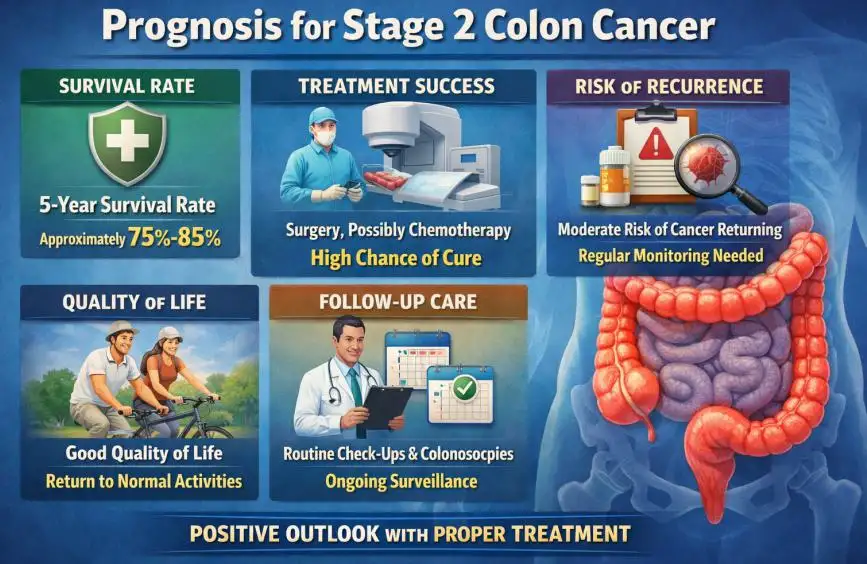
The prognosis for stage 2 colon cancer is generally favorable.
| Factor | Impact |
|---|---|
| 5-year survival rate | Approximately 75–85% |
| Early detection | Significantly improves outcomes |
| Treatment response | Varies by individual |
Most patients undergoing proper stage 2 colon cancer treatment can expect positive outcomes, especially with early intervention.
Latest Research and Innovations
Medical advancements continue to improve outcomes:
-
Immunotherapy for selected patients
-
Genetic profiling for personalized treatment
-
Minimally invasive surgical techniques
-
AI-assisted diagnostics
Institutions like the National Cancer Institute are leading groundbreaking research in colon cancer care.
Coping and Support for Patients
A cancer diagnosis affects more than just physical health. Emotional and mental well-being are equally important.
-
Join support groups (online or local)
-
Seek counseling or therapy
-
Stay connected with family and friends
-
Practice stress-reducing activities like meditation
Support systems play a vital role throughout the stage 2 colon cancer treatment journey.
Conclusion
Stage 2 colon cancer is a serious but often treatable condition. With advancements in medical care and early detection, many patients achieve successful outcomes. Understanding your options, staying informed, and maintaining a healthy lifestyle are key components of effective stage 2 colon cancer treatment.
By taking proactive steps and working closely with healthcare providers, patients can navigate this journey with confidence and hope.
FAQ
1. What is the main treatment for stage 2 colon cancer?
Surgery is the primary treatment, often sufficient on its own in many cases.
2. Is chemotherapy necessary for stage 2 colon cancer?
Not always. It is typically recommended only for high-risk patients.
3. What is the survival rate for stage 2 colon cancer?
The 5-year survival rate ranges from 75% to 85%, depending on various factors.
4. Can stage 2 colon cancer be cured?
Yes, many patients are successfully cured, especially with early and proper treatment.
5. How long is recovery after surgery?
Recovery can take several weeks to months, depending on the individual and surgical method.