Colon Cancer Stage 1: Early Detection, Treatment Options, and Survival Outlook
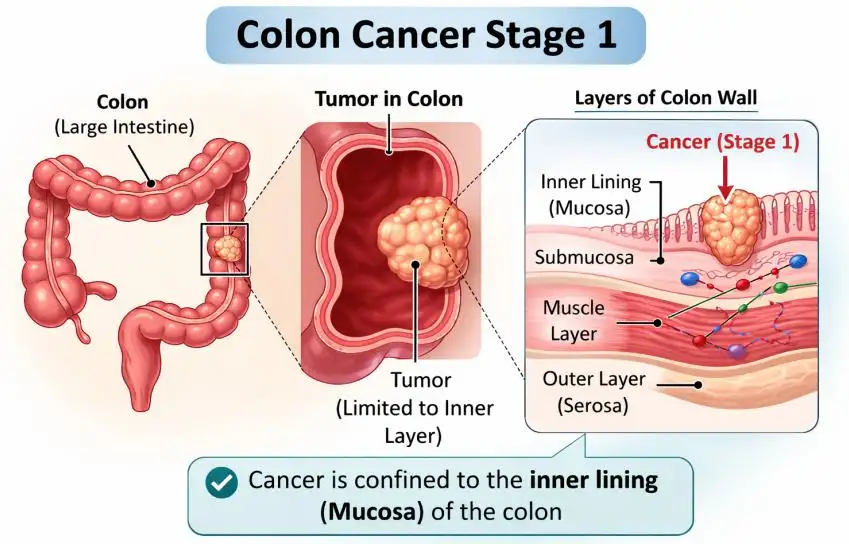
Being diagnosed with Colon Cancer at an early stage can feel overwhelming, but it also brings a significant advantage, timely intervention and a high chance of successful treatment. Colon cancer stage 1 is considered an early form of the disease, where the cancer is confined to the inner layers of the colon and has not spread to nearby lymph nodes or distant organs.
Understanding colon cancer stage 1 is crucial for making informed decisions about your health. In this guide, we will explore everything you need to know, from causes and symptoms to treatment options and survival rates, so you can take proactive steps toward recovery and long-term well-being.
Overview
Colon cancer stage 1 occurs when cancer has grown beyond the innermost lining (mucosa) into the submucosa or muscle layer of the colon wall but has not spread further. At this stage, the disease is localized and highly treatable.
Key Characteristics of Colon Cancer Stage 1
| Feature | Description |
|---|---|
| Tumor Growth | Invades submucosa or muscular layer |
| Lymph Node Involvement | None |
| Metastasis | None |
| Stage Classification | T1 or T2, N0, M0 |
| Treatment Success Rate | Very high |
Early detection significantly improves outcomes, making routine screening essential.
Types
While colon cancer stage 1 refers to the progression level, there are different types of colon cancer based on cell origin:
Common Types
| Type | Description |
|---|---|
| Adenocarcinoma | Most common type, originating in glandular cells |
| Mucinous Adenocarcinoma | Produces mucus; slightly more complex |
| Signet Ring Cell Carcinoma | Rare and more aggressive |
| Neuroendocrine Tumors | Develop from hormone-producing cells |
Most stage 1 cases are adenocarcinomas.
Causes and Risk Factors
Colon cancer develops due to abnormal cell growth in the colon. While the exact cause isn’t always clear, several factors increase the risk.
Major Risk Factors
| Risk Factor | Explanation |
|---|---|
| Age (50+) | Risk increases significantly with age |
| Family History | Genetic predisposition plays a role |
| Diet | High in red/processed meat, low in fiber |
| Sedentary Lifestyle | Lack of physical activity |
| Obesity | Linked to increased cancer risk |
| Smoking & Alcohol | Contribute to cellular damage |
| Inflammatory Bowel Disease | Includes conditions like Crohn’s disease |
Understanding these factors helps you reduce your overall risk.
Symptoms and Early Warning Signs
One challenge with colon cancer stage 1 is that symptoms may be mild or absent. However, early warning signs can still appear.
Common Symptoms
-
Changes in bowel habits (diarrhea or constipation)
-
Blood in stool
-
Abdominal discomfort or cramping
-
Unexplained fatigue
-
Narrow stools
If you notice persistent symptoms, consult a healthcare provider promptly.
Diagnosis
Early diagnosis plays a critical role in managing colon cancer stage 1 effectively.
Diagnostic Methods
| Test | Purpose |
|---|---|
| Colonoscopy | Direct visualization and biopsy |
| Biopsy | Confirms cancer presence |
| CT Scan | Evaluates spread (if suspected) |
| Blood Tests | Includes tumor markers like CEA |
Screening colonoscopy is the gold standard for early detection.
Treatment Options
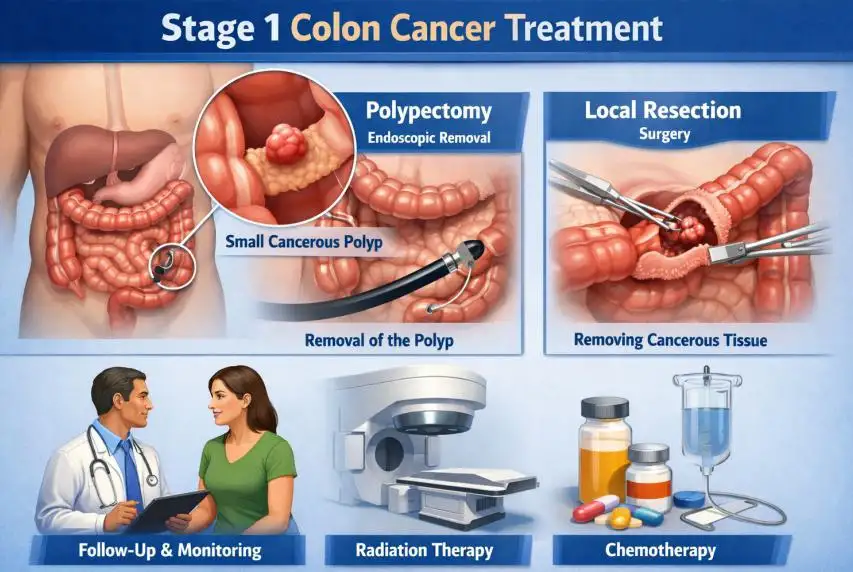
Treatment for colon cancer stage 1 is usually straightforward and highly effective.
Primary Treatments
| Treatment | Description |
|---|---|
| Surgery | Removal of tumor and nearby tissue |
| Polypectomy | Removal during colonoscopy (if small) |
| Colectomy | Partial removal of colon |
Key Points
-
Chemotherapy is rarely needed at this stage
-
Surgery alone often results in complete cure
-
Minimally invasive techniques are commonly used
Prevention and Lifestyle Recommendations
Although not all cases can be prevented, lifestyle changes can significantly reduce your risk.
Healthy Habits
-
Eat a fiber-rich diet (fruits, vegetables, whole grains)
-
Exercise regularly (at least 150 minutes per week)
-
Maintain a healthy weight
-
Limit red and processed meats
-
Avoid smoking and excessive alcohol
-
Schedule regular screenings
Prevention starts with small, consistent choices.
Prognosis and Survival Rates
The prognosis for colon cancer stage 1 is excellent.
Survival Statistics
| Metric | Rate |
|---|---|
| 5-Year Survival Rate | Over 90% |
| Recurrence Risk | Low |
| Treatment Success | Very high |
Early-stage detection dramatically improves survival outcomes.
Latest Research and Innovations
Advancements in cancer research continue to improve diagnosis and treatment.
Emerging Developments
-
Minimally invasive robotic surgery
-
Genetic testing for personalized treatment
-
Improved screening tools (DNA-based stool tests)
-
Enhanced imaging technologies
These innovations aim to detect cancer earlier and treat it more effectively.
Coping and Support for Patients
A cancer diagnosis can be emotionally challenging, even at an early stage.
Support Strategies
-
Join support groups (online or local)
-
Speak with a counselor or therapist
-
Stay informed but avoid misinformation
-
Lean on family and friends for emotional support
Mental health is just as important as physical recovery.
Conclusion
Colon cancer stage 1 represents a highly treatable and often curable form of cancer when detected early. By understanding the symptoms, risk factors, and available treatments, you empower yourself to take control of your health journey. Regular screenings, a healthy lifestyle, and prompt medical attention can make all the difference.
FAQ
1. What is colon cancer stage 1?
Colon cancer stage 1 is an early stage where cancer has grown into the inner layers of the colon but has not spread to lymph nodes or other organs.
2. Is colon cancer stage 1 curable?
Yes, it is highly curable, especially with early surgical intervention.
3. Do I need chemotherapy for stage 1 colon cancer?
In most cases, chemotherapy is not required; surgery alone is sufficient.
4. How is colon cancer stage 1 detected?
It is typically detected through colonoscopy and confirmed with a biopsy.
5. What are the survival rates?
The 5-year survival rate exceeds 90%, making early detection crucial.
6. Can lifestyle changes help prevent colon cancer?
Yes, maintaining a healthy diet, exercising, and avoiding harmful habits can significantly reduce risk.