Colon Cancer Stage 2: Symptoms, Treatment Options, and Survival Rates Explained
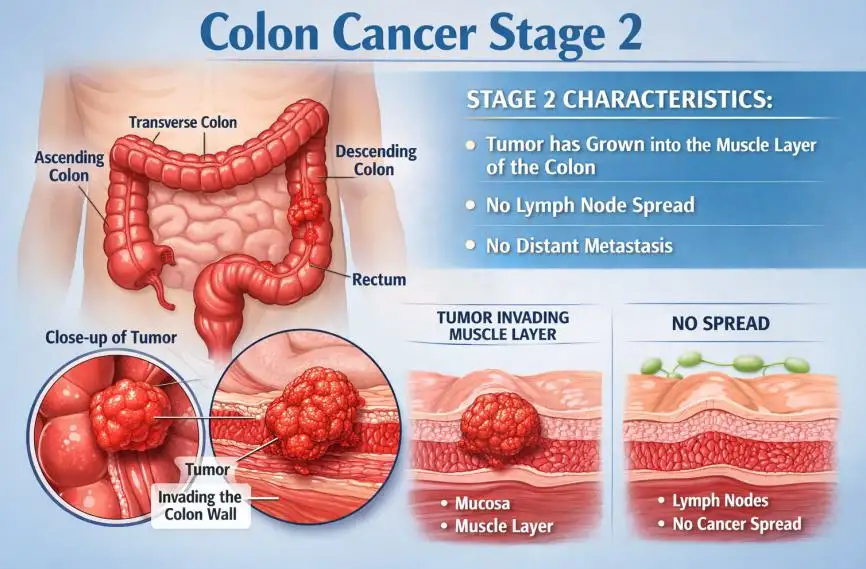
Colon cancer stage 2 is a critical phase in the progression of colon cancer, where the disease has grown beyond the inner lining of the colon but has not yet spread to nearby lymph nodes. At this stage, early detection and proper treatment can significantly improve outcomes, making awareness and timely action essential.
Understanding colon cancer stage 2 empowers patients and caregivers to make informed decisions about diagnosis, treatment, and lifestyle changes. In this article, we will explore everything you need to know, from symptoms and risk factors to advanced treatments and survival rates, so you can navigate this condition with confidence.
Overview
Colon cancer stage 2 refers to tumors that have penetrated the muscular layer of the colon wall and may have reached nearby tissues but have not spread to lymph nodes or distant organs. It is often subdivided into stages IIA, IIB, and IIC, depending on how far the tumor has grown.
At this stage, the cancer is still considered localized, which means treatment can often be highly effective, especially when diagnosed early.
Types
Colon cancer stage 2 is categorized into the following subtypes:
| Substage | Description |
|---|---|
| Stage IIA | Cancer has grown into the outer layers of the colon wall |
| Stage IIB | Cancer has penetrated through the colon wall |
| Stage IIC | Cancer has spread to nearby tissues or organs |
Each subtype influences treatment decisions and prognosis.
Causes and Risk Factors
Several factors increase the likelihood of developing colon cancer stage 2:
-
Age over 50
-
Family history of colorectal cancer
-
Genetic syndromes such as Lynch syndrome
-
Diet high in red or processed meat
-
Low fiber intake
-
Obesity and sedentary lifestyle
-
Smoking and alcohol consumption
-
Chronic conditions like ulcerative colitis
Understanding these risk factors can help in prevention and early detection.
Symptoms and Early Warning Signs
Colon cancer stage 2 may not always present obvious symptoms, but common warning signs include:
-
Persistent changes in bowel habits
-
Blood in the stool
-
Abdominal pain or cramping
-
Unexplained weight loss
-
Fatigue or weakness
If you notice any of these symptoms, it is important to consult a healthcare professional promptly.
Diagnosis
Diagnosing colon cancer stage 2 typically involves several tests:
| Test | Purpose |
|---|---|
| Colonoscopy | Visual examination of the colon |
| Biopsy | Confirms cancer cells |
| CT Scan | Determines tumor spread |
| MRI | Provides detailed imaging |
| Blood Tests | Detects tumor markers |
Early and accurate diagnosis is key to effective treatment planning.
Treatment Options
Treatment for colon cancer stage 2 depends on the tumor’s characteristics and patient health. Common approaches include:
-
Surgery: The primary treatment, often involving removal of the affected section of the colon
-
Chemotherapy: Recommended in high-risk cases to reduce recurrence
-
Targeted Therapy: Focuses on specific cancer cell mechanisms
| Treatment | Goal |
|---|---|
| Surgery | Remove tumor completely |
| Chemotherapy | Kill remaining cancer cells |
| Targeted therapy | Improve precision treatment |
A personalized treatment plan is essential for the best outcomes.
Prevention and Lifestyle Recommendations
While not all cases can be prevented, adopting healthy habits can lower risk:
-
Eat a fiber-rich diet (fruits, vegetables, whole grains)
-
Limit red and processed meats
-
Exercise regularly
-
Maintain a healthy weight
-
Avoid smoking and excessive alcohol
-
Schedule regular screenings, especially after age 50
Preventive strategies play a vital role in reducing colon cancer incidence.
Prognosis and Survival Rates
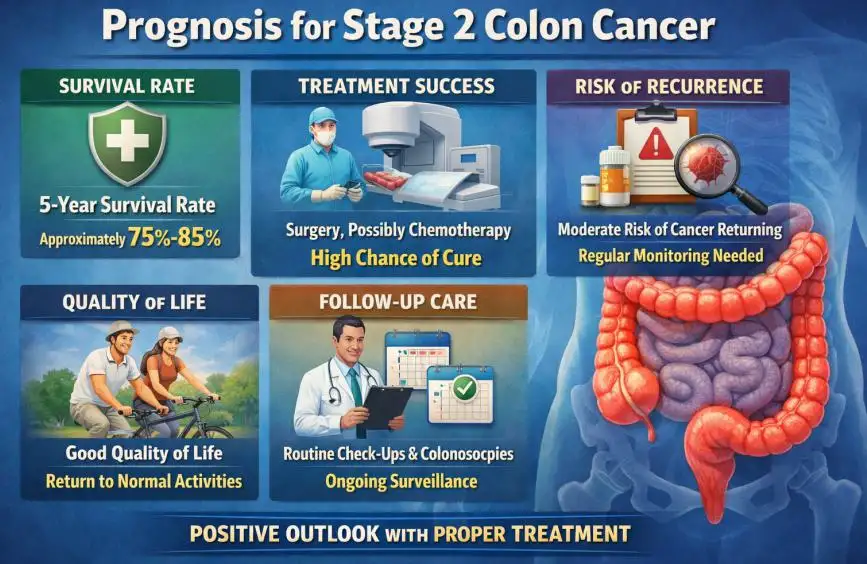
The prognosis for colon cancer stage 2 is generally favorable compared to more advanced stages.
| Factor | Impact on Prognosis |
|---|---|
| Early detection | Improves survival |
| Tumor size | Larger tumors may increase risk |
| Patient health | Better overall health improves outcomes |
The 5-year survival rate for stage 2 colon cancer is approximately 75% to 85%, depending on specific conditions and treatment effectiveness.
Latest Research and Innovations
Advancements in cancer research continue to improve outcomes for colon cancer stage 2:
-
Immunotherapy developments targeting cancer cells
-
Genetic testing for personalized treatment
-
Minimally invasive surgical techniques
-
Biomarker research for early detection
These innovations are transforming how colon cancer is diagnosed and treated.
Coping and Support for Patients
A colon cancer diagnosis can be emotionally challenging. Support is essential for both patients and families:
-
Join cancer support groups
-
Seek counseling or therapy
-
Maintain open communication with healthcare providers
-
Stay informed about treatment options
Emotional and psychological support can significantly improve quality of life during treatment.
Conclusion
Colon cancer stage 2 represents a crucial window for effective treatment and potential recovery. With proper diagnosis, timely intervention, and healthy lifestyle choices, many patients achieve positive outcomes. Staying informed and proactive is the key to managing this condition successfully.
FAQ
1. Is colon cancer stage 2 curable?
Yes, many cases are curable, especially when treated early with surgery and appropriate follow-up care.
2. Do all stage 2 patients need chemotherapy?
Not always. Chemotherapy is typically recommended for high-risk cases.
3. How is stage 2 different from stage 3 colon cancer?
Stage 2 has not spread to lymph nodes, while stage 3 involves lymph node involvement.
4. Can colon cancer stage 2 come back?
There is a risk of recurrence, but it can be reduced with proper treatment and monitoring.
5. How often should I get screened?
Screening frequency depends on your risk factors, but regular colonoscopies are generally recommended after age 50.