Colon Cancer Stage 3: Symptoms, Treatment Options, Survival Rates, and Prevention Guide
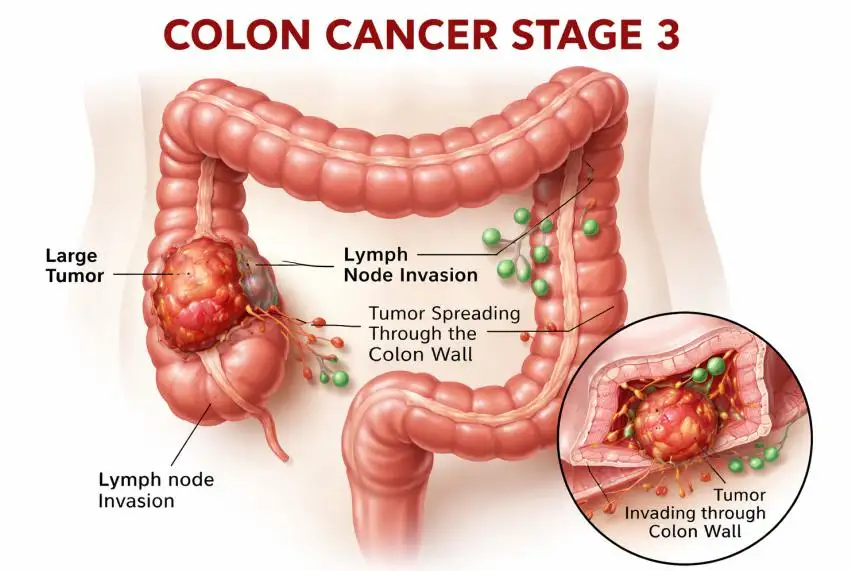
Colon cancer stage 3 is a critical phase of colorectal cancer where the disease has spread beyond the inner layers of the colon to nearby lymph nodes but not yet to distant organs. At this stage, timely diagnosis and proper treatment can significantly improve outcomes, making awareness and early action essential.
Understanding colon cancer stage 3 empowers patients and caregivers to make informed decisions. In this guide, you’ll learn everything from symptoms and causes to treatment options and survival rates, presented in a clear and practical way to support your journey.
Overview
Colon cancer stage 3 is categorized as a locally advanced cancer. While the tumor has penetrated deeper layers of the colon wall and reached nearby lymph nodes, it has not metastasized to distant organs such as the liver or lungs.
Key Characteristics of Stage 3 Colon Cancer
| Feature | Description |
|---|---|
| Tumor Spread | Through colon wall |
| Lymph Nodes | Cancer present |
| Distant Organs | Not affected |
| Treatment Approach | Surgery + chemotherapy |
Types
Colon cancer stage 3 is further divided into sub-stages based on tumor size and lymph node involvement:
| Substage | Description |
|---|---|
| Stage 3A | Cancer spread to a few lymph nodes, limited depth |
| Stage 3B | Deeper tumor growth and more lymph nodes involved |
| Stage 3C | Extensive lymph node involvement |
Each subtype helps doctors determine the most effective treatment plan.
Causes and Risk Factors
The exact cause of colon cancer stage 3 is not always clear, but several factors increase the risk:
Common Risk Factors
-
Age over 50
-
Family history of colorectal cancer
-
Genetic conditions (e.g., Lynch syndrome)
-
Diet high in red or processed meats
-
Smoking and alcohol consumption
-
Obesity and lack of physical activity
-
Inflammatory bowel diseases (Crohn’s disease, ulcerative colitis)
Lifestyle-Related Risks Table
| Risk Factor | Impact Level |
|---|---|
| Smoking | High |
| Poor Diet | High |
| Sedentary Lifestyle | Moderate |
| Alcohol Use | Moderate |
Symptoms and Early Warning Signs
Symptoms of colon cancer stage 3 may become more noticeable as the disease progresses.
Common Symptoms
-
Persistent abdominal pain or cramping
-
Changes in bowel habits (diarrhea or constipation)
-
Blood in stool
-
Unexplained weight loss
-
Fatigue and weakness
-
Feeling that the bowel does not empty completely
Early detection of these signs can lead to faster diagnosis and better outcomes.
Diagnosis
Diagnosing colon cancer stage 3 involves several medical tests:
Diagnostic Methods
-
Colonoscopy with biopsy
-
CT scan or MRI
-
PET scan (in some cases)
-
Blood tests (including CEA tumor marker)
Diagnosis Process Table
| Test | Purpose |
|---|---|
| Colonoscopy | Detect and biopsy tumors |
| CT Scan | Identify spread to lymph nodes |
| Blood Test | Monitor cancer markers |
Treatment Options
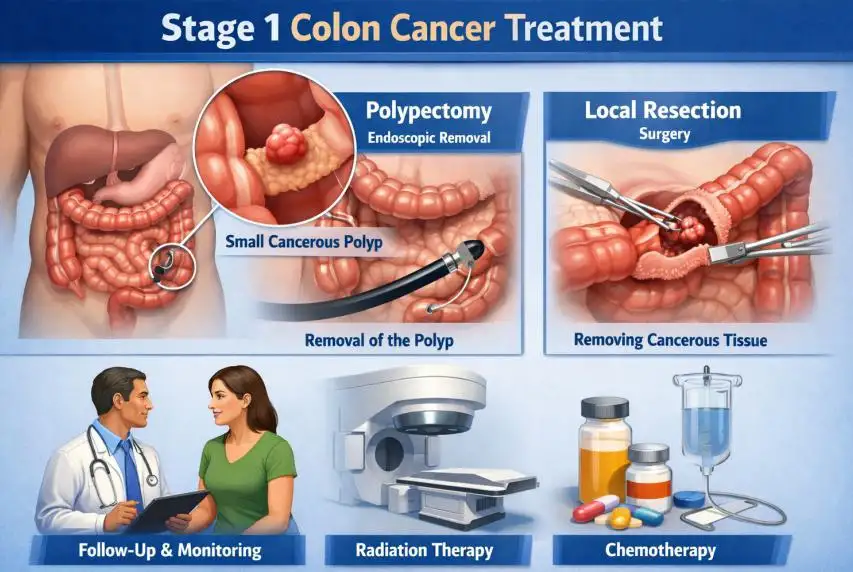
Treatment for colon cancer stage 3 typically involves a combination approach:
1. Surgery
Removal of the tumor and affected lymph nodes is the primary treatment.
2. Chemotherapy
Administered after surgery (adjuvant therapy) to eliminate remaining cancer cells.
3. Targeted Therapy
Used in specific cases based on genetic markers.
Treatment Comparison Table
| Treatment | Purpose | Effectiveness |
|---|---|---|
| Surgery | Remove tumor | High |
| Chemotherapy | Kill remaining cells | High |
| Targeted Therapy | Precision treatment | Moderate to High |
Prevention and Lifestyle Recommendations
While not all cases are preventable, lifestyle changes can reduce risk and improve outcomes:
Prevention Tips
-
Eat a fiber-rich diet (fruits, vegetables, whole grains)
-
Limit red and processed meats
-
Exercise regularly
-
Maintain a healthy weight
-
Avoid smoking and excessive alcohol
-
Get regular screenings, especially after age 50
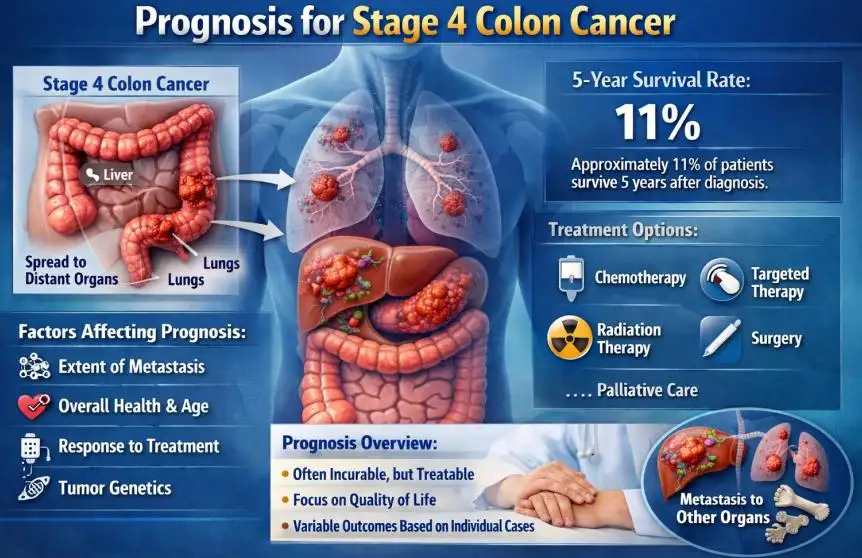
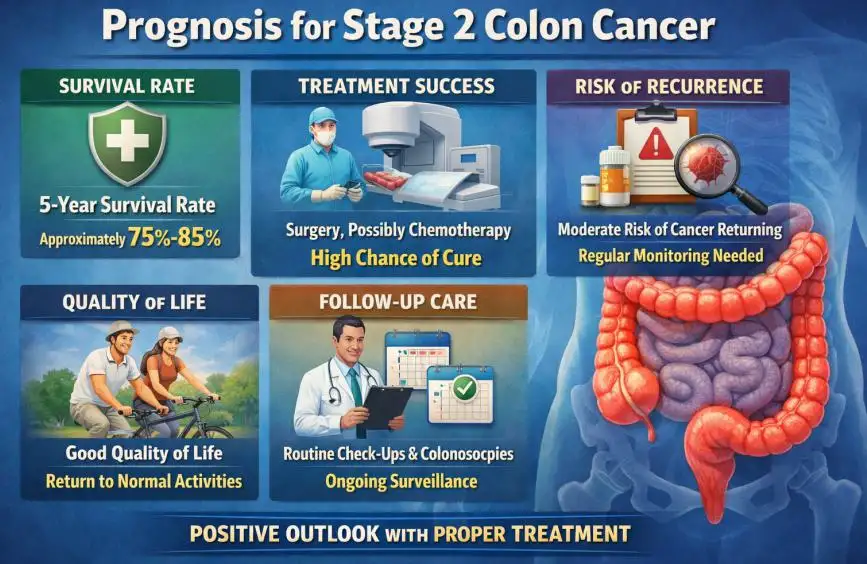
Prognosis and Survival Rates
The prognosis for colon cancer stage 3 varies depending on factors such as overall health, treatment response, and number of lymph nodes affected.
Survival Rate Overview
| Stage | 5-Year Survival Rate |
|---|---|
| Stage 3A | ~90% |
| Stage 3B | ~70% |
| Stage 3C | ~50–60% |
Early and aggressive treatment significantly improves survival chances.
Latest Research and Innovations
Medical advancements continue to improve outcomes for colon cancer stage 3:
Emerging Developments
-
Immunotherapy for specific genetic profiles
-
Personalized medicine based on tumor DNA
-
Minimally invasive surgical techniques
-
Improved chemotherapy regimens with fewer side effects
Clinical trials are also offering new hope for patients seeking advanced treatment options.
Coping and Support for Patients
Living with colon cancer stage 3 can be physically and emotionally challenging. Support systems play a crucial role.
Coping Strategies
-
Join cancer support groups
-
Seek counseling or therapy
-
Stay informed about your condition
-
Maintain open communication with healthcare providers
-
Lean on family and friends for emotional support
Support Resources Table
| Support Type | Benefit |
|---|---|
| Support Groups | Emotional connection |
| Therapy | Mental health support |
| Nutrition Counseling | Better recovery |
Conclusion
Colon cancer stage 3 is a serious but treatable condition. With early detection, proper medical care, and a proactive lifestyle, many patients achieve positive outcomes. Understanding your options and staying engaged in your treatment journey can make a meaningful difference.
If you or a loved one is facing colon cancer stage 3, remember that advancements in medicine continue to improve survival rates and quality of life.
FAQ
1. What is colon cancer stage 3?
It is a stage where cancer has spread to nearby lymph nodes but not to distant organs.
2. Is colon cancer stage 3 curable?
Yes, many cases are treatable, especially with surgery and chemotherapy.
3. What is the main treatment for stage 3 colon cancer?
Surgery followed by chemotherapy is the standard approach.
4. How long can someone live with stage 3 colon cancer?
Survival varies, but many patients live beyond 5 years, especially with early treatment.
5. Can lifestyle changes help after diagnosis?
Absolutely. Healthy habits can improve recovery and reduce recurrence risk.