Myeloma Experience: A Complete Guide to Symptoms, Treatment, Recovery, and Living Well
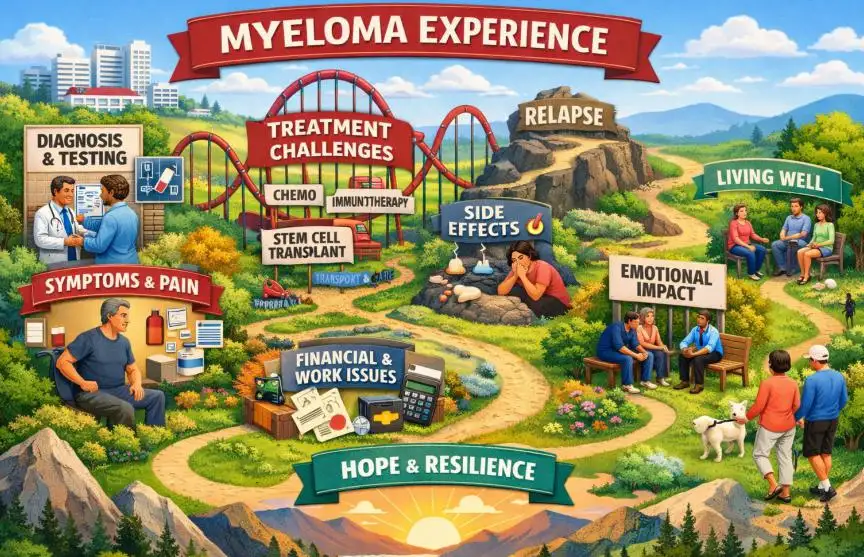
The myeloma experience is different for every patient, yet many share common challenges, emotions, and medical milestones along the journey. From the moment of diagnosis to long-term management, individuals often face physical symptoms, emotional stress, and important lifestyle changes. Understanding what to expect can empower patients and caregivers to make informed decisions and take an active role in care.
This guide is designed to help you navigate the myeloma experience with clarity and confidence. Whether you are newly diagnosed, supporting a loved one, or seeking reliable health information, this article provides practical insights, medical knowledge, and supportive strategies to improve quality of life and outcomes.
Overview
Multiple myeloma is a cancer of plasma cells found in the bone marrow. These abnormal cells multiply rapidly and interfere with normal blood cell production, weaken bones, and impair immune function. The myeloma experience typically includes periods of treatment, remission, monitoring, and sometimes relapse, making it a long-term condition for many patients.
Modern medicine has transformed how myeloma is managed. While it is often considered a chronic illness rather than a curable disease, advances in therapy allow many patients to live longer, healthier lives with improved symptom control.
Types
Multiple myeloma can present in several forms, each influencing the patient’s myeloma experience differently.
| Type of Myeloma | Description | Impact on Patient Experience |
|---|---|---|
| Smoldering Myeloma | Early-stage, slow-growing form | Often monitored without immediate treatment |
| Active Multiple Myeloma | Symptomatic and progressive | Requires prompt and ongoing therapy |
| Light Chain Myeloma | Produces abnormal light chains | Higher risk of kidney complications |
| Non-Secretory Myeloma | Produces little or no detectable protein | Diagnosis can be more complex |
Understanding the type of myeloma helps guide treatment decisions and expectations.
Causes and Risk Factors
The exact cause of multiple myeloma remains unknown, but several factors increase risk and shape the myeloma experience.
Common risk factors include:
-
Age over 60 years
-
Family history of blood cancers
-
Male gender
-
Exposure to radiation or certain chemicals
-
Obesity and metabolic disorders
-
History of monoclonal gammopathy of undetermined significance (MGUS)
While these factors do not guarantee disease development, awareness supports early detection and proactive health monitoring.
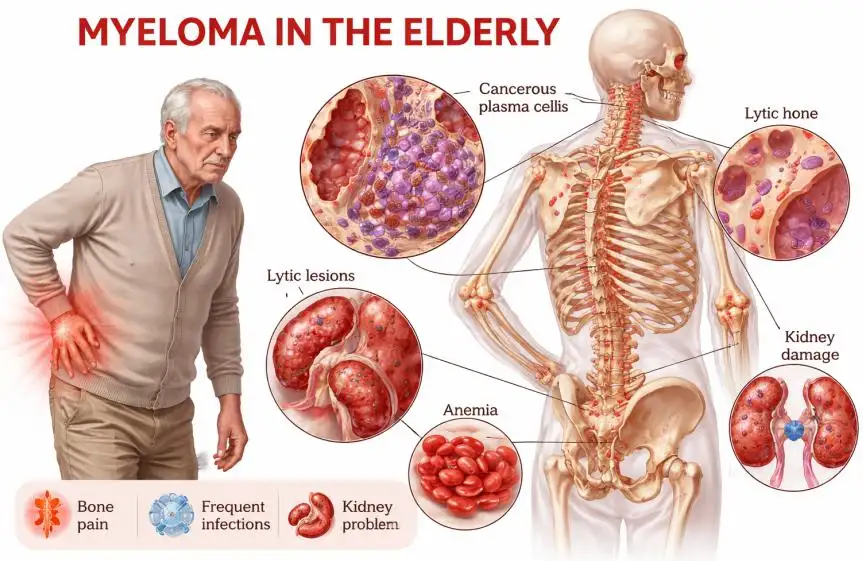
Symptoms and Early Warning Signs
Symptoms can vary widely, and early signs are often subtle. Recognizing changes early can significantly improve the myeloma experience.
| Symptom | Description |
|---|---|
| Bone Pain | Commonly affects the spine, ribs, and hips |
| Fatigue | Caused by anemia and reduced red blood cells |
| Frequent Infections | Result of weakened immune system |
| Kidney Problems | Due to abnormal protein buildup |
| Weight Loss | Often linked to reduced appetite |
| Numbness or Tingling | Nerve damage from disease progression |
If these symptoms persist, medical evaluation is essential.
Diagnosis
Diagnosing multiple myeloma involves a combination of laboratory tests and imaging studies. Accurate diagnosis plays a crucial role in shaping the patient’s myeloma experience.
Key diagnostic tools include:
-
Blood tests to detect abnormal proteins
-
Urine analysis for light chains
-
Bone marrow biopsy
-
Imaging scans such as MRI, CT, or PET
-
Kidney and calcium level assessments
Early and precise diagnosis allows timely treatment and improved outcomes.
Treatment Options
Treatment plans are personalized and depend on disease stage, patient age, overall health, and treatment goals.
| Treatment Type | Purpose |
|---|---|
| Chemotherapy | Destroys cancer cells |
| Targeted Therapy | Attacks specific cancer pathways |
| Immunotherapy | Boosts immune system response |
| Stem Cell Transplant | Replaces damaged bone marrow |
| Radiation Therapy | Controls localized bone pain |
| Supportive Care | Manages symptoms and side effects |
Combining therapies often enhances treatment effectiveness and improves the overall myeloma experience.
Prevention and Lifestyle Recommendations
Although myeloma cannot always be prevented, healthy habits can reduce complications and support long-term wellness.
Recommended lifestyle practices include:
-
Maintaining a balanced, nutrient-rich diet
-
Staying physically active with doctor-approved exercise
-
Avoiding smoking and excessive alcohol
-
Managing stress through meditation or counseling
-
Prioritizing regular medical follow-ups
These steps improve energy levels and help patients remain active throughout their treatment journey.
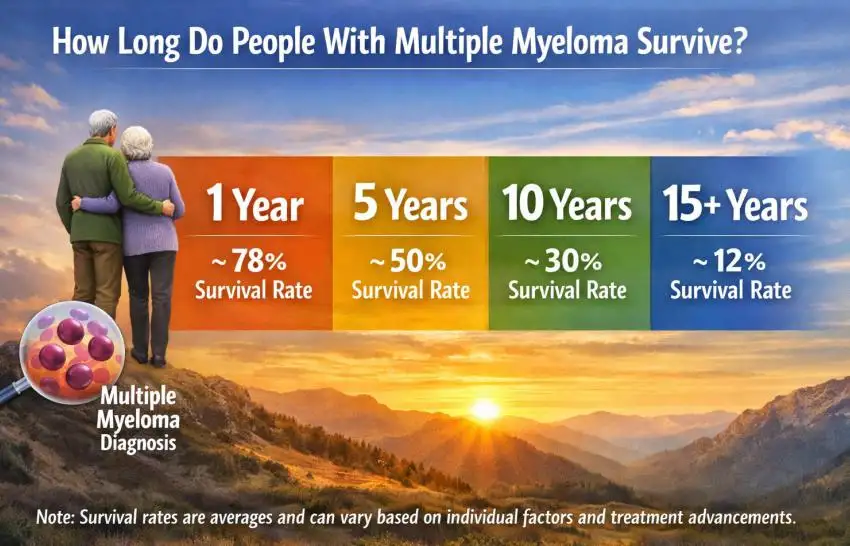
Prognosis and Survival Rates
Prognosis depends on multiple factors such as age, disease stage, genetics, and response to treatment. Advances in therapy have significantly improved survival outcomes.
| Disease Stage | Approximate 5-Year Survival Rate |
|---|---|
| Early Stage | 70–80 percent |
| Intermediate Stage | 50–65 percent |
| Advanced Stage | 30–50 percent |
Individual outcomes vary, but ongoing research continues to extend life expectancy and improve quality of life for many patients.
Latest Research and Innovations
Medical research is rapidly transforming the myeloma experience. New therapies are becoming more targeted and less toxic.
Recent innovations include:
-
CAR T-cell therapy
-
Bispecific antibodies
-
Personalized medicine approaches
-
Minimal residual disease monitoring
-
Improved imaging technologies
These breakthroughs offer renewed hope and better long-term disease management.
Coping and Support for Patients
Living with multiple myeloma affects emotional and mental health as much as physical well-being. Building a strong support system can make a meaningful difference.
Helpful coping strategies include:
-
Joining patient support groups
-
Seeking professional counseling
-
Staying informed about treatment options
-
Practicing relaxation techniques
-
Communicating openly with healthcare providers
Emotional resilience plays a vital role in shaping a positive myeloma experience.
Conclusion
The myeloma experience is a complex journey that combines medical treatment, emotional strength, and lifestyle adaptation. While the diagnosis can be overwhelming, modern medicine offers powerful tools to manage the disease effectively. With proper care, support, and informed decision-making, many patients lead fulfilling lives despite the challenges.
By understanding symptoms, treatment options, and supportive strategies, you can take control of your health journey and face the future with confidence and hope.
FAQ
1. What is the typical myeloma experience like?
The myeloma experience varies, but most patients go through diagnosis, treatment phases, remission periods, and ongoing monitoring.
2. Can multiple myeloma be cured?
Currently, multiple myeloma is not considered curable, but it is highly treatable. Many patients achieve long-term remission.
3. How long can someone live with multiple myeloma?
Life expectancy depends on disease stage and treatment response. With modern therapies, many patients live 10 years or longer.
4. Is myeloma treatment painful?
Some treatments may cause side effects, but pain management strategies and supportive care help minimize discomfort.
5. How can patients improve quality of life during treatment?
Maintaining a healthy lifestyle, staying active, managing stress, and seeking emotional support significantly improve the myeloma experience.