Basal Cell Skin Cancer Treatment: Complete Guide to Options, Prognosis, and Recovery
Basal cell carcinoma (BCC) is the most common type of skin cancer worldwide, and while it is generally slow-growing, timely and appropriate care is essential. Understanding basal cell skin cancer treatment options empowers patients to make informed decisions, reduce complications, and achieve the best possible outcomes.
In this comprehensive guide, you’ll learn about the types of basal cell carcinoma, how it develops, how it’s diagnosed, and the most effective treatment strategies available today. We’ll also explore prevention tips, prognosis, the latest research, and emotional support resources to help you or your loved ones navigate the journey with confidence.
Overview
Basal cell carcinoma originates in the basal cells of the epidermis, the skin’s outermost layer. It most often appears on sun-exposed areas such as the face, neck, ears, and hands. Although BCC rarely spreads to distant organs, untreated lesions can grow locally and damage surrounding tissue, including bone.
Modern basal cell skin cancer treatment is highly effective, especially when the condition is detected early. Treatment choice depends on tumor size, location, subtype, patient health, and cosmetic considerations.
Types of Basal Cell Carcinoma
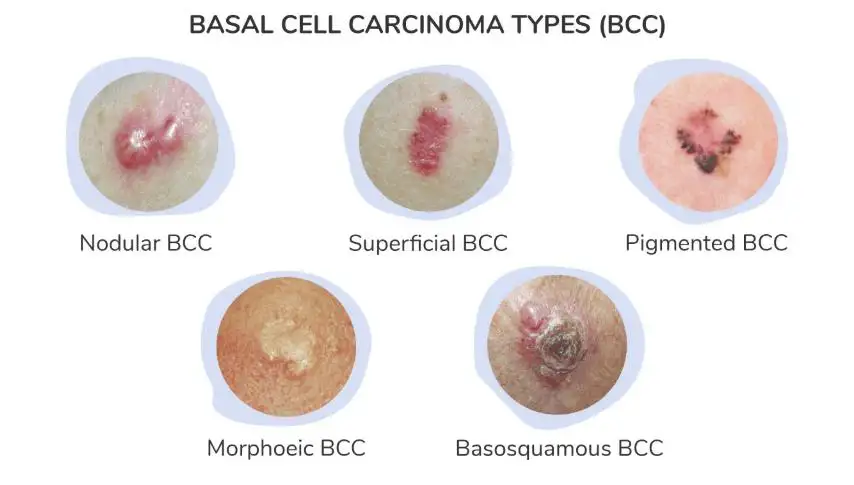
Different subtypes of BCC can influence treatment decisions and outcomes.
| Type of BCC | Characteristics | Common Locations |
|---|---|---|
| Nodular BCC | Pearly or flesh-colored bump, may bleed | Face, neck |
| Superficial BCC | Flat, scaly, reddish patch | Trunk, shoulders |
| Morpheaform (Sclerosing) BCC | Scar-like, firm lesion | Face |
| Pigmented BCC | Darkly colored, resembles melanoma | Face, torso |
Understanding the subtype helps clinicians tailor the most appropriate basal cell skin cancer treatment approach.
Causes and Risk Factors
The primary cause of basal cell carcinoma is prolonged exposure to ultraviolet (UV) radiation, either from the sun or tanning beds. UV rays damage DNA in skin cells, leading to uncontrolled cell growth.
Key risk factors include:
-
Fair skin, light eyes, or blonde/red hair
-
History of frequent sunburns
-
Long-term outdoor work or hobbies
-
Use of tanning beds
-
Older age
-
Personal or family history of skin cancer
-
Weakened immune system
Reducing UV exposure significantly lowers the risk of developing BCC.
Symptoms and Early Warning Signs
Basal cell carcinoma often develops slowly, making early signs easy to overlook. Common symptoms include:
-
A shiny, pearly bump or nodule
-
A sore that doesn’t heal or repeatedly bleeds
-
A flat, scaly patch with raised edges
-
A scar-like area without prior injury
If you notice persistent skin changes, seeking medical evaluation early can simplify basal cell skin cancer treatment and improve cosmetic results.
Diagnosis
Diagnosis usually begins with a physical skin examination by a dermatologist. If a suspicious lesion is identified, a skin biopsy is performed to confirm basal cell carcinoma and determine its subtype.
Diagnostic steps may include:
-
Visual and dermoscopic examination
-
Shave, punch, or excisional biopsy
-
Imaging studies (rare, for advanced cases)
Accurate diagnosis ensures that treatment is both effective and minimally invasive.
Treatment Options
There are several proven basal cell skin cancer treatment methods. The choice depends on tumor characteristics and patient-specific factors.
| Treatment Option | Best For | Key Benefits |
|---|---|---|
| Surgical Excision | Most BCCs | High cure rate |
| Mohs Micrographic Surgery | High-risk or facial tumors | Tissue-sparing, highest cure rate |
| Curettage and Electrodessication | Small, superficial BCC | Quick, cost-effective |
| Radiation Therapy | Non-surgical candidates | Non-invasive |
| Topical Medications (Imiquimod, 5-FU) | Superficial BCC | At-home treatment |
| Targeted Therapy (Hedgehog inhibitors) | Advanced or metastatic BCC | Option when surgery isn’t possible |
Early-stage tumors often respond well to minor procedures, while advanced cases may require systemic therapies.
Prevention and Lifestyle Recommendations
Prevention plays a crucial role in reducing recurrence and protecting overall skin health. Practical recommendations include:
-
Use broad-spectrum sunscreen (SPF 30 or higher) daily
-
Wear protective clothing, hats, and sunglasses
-
Avoid peak sun hours (10 a.m.–4 p.m.)
-
Never use tanning beds
-
Perform regular self-skin examinations
-
Schedule routine dermatology check-ups
These habits complement basal cell skin cancer treatment and lower the risk of future lesions.
Prognosis and Survival Rates
The prognosis for basal cell carcinoma is excellent. When treated early, cure rates exceed 95%, and survival rates are nearly 100%. Even in recurrent cases, modern treatment options are highly effective.
Factors affecting prognosis include:
-
Tumor size and depth
-
Location (face and ears may be higher risk)
-
Histological subtype
-
Prior recurrence
Consistent follow-up care is key to long-term success.
Latest Research and Innovations
Advances in dermatologic oncology continue to improve basal cell skin cancer treatment. Recent innovations include:
-
Improved Mohs surgical techniques for precision and cosmetic outcomes
-
New-generation Hedgehog pathway inhibitors with fewer side effects
-
Research into immunotherapy for advanced BCC
-
AI-assisted imaging for earlier and more accurate detection
These developments are expanding treatment possibilities, especially for patients with complex or recurrent disease.
Coping and Support for Patients
A cancer diagnosis, even a highly treatable one, can be emotionally challenging. Patients may experience anxiety about appearance, recurrence, or procedures.
Helpful coping strategies include:
-
Open communication with healthcare providers
-
Joining skin cancer support groups
-
Seeking counseling or mental health support if needed
-
Involving family or friends in appointments and recovery
Emotional well-being is an important part of holistic basal cell skin cancer treatment.
Conclusion
Basal cell carcinoma is a common but highly manageable form of skin cancer. With early detection and the right basal cell skin cancer treatment, most patients achieve complete recovery with minimal long-term impact. By understanding risk factors, recognizing early signs, and following prevention strategies, you can protect your skin health and maintain peace of mind.
If you suspect any unusual skin changes, don’t wait—early evaluation makes all the difference.
FAQ
1. What is the most effective basal cell skin cancer treatment?
Mohs micrographic surgery offers the highest cure rate, especially for high-risk or facial tumors, but many treatments are effective depending on the case.
2. Can basal cell carcinoma come back after treatment?
Yes, recurrence is possible, which is why regular follow-up and skin checks are important.
3. Is basal cell carcinoma life-threatening?
It is rarely life-threatening, especially when treated early, but untreated cases can cause significant local damage.
4. How long does recovery take after treatment?
Recovery time varies by treatment type, ranging from a few days for minor procedures to several weeks for surgery.
5. Can lifestyle changes really help prevent BCC?
Absolutely. Sun protection and regular skin exams significantly reduce the risk of developing or recurring basal cell carcinoma.