Bone Cancer in the Hip: Symptoms, Causes, Diagnosis, and Treatment Guide

Bone cancer in the hip is a rare but serious condition that can significantly affect mobility, comfort, and overall quality of life. Because the hip plays a vital role in movement and weight-bearing, tumors in this area often cause symptoms that interfere with daily activities. Understanding the early signs and available treatment options can help patients seek timely medical care and improve outcomes.
If you or someone you care about is experiencing persistent hip pain or unexplained discomfort, learning about bone cancer in the hip can provide clarity and reassurance. This guide explains the condition in a clear and practical way, helping you recognize symptoms, understand risk factors, and explore modern treatment approaches with confidence.
Overview
Bone cancer in the hip refers to malignant tumors that develop in the bones forming the hip joint, including the pelvis, proximal femur (upper thigh bone), or surrounding bone structures. Bone cancer may originate in the bone itself (primary bone cancer) or spread from other parts of the body (secondary or metastatic bone cancer).
Although primary bone cancers are relatively uncommon, the hip is a location where both primary and metastatic tumors may occur. Because hip pain is commonly associated with arthritis or muscle strain, diagnosis may sometimes be delayed, making awareness especially important.
Types
Several types of bone cancer can affect the hip region. Each type differs in growth rate, age group affected, and treatment approach.
| Type of Bone Cancer | Description | Common Age Group |
|---|---|---|
| Osteosarcoma | A cancer that forms in bone-producing cells, often affecting long bones near joints | Teenagers and young adults |
| Chondrosarcoma | Develops in cartilage cells and commonly affects the pelvis and hip area | Adults over 40 |
| Ewing Sarcoma | A rare and aggressive tumor affecting bone or soft tissue | Children and young adults |
| Metastatic Bone Cancer | Cancer spread from organs such as breast, prostate, or lung | Older adults |
Causes and Risk Factors
The exact cause of bone cancer in the hip is not always known. However, several factors may increase the risk of developing the disease.
Genetic mutations play a role in many cases, either inherited or acquired during a person’s lifetime. Previous radiation therapy, especially at high doses, may also increase the likelihood of bone cancer later in life. Certain inherited conditions such as Li-Fraumeni syndrome or hereditary retinoblastoma are associated with higher risk.
Other possible risk factors include chronic bone conditions like Paget’s disease, rapid bone growth during adolescence, and a history of cancer that can spread to bone tissue. It is important to remember that many people with risk factors never develop bone cancer.
Symptoms and Early Warning Signs
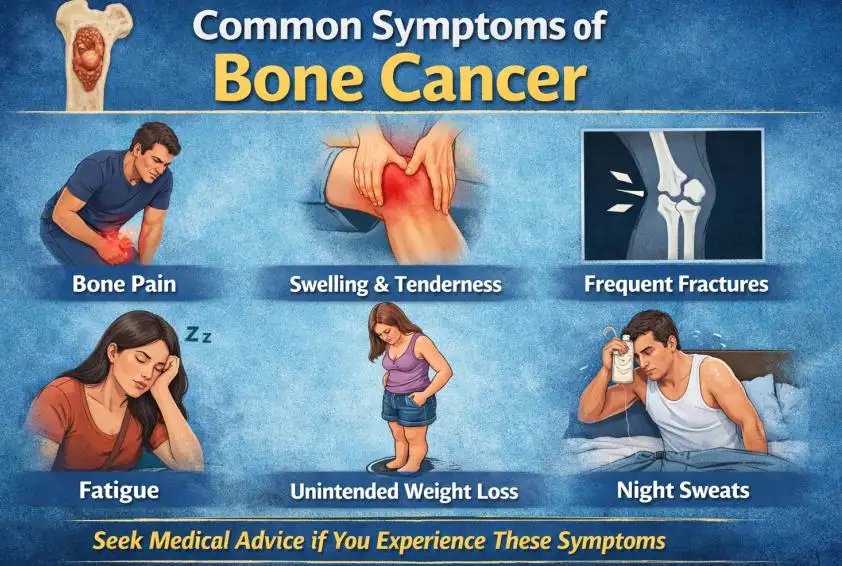
Symptoms of bone cancer in the hip may develop gradually and can resemble common orthopedic problems. Persistent or worsening symptoms should always be evaluated by a healthcare professional.
Common symptoms include:
| Symptom | Description |
|---|---|
| Persistent hip pain | Often worse at night or during activity |
| Swelling or tenderness | May appear around the hip or upper thigh |
| Limited mobility | Difficulty walking or moving the leg |
| Weakening of bone | Increased risk of fractures |
| Unexplained weight loss | May occur in advanced stages |
| Fatigue | General feeling of low energy |
Early detection is important because treatment outcomes are generally better when the cancer is diagnosed before it spreads.
Diagnosis
Diagnosing bone cancer in the hip involves several steps designed to confirm the presence of a tumor and determine its type and stage. Doctors typically begin with a physical examination and medical history review.
Imaging tests such as X-rays, MRI scans, CT scans, and bone scans help visualize abnormalities in the bone. A biopsy, where a small tissue sample is removed and examined under a microscope, is necessary to confirm the diagnosis. Blood tests may also be used to assess overall health and support treatment planning.
Treatment Options
Treatment for bone cancer in the hip depends on the cancer type, stage, location, and the patient’s overall health. A multidisciplinary medical team usually develops a personalized treatment plan.
Common treatment approaches include:
| Treatment | Purpose |
|---|---|
| Surgery | Removal of the tumor while preserving limb function when possible |
| Chemotherapy | Destroys cancer cells or shrinks tumors before surgery |
| Radiation therapy | Targets cancer cells when surgery is not possible or as additional therapy |
| Targeted therapy | Focuses on specific cancer cell characteristics |
| Rehabilitation | Restores mobility and strength after treatment |
Advances in surgical techniques now allow many patients to avoid amputation through limb-sparing procedures.
Prevention and Lifestyle Recommendations
Because the exact cause of bone cancer in the hip is often unknown, complete prevention is not always possible. However, maintaining overall bone health and general wellness may help reduce risks and support recovery.
Healthy lifestyle recommendations include maintaining a balanced diet rich in calcium and vitamin D, engaging in regular physical activity, avoiding tobacco use, and attending routine medical checkups. Individuals with a history of cancer should report new or persistent bone pain promptly.
Prognosis and Survival Rates
The prognosis for bone cancer in the hip varies widely depending on the cancer type, stage at diagnosis, and response to treatment. Early-stage cancers that have not spread tend to have better outcomes compared to advanced-stage disease.
Survival rates have improved significantly over the past decades due to earlier detection and advances in treatment. Many patients are able to return to active lifestyles following successful therapy and rehabilitation, especially when treatment begins early.
Latest Research and Innovations
Recent research has focused on improving survival rates while preserving mobility and quality of life. Innovations include precision medicine approaches that tailor treatments based on genetic characteristics of tumors, improved imaging technologies for earlier detection, and advanced prosthetic implants that enhance post-surgical mobility.
Immunotherapy is also being studied as a promising option for certain types of bone cancer, aiming to help the body’s immune system recognize and destroy cancer cells more effectively.
Coping and Support for Patients
A diagnosis of bone cancer in the hip can be emotionally and physically challenging. Patients often benefit from a strong support system that includes healthcare professionals, family members, and support groups.
Physical therapy plays an important role in recovery, helping patients regain strength and independence. Emotional counseling and patient communities can also provide encouragement and practical coping strategies throughout treatment and recovery.
Conclusion
Bone cancer in the hip is a complex condition, but advances in medical science continue to improve diagnosis, treatment, and long-term outcomes. Recognizing early symptoms, seeking timely medical evaluation, and understanding available treatment options can make a meaningful difference in recovery and quality of life.
By staying informed and proactive, patients and families can face this diagnosis with greater confidence and hope, supported by modern therapies and comprehensive care.
FAQ
1. What are the first signs of bone cancer in the hip?
Persistent hip pain that worsens over time, especially at night or during activity, is often one of the earliest signs.
2. Is hip pain always a sign of bone cancer?
No. Most hip pain is caused by arthritis, injury, or muscle strain. However, persistent or unexplained pain should be evaluated by a doctor.
3. Can bone cancer in the hip be cured?
Some cases can be successfully treated, especially when diagnosed early. Treatment outcomes depend on cancer type and stage.
4. How is bone cancer in the hip treated?
Treatment usually involves surgery, chemotherapy, radiation therapy, or a combination of these approaches.
5. Can patients walk normally after treatment?
Many patients regain mobility through rehabilitation and modern surgical techniques, although recovery time varies between individuals.