Giant Cell Tumor of Bone: Symptoms, Causes, Treatment, and Prognosis Explained

Giant cell tumor of bone is a rare but locally aggressive tumor that primarily affects young adults. Although it is generally classified as benign, this condition can behave unpredictably, sometimes spreading to other parts of the body such as the lungs. Understanding its nature is crucial for early detection and effective management.
If you or someone close to you has recently been diagnosed with giant cell tumor of bone, it is natural to have concerns and questions. This comprehensive guide will walk you through everything you need to know, from causes and symptoms to treatment options, prognosis, and the latest medical advancements, so you can make informed decisions about your health.
Overview of Giant Cell Tumor of Bone
Giant cell tumor of bone (GCTB) is a primary bone tumor characterized by the presence of multinucleated giant cells that resemble osteoclasts. It most commonly occurs in the epiphysis (end portion) of long bones, especially around the knee joint.
Although considered benign, giant cell tumor of bone can be locally aggressive and may recur after treatment. In rare cases, it can metastasize, most commonly to the lungs.
Key Facts at a Glance
| Feature | Description |
|---|---|
| Nature | Generally benign but locally aggressive |
| Common Age Group | 20–40 years |
| Most Affected Bones | Distal femur, proximal tibia, distal radius |
| Recurrence Rate | 10–35% depending on treatment |
| Metastasis Risk | Rare (1–5%), usually to lungs |
Types of Giant Cell Tumor of Bone
Giant cell tumor of bone can be categorized based on its biological behavior and imaging features.
1. Conventional Giant Cell Tumor
This is the most common type. It typically appears as a lytic (bone-destroying) lesion at the end of long bones.
2. Malignant Giant Cell Tumor
This rare form either presents as a primary malignancy or develops secondary to radiation therapy or recurrent disease.
3. Recurrent Giant Cell Tumor
Occurs after initial surgical treatment, often within the first few years.
Understanding the type of giant cell tumor of bone helps guide treatment decisions and long-term monitoring.
Causes and Risk Factors
The exact cause of giant cell tumor of bone remains unclear. However, recent research has identified specific genetic mutations that play a role in tumor development.
Potential Causes
-
Mutations in the H3F3A gene
-
Abnormal proliferation of stromal cells
-
Dysregulation of osteoclast activity
Risk Factors
| Risk Factor | Explanation |
|---|---|
| Age | Most common between 20–40 years |
| Gender | Slightly more common in females |
| Previous Radiation | Increased risk of malignant transformation |
| Genetic Mutations | Associated with tumor formation |
Unlike many other bone tumors, giant cell tumor of bone is not strongly linked to lifestyle or environmental exposures.
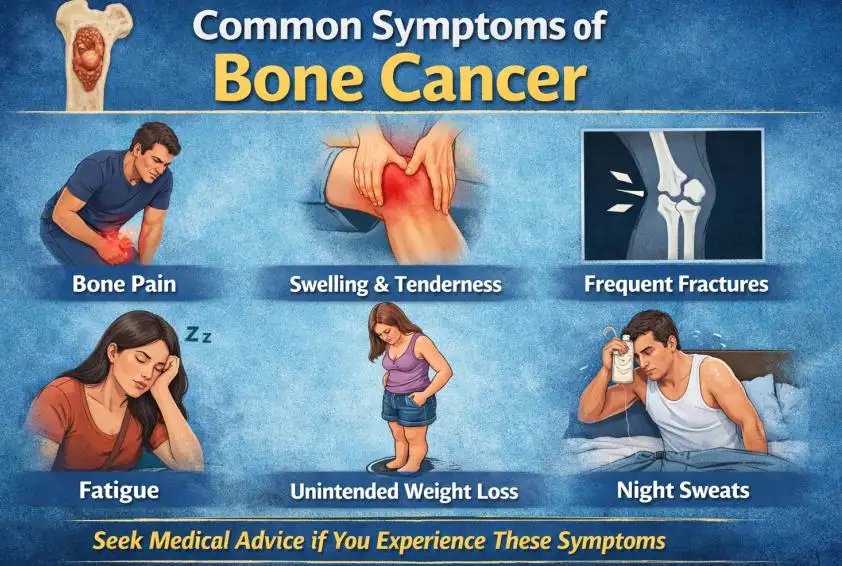
Symptoms and Early Warning Signs
Symptoms of giant cell tumor of bone often develop gradually and may initially be mistaken for joint-related conditions.
Common Symptoms
-
Persistent bone pain near a joint
-
Swelling or visible lump
-
Limited range of motion
-
Weakness in the affected limb
-
Pathological fractures (bone breaks due to weakened structure)
If you experience persistent pain around the knee or wrist that does not improve with rest, it is important to consult a healthcare provider for evaluation.
Diagnosis of Giant Cell Tumor of Bone
Accurate diagnosis is essential to differentiate giant cell tumor of bone from other bone lesions.
Diagnostic Methods
-
Physical examination
-
Imaging studies
-
X-ray (shows lytic, expansile lesion)
-
MRI (assesses soft tissue involvement)
-
CT scan (evaluates cortical destruction)
-
-
Biopsy (confirms histological features)
A biopsy remains the gold standard for confirming giant cell tumor of bone, as imaging findings alone are not definitive.
Treatment Options for Giant Cell Tumor of Bone
Treatment depends on tumor size, location, and whether it has recurred or spread.
1. Surgical Treatment
Surgery is the primary treatment approach.
| Procedure | Purpose |
|---|---|
| Curettage | Scraping out tumor tissue |
| Bone Grafting | Filling the cavity with bone material |
| En Bloc Resection | Removing tumor in one piece |
| Joint Reconstruction | For extensive damage |
Extended curettage with adjuvant therapies (e.g., bone cement or chemical agents) reduces recurrence risk.
2. Medical Therapy
In cases where surgery is difficult or the tumor is inoperable:
-
Denosumab (a RANKL inhibitor)
-
Bisphosphonates
Denosumab has significantly improved management of unresectable giant cell tumor of bone.
3. Radiation Therapy
Used selectively, particularly when surgery is not feasible. However, it carries a small risk of malignant transformation.
Prevention and Lifestyle Recommendations
There is currently no known way to prevent giant cell tumor of bone, as it is not strongly linked to lifestyle factors.
However, you can reduce complications by:
-
Seeking early evaluation for persistent bone pain
-
Following post-surgical rehabilitation plans
-
Maintaining bone health through adequate calcium and vitamin D intake
-
Avoiding unnecessary radiation exposure
Regular follow-up appointments are critical to detect recurrence early.
Prognosis and Survival Rates
The prognosis for giant cell tumor of bone is generally favorable, especially with appropriate surgical treatment.
Prognostic Overview
| Factor | Outcome |
|---|---|
| Overall Survival | Very high (benign nature) |
| Local Recurrence | 10–35% |
| Lung Metastasis | Rare, often treatable |
| Malignant Transformation | Uncommon |
Even when metastasis occurs, it often progresses slowly and may still be managed successfully.
Latest Research and Innovations
Recent advances in molecular biology have transformed the understanding of giant cell tumor of bone.
Key Innovations
-
Identification of H3F3A mutation as a diagnostic marker
-
Targeted therapy with denosumab
-
Improved surgical techniques with adjuvant therapies
-
Ongoing clinical trials exploring combination therapies
Researchers continue to investigate personalized treatment strategies to minimize recurrence while preserving joint function.
Coping and Support for Patients
Receiving a diagnosis of giant cell tumor of bone can be emotionally overwhelming. You may worry about recurrence, mobility limitations, or long-term health.
Here are some helpful strategies:
-
Join patient support groups
-
Work with a physical therapist for rehabilitation
-
Maintain open communication with your medical team
-
Seek counseling if anxiety or depression develops
A multidisciplinary approach, including orthopedic surgeons, oncologists, radiologists, and rehabilitation specialists, ensures comprehensive care.
Conclusion
Giant cell tumor of bone is a rare but treatable condition that primarily affects young adults. While typically benign, it requires careful diagnosis, proper surgical management, and long-term follow-up due to the risk of recurrence.
By understanding the symptoms, causes, and available treatment options, you empower yourself to take an active role in your care. If you experience persistent bone pain or swelling near a joint, early medical evaluation can make a significant difference in outcomes.
With ongoing research and advances in targeted therapies, the future outlook for patients with giant cell tumor of bone continues to improve.
Frequently Asked Questions (FAQ)
1. Is giant cell tumor of bone cancer?
Most cases are benign, but the tumor can be locally aggressive. Rarely, it may metastasize or become malignant.
2. Can giant cell tumor of bone spread?
Yes, in rare cases it can spread to the lungs, but this occurs in a small percentage of patients.
3. What is the recurrence rate?
Recurrence rates range from 10% to 35%, depending on the type of surgery and tumor characteristics.
4. Is surgery always required?
Surgery is the primary treatment, but medications like denosumab may be used when surgery is not possible.
5. Can giant cell tumor of bone be prevented?
Currently, there is no known method of prevention, as the exact cause is not fully understood. Early detection remains the best strategy.