What Happens If You Get Bone Cancer? Symptoms, Treatment, and Survival Explained

What happens if get bone cancer? This is a question many people ask after experiencing persistent bone pain or receiving unexpected medical news. Bone cancer is a rare but serious condition that begins in the cells of the bone and can affect people of all ages, though it is more common in children and young adults. Understanding what happens when you get bone cancer can help reduce fear and empower you to take timely action.
If you or someone close to you is facing a possible diagnosis, it is important to know that early detection and advances in treatment have significantly improved outcomes. In this article, we will explore what happens if you get bone cancer, including its types, causes, symptoms, diagnosis, treatment options, and survival rates.
Overview of Bone Cancer
Bone cancer occurs when abnormal cells grow uncontrollably in bone tissue. It can be classified into two main categories:
-
Primary bone cancer – Cancer that starts in the bone itself
-
Secondary (metastatic) bone cancer – Cancer that spreads to the bone from another part of the body, such as the breast, lung, or prostate
Primary bone cancer is rare compared to metastatic bone cancer. When asking what happens if get bone cancer, the answer depends on whether it is primary or secondary, the stage at diagnosis, and the patient’s overall health.
Bone cancer can affect any bone, but it most commonly develops in the long bones of the arms and legs.
Types of Bone Cancer
There are several types of primary bone cancer. The most common include:
| Type of Bone Cancer | Common Age Group | Most Affected Area |
|---|---|---|
| Osteosarcoma | Children, teens, young adults | Long bones (arms, legs) |
| Ewing sarcoma | Children, adolescents | Pelvis, legs |
| Chondrosarcoma | Adults over 40 | Pelvis, shoulder, hip |
| Chordoma | Adults | Spine, base of skull |
Each type behaves differently. For example, osteosarcoma tends to grow quickly, while chondrosarcoma may grow more slowly. Knowing the specific type helps determine what happens if you get bone cancer and which treatment approach is most effective.
Causes and Risk Factors
The exact cause of bone cancer is not always known. However, several risk factors may increase the likelihood of developing it.
Common risk factors include:
-
Genetic conditions such as Li-Fraumeni syndrome
-
Previous radiation therapy
-
Paget’s disease of bone
-
Family history of certain cancers
-
Rapid bone growth during adolescence (for osteosarcoma)
While having these risk factors does not guarantee that you will get bone cancer, they may increase your vulnerability. In many cases, bone cancer develops without a clear cause.
Symptoms and Early Warning Signs
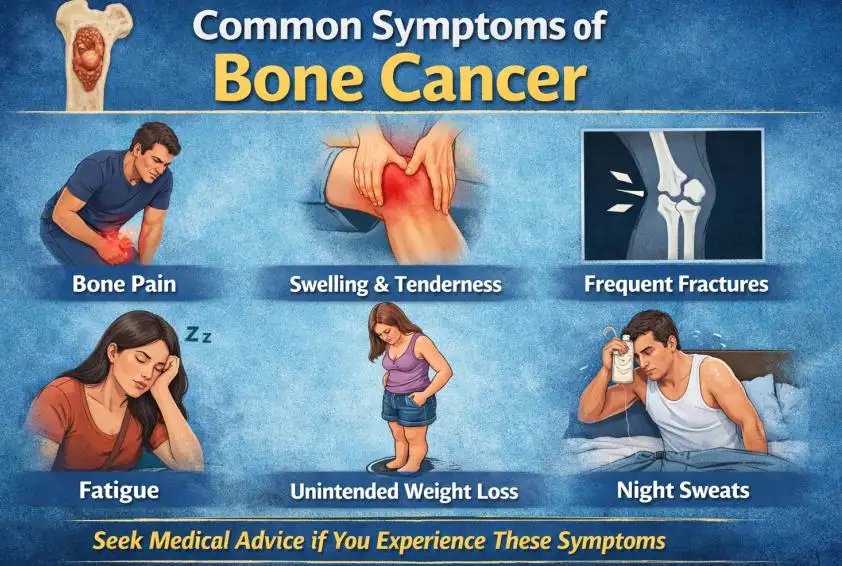
Understanding the early symptoms is crucial when considering what happens if get bone cancer. Early detection often leads to better outcomes.
Common symptoms include:
-
Persistent bone pain (especially at night)
-
Swelling or tenderness near the affected area
-
Unexplained fractures
-
Fatigue
-
Weight loss
-
Limited movement in nearby joints
Bone pain is usually the first symptom. At first, it may come and go, but over time it becomes constant and more intense. If you experience ongoing bone pain without injury, it is important to seek medical evaluation.
Diagnosis
If bone cancer is suspected, doctors use several tests to confirm the diagnosis.
Common diagnostic procedures include:
-
X-rays
-
MRI scans
-
CT scans
-
Bone scans
-
Biopsy (removal of a tissue sample)
A biopsy is the only definitive way to diagnose bone cancer. Imaging tests help determine the tumor’s size, location, and whether it has spread.
Staging is also crucial. Cancer stages range from localized (confined to the bone) to advanced (spread to other parts of the body). The stage greatly influences what happens if you get bone cancer and your treatment plan.
Treatment Options
Treatment depends on the type, stage, and overall health of the patient. In many cases, a combination of therapies is used.
| Treatment Option | Purpose | When Used |
|---|---|---|
| Surgery | Remove the tumor | Most primary bone cancers |
| Chemotherapy | Kill cancer cells | Before or after surgery |
| Radiation therapy | Destroy cancer cells | When surgery is not possible |
| Targeted therapy | Attack specific cancer cells | Certain tumor types |
Surgery is often the main treatment. In the past, amputation was common, but today limb-sparing surgery is frequently possible.
Chemotherapy is particularly effective for osteosarcoma and Ewing sarcoma. Radiation therapy may be used if the tumor cannot be completely removed surgically.
Prevention and Lifestyle Recommendations
There is no guaranteed way to prevent bone cancer, especially when genetic factors are involved. However, maintaining overall health can support early detection and recovery.
Lifestyle recommendations include:
-
Regular medical check-ups
-
Prompt evaluation of persistent bone pain
-
Avoiding unnecessary radiation exposure
-
Maintaining a balanced diet rich in calcium and vitamin D
-
Staying physically active
If you have a family history of cancer or genetic risk factors, genetic counseling may be beneficial.
Prognosis and Survival Rates
When people ask what happens if get bone cancer, they often want to know about survival rates. Prognosis depends on several factors, including:
-
Type of bone cancer
-
Stage at diagnosis
-
Tumor size and location
-
Response to treatment
-
Patient’s age and overall health
Here is a general overview of five-year survival rates for localized primary bone cancer:
| Type | Approximate 5-Year Survival Rate (Localized) |
|---|---|
| Osteosarcoma | 60–80% |
| Ewing sarcoma | 70–80% |
| Chondrosarcoma | 80–90% |
If the cancer has spread (metastasized), survival rates decrease. However, advances in treatment continue to improve outcomes each year.
Latest Research and Innovations
Medical research is continuously improving bone cancer treatment. Recent innovations include:
-
Immunotherapy to boost the body’s immune response
-
Precision medicine based on genetic profiling
-
Advanced limb-sparing surgical techniques
-
Improved chemotherapy combinations
-
Clinical trials for targeted therapies
Researchers are also exploring new biomarkers for earlier diagnosis. These advancements are changing what happens if you get bone cancer, offering more hope and personalized treatment options.
Coping and Support for Patients
A bone cancer diagnosis can be emotionally overwhelming. Beyond physical treatment, psychological and social support are essential.
Support options include:
-
Oncology counseling
-
Support groups
-
Physical rehabilitation
-
Pain management programs
-
Family and caregiver education
You are not alone. Many cancer centers provide comprehensive care that includes emotional and mental health services.
Building a strong support network can significantly improve quality of life during treatment and recovery.
Conclusion
So, what happens if get bone cancer? The answer depends on the type, stage, and how early it is detected. While bone cancer is serious, many cases are treatable—especially when diagnosed early. Modern medical advancements have significantly improved survival rates and quality of life.
If you notice persistent bone pain or unusual symptoms, do not ignore them. Early medical evaluation can make a life-changing difference. Knowledge, awareness, and timely treatment are your strongest tools in facing bone cancer.
FAQ
1. Is bone cancer always fatal?
No. Many people with localized bone cancer respond well to treatment and achieve long-term survival, especially with early diagnosis.
2. What is the first sign of bone cancer?
Persistent bone pain, particularly worsening at night or without injury, is often the first symptom.
3. Can bone cancer be cured?
Yes, especially if detected early and treated aggressively. Surgery combined with chemotherapy often leads to positive outcomes.
4. How rare is bone cancer?
Primary bone cancer is rare, accounting for less than 1% of all cancers.
5. Does bone cancer spread quickly?
Some types, such as osteosarcoma and Ewing sarcoma, can grow and spread rapidly, which is why early detection is crucial.