Can Stage 4B Lung Cancer Go Into Remission? Symptoms, Treatment, and Survival Insights
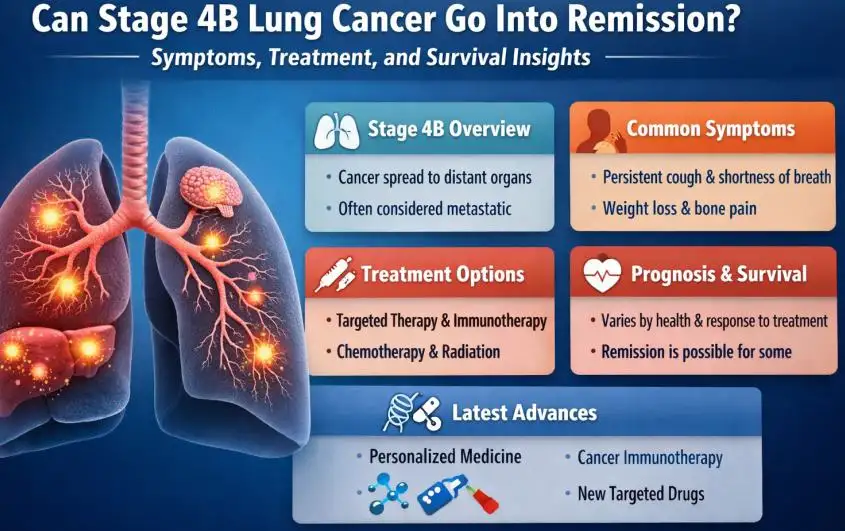
Many patients and families facing advanced lung cancer ask the same critical question: can stage 4b lung cancer go into remission? Stage 4B represents the most advanced stage of lung cancer, where the disease has spread to distant organs. While this stage is considered difficult to cure, advances in medical treatments have created new possibilities for disease control and, in some cases, remission.
Understanding the nature of stage 4B lung cancer, its symptoms, treatment strategies, and prognosis can help patients make informed decisions and maintain hope. This article explores whether remission is possible, the available treatment options, and the latest research developments that are improving outcomes for many individuals.
Overview
Stage 4B lung cancer is the most advanced form of lung cancer. At this stage, cancer has spread beyond the lungs to distant organs such as the liver, brain, bones, or adrenal glands.
Doctors generally consider stage 4B lung cancer metastatic, meaning the cancer cells travel through the bloodstream or lymphatic system to other parts of the body. Because of this widespread involvement, treatment focuses on controlling disease progression, relieving symptoms, and extending survival.
Although a complete cure is rare, remission is sometimes possible, especially with modern targeted therapies and immunotherapy. Some patients experience long-term disease control where tumors shrink or remain stable for extended periods.
Types
Lung cancer is mainly divided into two major categories, and both can progress to stage 4B.
| Type of Lung Cancer | Description | Frequency |
|---|---|---|
| Non-Small Cell Lung Cancer (NSCLC) | The most common form, including adenocarcinoma, squamous cell carcinoma, and large cell carcinoma | About 85% |
| Small Cell Lung Cancer (SCLC) | A fast-growing cancer that spreads quickly | About 15% |
Among these, advanced NSCLC is more likely to benefit from modern targeted therapies that may lead to remission or prolonged disease control.
Causes and Risk Factors
Several factors can increase the likelihood of developing lung cancer and its progression to advanced stages.
| Risk Factor | Explanation |
|---|---|
| Smoking | The leading cause of lung cancer worldwide |
| Secondhand smoke | Exposure to smoke from others increases risk |
| Environmental pollutants | Air pollution and toxic chemicals |
| Radon exposure | Naturally occurring radioactive gas in homes |
| Genetic mutations | Certain gene changes can trigger cancer development |
| Family history | Having close relatives with lung cancer |
Not everyone with these risk factors develops lung cancer, but reducing exposure can significantly lower risk.
Symptoms and Early Warning Signs
Symptoms of stage 4B lung cancer vary depending on where the cancer has spread.
Common symptoms include:
-
Persistent cough
-
Chest pain
-
Shortness of breath
-
Unexplained weight loss
-
Fatigue
-
Coughing up blood
-
Bone pain if cancer spreads to bones
-
Headaches or neurological symptoms if it spreads to the brain
Sometimes early-stage lung cancer shows few symptoms, which is why many cases are diagnosed at advanced stages.
Diagnosis
Doctors use several tests to confirm lung cancer and determine whether it has reached stage 4B.
| Diagnostic Test | Purpose |
|---|---|
| CT Scan | Detects tumors and metastasis |
| PET Scan | Identifies cancer activity throughout the body |
| Biopsy | Confirms cancer cells in tissue samples |
| MRI | Often used to check for brain metastases |
| Molecular Testing | Identifies gene mutations for targeted therapy |
Accurate staging is essential for choosing the most effective treatment plan.
Treatment Options
Treatment for stage 4B lung cancer focuses on controlling the disease, reducing symptoms, and improving quality of life.
| Treatment | Purpose |
|---|---|
| Chemotherapy | Kills rapidly dividing cancer cells |
| Immunotherapy | Helps the immune system fight cancer |
| Targeted Therapy | Attacks specific genetic mutations in tumors |
| Radiation Therapy | Shrinks tumors and relieves symptoms |
| Surgery | Rarely used but possible in selected cases |
In some patients, targeted therapy or immunotherapy can significantly shrink tumors, leading to partial or even complete remission.
Prevention and Lifestyle Recommendations
Although not all lung cancers can be prevented, certain lifestyle choices reduce risk and support treatment.
Key recommendations include:
-
Avoid smoking and quit if currently smoking
-
Limit exposure to secondhand smoke
-
Test homes for radon gas
-
Maintain a healthy diet rich in fruits and vegetables
-
Exercise regularly
-
Follow recommended cancer screenings if high risk
These steps can improve overall lung health and support treatment outcomes.
Prognosis and Survival Rates
Survival for stage 4B lung cancer varies depending on several factors, including tumor type, genetic mutations, overall health, and treatment response.
| Factor | Impact on Prognosis |
|---|---|
| Genetic mutations | Targeted therapies may improve outcomes |
| Early treatment response | Better survival prospects |
| Overall health | Stronger immune system supports treatment |
| Access to advanced therapies | Improves survival chances |
The five-year survival rate for metastatic lung cancer is relatively low, but some patients live much longer with modern treatments. In rare cases, long-term remission can occur.
Latest Research and Innovations
Recent advances in lung cancer treatment are transforming patient outcomes.
Promising developments include:
-
Next-generation targeted therapies
-
Personalized medicine based on genetic testing
-
Combination immunotherapy treatments
-
Cancer vaccines
-
Artificial intelligence-assisted diagnosis
-
New drugs targeting specific tumor pathways
Clinical trials are continuously exploring new strategies that may increase remission rates for advanced lung cancer.
Coping and Support for Patients
A stage 4B lung cancer diagnosis can be emotionally overwhelming. Support systems play a crucial role in coping with the disease.
Helpful support options include:
-
Oncology counseling
-
Cancer support groups
-
Psychological therapy
-
Palliative care teams
-
Family and community support
Maintaining emotional well-being is an important part of cancer care and can improve overall quality of life.
Conclusion
So, can stage 4b lung cancer go into remission? While a complete cure remains rare, remission is possible in some cases, particularly with modern targeted therapies and immunotherapy. Advances in cancer research continue to improve treatment effectiveness, giving many patients longer survival and better quality of life.
Early diagnosis, personalized treatment strategies, and strong support systems can make a meaningful difference for people living with advanced lung cancer. Ongoing research offers hope that remission and long-term disease control will become increasingly achievable in the future.
FAQ
1. Can stage 4B lung cancer be cured?
In most cases, stage 4B lung cancer is not considered curable. However, treatments may control the disease for long periods and sometimes lead to remission.
2. How long can someone live with stage 4B lung cancer?
Survival varies widely. Some patients live months, while others live several years depending on treatment response and overall health.
3. What treatments give the best chance of remission?
Targeted therapy and immunotherapy have shown the most promising results, particularly for patients with specific genetic mutations.
4. Is remission the same as cure?
No. Remission means cancer signs are reduced or disappear, but it may return later. A cure means the cancer will never return.
5. Can lifestyle changes help during treatment?
Yes. Healthy eating, regular activity, quitting smoking, and emotional support can help patients tolerate treatments better and improve overall well-being.