Photodynamic Therapy for Lung Cancer: Benefits, Procedure, Risks, and Survival Outlook
Lung cancer remains one of the leading causes of cancer-related deaths worldwide. As medical science advances, less invasive and more targeted treatments are becoming increasingly available. One such innovative approach is photodynamic therapy for lung cancer, a treatment that uses light-sensitive drugs and laser technology to destroy cancer cells with precision.
If you or a loved one is exploring treatment options, understanding how photodynamic therapy for lung cancer works can help you make informed decisions. This article provides a comprehensive overview, including benefits, procedure details, eligibility, survival rates, and the latest research developments.
Overview of Photodynamic Therapy for Lung Cancer
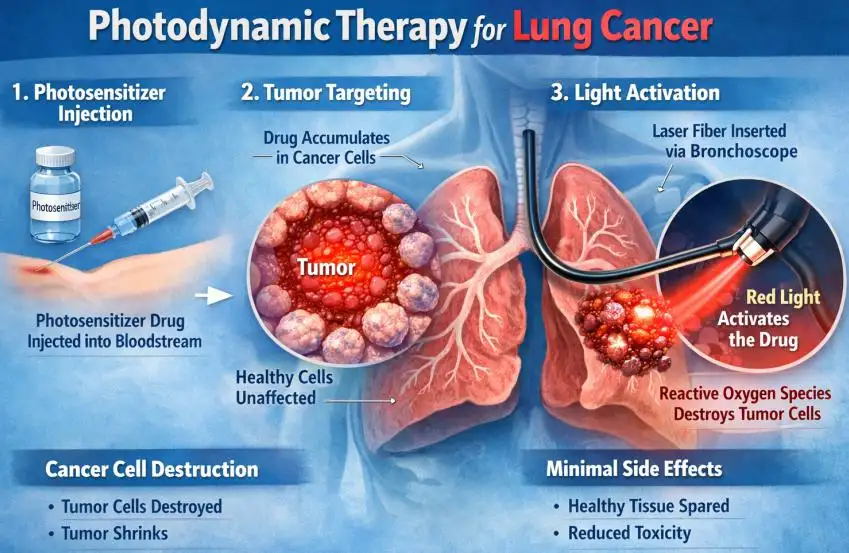
Photodynamic therapy (PDT) is a minimally invasive cancer treatment that combines a photosensitizing drug with a specific wavelength of light to kill cancer cells. The process involves three essential components:
-
A light-sensitive medication (photosensitizer)
-
A specific type of light (usually laser)
-
Oxygen within the cells
Once activated by light, the drug produces a form of oxygen that destroys nearby cancer cells while sparing most healthy tissue. Photodynamic therapy for lung cancer is most commonly used in early-stage non-small cell lung cancer (NSCLC) and for relieving airway obstruction in advanced cases.
Key Features of Photodynamic Therapy
| Feature | Description |
|---|---|
| Invasiveness | Minimally invasive |
| Hospital Stay | Often outpatient or short stay |
| Target Area | Superficial or airway tumors |
| Repeatable | Yes, can be repeated if necessary |
| Recovery Time | Generally shorter than surgery |
Types of Lung Cancer Treated with PDT
Photodynamic therapy for lung cancer is not suitable for all types. It is most effective in:
1. Early-Stage Non-Small Cell Lung Cancer (NSCLC)
Particularly when tumors are located in the central airways and are small in size.
2. Recurrent Lung Cancer
Used when cancer returns in previously treated airway areas.
3. Palliative Treatment in Advanced Lung Cancer
Helps relieve symptoms such as airway blockage, breathing difficulty, or persistent coughing.
It is less commonly used for small cell lung cancer (SCLC) due to its aggressive and rapidly spreading nature.
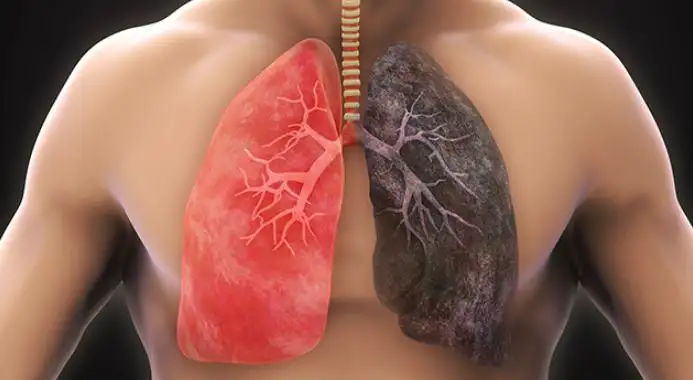
Causes and Risk Factors of Lung Cancer
Understanding the causes of lung cancer helps clarify why treatments like photodynamic therapy for lung cancer are essential.
Major Risk Factors
| Risk Factor | Impact |
|---|---|
| Smoking | Primary cause of lung cancer |
| Secondhand smoke | Increases risk significantly |
| Radon exposure | Leading environmental cause |
| Occupational hazards | Asbestos, arsenic, diesel exhaust |
| Air pollution | Contributes to long-term risk |
| Genetic predisposition | Family history increases risk |
If you have one or more of these risk factors, early screening becomes even more critical.
Symptoms and Early Warning Signs
Lung cancer symptoms often appear in later stages, making early detection challenging. However, watch for:
-
Persistent cough
-
Coughing up blood
-
Shortness of breath
-
Chest pain
-
Unexplained weight loss
-
Fatigue
-
Recurrent respiratory infections
Early-stage patients eligible for photodynamic therapy for lung cancer may have minimal symptoms, which is why screening plays a vital role.
Diagnosis
Accurate diagnosis determines whether you are a candidate for photodynamic therapy.
Common Diagnostic Tests
-
Chest X-ray
-
CT scan
-
PET scan
-
Bronchoscopy
-
Biopsy
Bronchoscopy is particularly important because PDT is often delivered through a bronchoscope directly into the airway tumor.
Doctors also assess:
-
Tumor size
-
Tumor location
-
Cancer stage
-
Overall health condition
Treatment Options
Photodynamic therapy for lung cancer is one of several available treatments. Your doctor may recommend it alone or in combination with other therapies.
How the Procedure Works
-
The photosensitizing drug is injected into your bloodstream.
-
The drug accumulates in cancer cells over 24–72 hours.
-
A laser is delivered through a bronchoscope to activate the drug.
-
Cancer cells are destroyed.
-
Dead tissue is removed in a follow-up bronchoscopy.
Comparison with Other Treatments
| Treatment | Invasiveness | Suitable Stage | Recovery |
|---|---|---|---|
| Surgery | Highly invasive | Early-stage | Longer |
| Chemotherapy | Systemic | Various stages | Moderate |
| Radiation therapy | Localized | Various stages | Moderate |
| Photodynamic therapy | Minimally invasive | Early/palliative | Shorter |
Prevention and Lifestyle Recommendations
While treatment is critical, prevention remains the best strategy.
Practical Steps to Reduce Risk
-
Quit smoking immediately
-
Avoid secondhand smoke
-
Test your home for radon
-
Use protective equipment in hazardous workplaces
-
Maintain a healthy diet rich in antioxidants
-
Exercise regularly
-
Attend regular lung screenings if high-risk
Lifestyle improvements can also enhance recovery outcomes after photodynamic therapy for lung cancer.
Prognosis and Survival Rates
The prognosis depends largely on the stage at diagnosis.
Early-Stage Lung Cancer
Patients treated early with photodynamic therapy for lung cancer may experience high local control rates and promising survival outcomes.
Advanced-Stage Lung Cancer
In advanced cases, PDT is often used to improve quality of life rather than cure the disease.
Survival statistics vary widely depending on:
-
Cancer type
-
Stage at diagnosis
-
Overall health
-
Response to treatment
Early detection significantly improves long-term survival chances.
Latest Research and Innovations
Medical research continues to enhance the effectiveness of photodynamic therapy for lung cancer.
Emerging Developments
-
Improved photosensitizing drugs with fewer side effects
-
Targeted light delivery systems
-
Combination therapies with immunotherapy
-
Nanotechnology-based drug carriers
-
Enhanced imaging for precise tumor targeting
Researchers are also studying how PDT may stimulate immune responses, potentially helping the body fight cancer more effectively.
Coping and Support for Patients
A lung cancer diagnosis can be emotionally overwhelming. Treatment decisions may feel complex, but support is available.
Emotional and Practical Support Options
-
Oncology counseling
-
Support groups
-
Pulmonary rehabilitation
-
Nutritional counseling
-
Palliative care teams
You are not alone in this journey. Discuss concerns openly with your healthcare team to better understand whether photodynamic therapy for lung cancer aligns with your goals and medical needs.
Conclusion
Photodynamic therapy for lung cancer represents a promising, minimally invasive treatment option, particularly for early-stage or centrally located tumors. By combining targeted drug therapy with laser activation, it offers precision treatment with fewer systemic side effects compared to traditional approaches.
If you are exploring lung cancer treatment options, speak with a specialist to determine whether this therapy is suitable for your condition. Early diagnosis, informed decision-making, and comprehensive care significantly improve outcomes and quality of life.
FAQ
1. What is photodynamic therapy for lung cancer?
It is a treatment that uses a light-sensitive drug and laser light to destroy cancer cells in the lungs, particularly in early-stage or airway-located tumors.
2. Who is a good candidate for photodynamic therapy?
Patients with early-stage non-small cell lung cancer located in the central airways or those needing symptom relief from airway obstruction may be suitable candidates.
3. Is photodynamic therapy painful?
The procedure itself is typically performed under sedation or anesthesia. Some temporary side effects may include swelling, coughing, or light sensitivity.
4. What are the side effects?
Common side effects include temporary skin sensitivity to light, airway inflammation, cough, and mild discomfort.
5. Can photodynamic therapy cure lung cancer?
In selected early-stage cases, it may achieve local tumor control. However, in advanced stages, it is usually used to relieve symptoms rather than cure the disease.
6. How long is recovery?
Most patients recover relatively quickly, often within days, though follow-up bronchoscopy may be required.