Canine Vestibular Disease or Brain Tumor: Causes, Symptoms, Diagnosis, and Treatment Guide
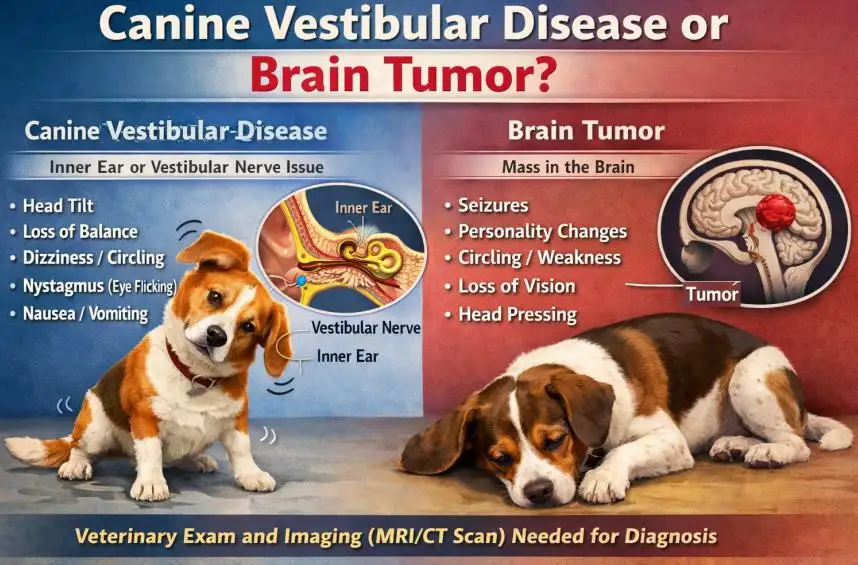
When a dog suddenly develops balance problems, head tilting, or difficulty walking, it can be frightening for any pet owner. These neurological signs often raise a critical question: is it canine vestibular disease or a brain tumor? While both conditions can appear similar at first glance, they differ greatly in cause, treatment, and long-term outlook.
Understanding the difference between canine vestibular disease or brain tumor is essential for timely diagnosis and appropriate care. This guide is designed to help dog owners recognize early warning signs, navigate diagnostic options, and make informed decisions about treatment and ongoing support, all while working closely with a veterinarian.
Overview of Canine Vestibular Disease or Brain Tumor
Canine vestibular disease affects a dog’s balance system, which controls coordination and spatial orientation. It often appears suddenly and can look dramatic, but many cases are not life-threatening. In contrast, a brain tumor is an abnormal growth of cells within the brain that may cause progressive neurological decline.
Because the symptoms can overlap, distinguishing canine vestibular disease or brain tumor requires careful evaluation. Some dogs recover quickly with minimal treatment, while others may need advanced imaging, long-term therapy, or palliative care.
Types
Understanding the types helps clarify whether a dog is more likely experiencing vestibular disease or a brain tumor.
Types of Vestibular Disease
| Type | Description |
|---|---|
| Peripheral vestibular disease | Affects the inner ear or vestibular nerve; most common form |
| Central vestibular disease | Involves the brainstem or cerebellum |
| Idiopathic vestibular disease | Cause unknown; often seen in older dogs |
Types of Brain Tumors
| Type | Characteristics |
|---|---|
| Meningioma | Usually slow-growing; more common in older dogs |
| Glioma | Often aggressive and infiltrative |
| Choroid plexus tumor | Arises from cerebrospinal fluid–producing tissue |
| Metastatic tumors | Spread from cancer elsewhere in the body |
Causes and Risk Factors
The causes of canine vestibular disease or brain tumor vary significantly.
Vestibular disease causes may include:
-
Inner ear infections
-
Trauma to the head
-
Inflammatory or infectious conditions
-
Age-related degeneration
Brain tumor risk factors include:
-
Advanced age
-
Genetic predisposition (certain breeds)
-
Previous exposure to radiation or toxins
-
History of cancer
Breed and age play a major role, with senior dogs being at higher risk for both conditions.
Symptoms and Early Warning Signs
Many pet owners first notice balance-related issues, but other neurological signs may develop.
| Symptom | Vestibular Disease | Brain Tumor |
|---|---|---|
| Head tilt | Common | Common |
| Loss of balance | Sudden onset | Gradual or progressive |
| Nystagmus (rapid eye movement) | Frequent | Possible |
| Seizures | Rare | More common |
| Behavioral changes | Uncommon | Common |
| Appetite loss | Temporary | Progressive |
Sudden onset with rapid improvement often suggests vestibular disease, while worsening symptoms over time may indicate a brain tumor.
Diagnosis
Accurate diagnosis of canine vestibular disease or brain tumor requires veterinary assessment.
Diagnostic tools may include:
-
Comprehensive neurological examination
-
Blood and urine tests to rule out metabolic causes
-
Otoscopic exam for ear infections
-
Advanced imaging such as MRI or CT scans
-
Cerebrospinal fluid analysis in select cases
Advanced imaging is often the key step in differentiating vestibular disease from a brain tumor.
Treatment Options
Treatment depends on the underlying diagnosis and severity.
Vestibular disease treatment may include:
-
Anti-nausea and anti-dizziness medications
-
Antibiotics if infection is present
-
Supportive care such as IV fluids and assisted feeding
Brain tumor treatment options include:
-
Surgical removal (when feasible)
-
Radiation therapy
-
Chemotherapy in selected cases
-
Palliative care focused on comfort
Early intervention can significantly improve quality of life, even when a cure is not possible.
Prevention and Lifestyle Recommendations
While not all cases are preventable, certain steps may reduce risk or improve outcomes.
-
Schedule regular veterinary checkups, especially for senior dogs
-
Treat ear infections promptly
-
Maintain a balanced diet and healthy weight
-
Provide a safe home environment to prevent head injuries
-
Monitor for subtle behavioral or coordination changes
Lifestyle support plays an important role in managing both vestibular disease and brain tumors.
Prognosis and Survival Rates
The prognosis for canine vestibular disease or brain tumor varies widely.
| Condition | Typical Prognosis |
|---|---|
| Idiopathic vestibular disease | Excellent; recovery in days to weeks |
| Peripheral vestibular disease | Good with appropriate treatment |
| Central vestibular disease | Guarded; depends on cause |
| Brain tumor | Variable; months to years depending on type and treatment |
Early diagnosis and tailored treatment significantly influence survival and quality of life.
Latest Research and Innovations
Ongoing advances in veterinary neurology continue to improve outcomes. Innovations include:
-
Improved MRI resolution for earlier detection
-
Targeted radiation techniques that minimize side effects
-
Novel chemotherapy protocols
-
Research into immunotherapy and gene-based treatments
These developments offer hope for dogs diagnosed with brain tumors and complex vestibular disorders.
Coping and Support for Patients
Caring for a dog with neurological disease can be emotionally challenging.
-
Use non-slip flooring and supportive harnesses
-
Assist with feeding and hydration during recovery
-
Maintain a calm, predictable environment
-
Seek guidance from veterinary neurologists or support groups
Emotional support for pet owners is just as important as physical care for the dog.
Conclusion
Distinguishing between canine vestibular disease or brain tumor is critical when a dog shows neurological symptoms. While the signs may look similar, the underlying causes, treatments, and outcomes can differ dramatically. Prompt veterinary evaluation, informed decision-making, and compassionate care can make a meaningful difference in your dog’s comfort and quality of life.
By staying informed and proactive, pet owners can navigate this challenging situation with confidence and clarity.
FAQ
1. What is the main difference between canine vestibular disease or brain tumor?
Vestibular disease often has a sudden onset and may resolve, while brain tumors usually cause progressive symptoms.
2. Can a dog recover fully from vestibular disease?
Yes, many dogs recover completely within weeks, especially with idiopathic vestibular disease.
3. Are brain tumors in dogs always fatal?
Not always. Some dogs respond well to surgery or radiation and can live months to years with good quality of life.
4. When should I see a veterinarian?
Immediately, if your dog shows sudden balance issues, seizures, or behavioral changes.
5. Is advanced imaging always necessary?
Not in every case, but MRI or CT scans are often essential when a brain tumor is suspected.