Endometrial Cancer Metastasis: Causes, Symptoms, Diagnosis, Treatment, and Prognosis Explained
Endometrial cancer metastasis refers to the spread of cancer cells from the lining of the uterus (endometrium) to other parts of the body. For many patients, understanding how and why this spread occurs is one of the most important, and often most overwhelming, parts of their cancer journey. Clear, accurate information can help patients and families make informed decisions and feel more in control.
This comprehensive guide is designed to walk you through everything you need to know about endometrial cancer metastasis, from early warning signs and diagnostic methods to treatment options, prognosis, and the latest medical advances. Whether you are a patient, caregiver, or simply seeking reliable information, this article aims to support and inform you at every step.
Overview of Endometrial Cancer Metastasis
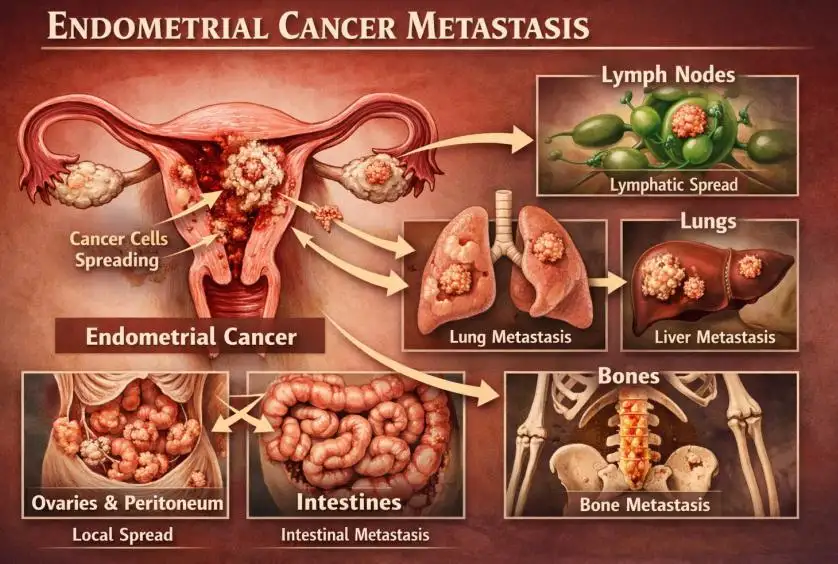
Endometrial cancer metastasis occurs when cancer cells break away from the primary tumor in the uterus and travel through lymphatic channels or the bloodstream. These cells can then form new tumors (secondary or metastatic tumors) in distant organs. Common sites of metastasis include lymph nodes, lungs, liver, bones, and, less frequently, the brain.
Metastatic disease typically indicates an advanced stage of cancer (Stage III or IV), but outcomes vary widely depending on factors such as tumor type, spread pattern, overall health, and response to treatment.
Types of Endometrial Cancer and Metastatic Patterns
Different types of endometrial cancer behave differently when it comes to metastasis.
| Type of Endometrial Cancer | Characteristics | Likelihood of Metastasis |
|---|---|---|
| Endometrioid carcinoma | Most common, often hormone-related | Lower to moderate |
| Serous carcinoma | Aggressive, high-grade | High |
| Clear cell carcinoma | Rare, aggressive | High |
| Carcinosarcoma | Mixed tumor, very aggressive | Very high |
Understanding the tumor type helps doctors predict the risk and pattern of endometrial cancer metastasis and tailor treatment plans accordingly.
Causes and Risk Factors
Several factors increase the likelihood of endometrial cancer spreading beyond the uterus:
-
Advanced tumor stage at diagnosis
-
High-grade or aggressive tumor types
-
Deep invasion into the uterine muscle (myometrium)
-
Lymphovascular space invasion
-
Delayed diagnosis or incomplete treatment
Additional risk factors include obesity, prolonged estrogen exposure, diabetes, hypertension, genetic syndromes such as Lynch syndrome, and older age.
Symptoms and Early Warning Signs
Symptoms of endometrial cancer metastasis may differ from early-stage disease and depend on where the cancer has spread.
Common symptoms include:
-
Persistent pelvic or abdominal pain
-
Unexplained weight loss or fatigue
-
Shortness of breath or chronic cough (lung metastasis)
-
Bone pain or fractures (bone metastasis)
-
Swelling of legs due to lymph node involvement
Any new or worsening symptoms after an endometrial cancer diagnosis should be reported to a healthcare provider promptly.
Diagnosis of Metastatic Endometrial Cancer
Diagnosing endometrial cancer metastasis involves a combination of imaging, laboratory tests, and tissue analysis.
| Diagnostic Method | Purpose |
|---|---|
| CT or MRI scans | Detect spread to organs and lymph nodes |
| PET scans | Identify active metastatic disease |
| Biopsy | Confirm cancer type in metastatic sites |
| Blood tests | Assess organ function and tumor markers |
Accurate staging is essential to guide treatment decisions and estimate prognosis.
Treatment Options
Treatment for endometrial cancer metastasis is usually multimodal and personalized.
-
Surgery: May be used to remove metastatic lesions in selected cases
-
Radiation therapy: Helps control local symptoms and reduce tumor size
-
Chemotherapy: Systemic treatment to target cancer cells throughout the body
-
Hormonal therapy: Effective for hormone receptor–positive tumors
-
Targeted therapy and immunotherapy: Used in specific genetic or molecular profiles
The goal may be curative in limited metastasis or palliative to control symptoms and improve quality of life in advanced cases.
Prevention and Lifestyle Recommendations
While not all cases of endometrial cancer metastasis can be prevented, certain strategies may reduce risk or support treatment outcomes:
-
Maintain a healthy weight and balanced diet
-
Engage in regular physical activity as tolerated
-
Manage chronic conditions such as diabetes and hypertension
-
Attend regular follow-up appointments and screenings
-
Avoid unopposed estrogen therapy without medical supervision
Healthy lifestyle choices can also enhance overall well-being during and after treatment.
Prognosis and Survival Rates
Prognosis in endometrial cancer metastasis varies widely. Survival depends on factors such as the extent of spread, tumor biology, patient age, and treatment response.
| Stage | Approximate 5-Year Survival Rate |
|---|---|
| Stage III | 50–65% |
| Stage IV | 15–25% |
While metastatic disease is more challenging to treat, advances in therapy continue to improve outcomes and quality of life.
Latest Research and Innovations
Ongoing research is transforming the management of endometrial cancer metastasis. Promising areas include:
-
Immunotherapy using checkpoint inhibitors
-
Molecular profiling to personalize treatment
-
Combination therapies targeting multiple pathways
-
Less toxic chemotherapy regimens
Clinical trials play a critical role in expanding treatment options and may be worth discussing with your oncology team.
Coping and Support for Patients
Living with metastatic endometrial cancer can be emotionally and physically demanding. Support is a vital part of care.
Helpful resources include:
-
Oncology social workers and counselors
-
Patient support groups (in-person or online)
-
Palliative care services for symptom management
-
Family and caregiver education programs
Seeking support is not a sign of weakness, it is a key component of comprehensive cancer care.
Conclusion
Endometrial cancer metastasis represents an advanced stage of disease, but it does not eliminate hope. With early recognition, accurate diagnosis, and a personalized treatment approach, many patients achieve meaningful disease control and improved quality of life. Staying informed, engaged, and supported can make a significant difference throughout the journey.
FAQ
1. What is endometrial cancer metastasis?
It is the spread of cancer cells from the uterine lining to other organs such as lymph nodes, lungs, liver, or bones.
2. Is metastatic endometrial cancer curable?
In some limited cases, long-term control or remission is possible. In advanced stages, treatment often focuses on prolonging survival and improving quality of life.
3. What are the most common sites of metastasis?
Lymph nodes, lungs, liver, and bones are the most frequent sites.
4. Can lifestyle changes help after diagnosis?
Yes. Healthy habits, symptom monitoring, and adherence to treatment can support overall health and treatment effectiveness.
5. Should I consider clinical trials?
Clinical trials may provide access to new therapies and are worth discussing with your oncologist, especially in metastatic disease.