Risk Factors for Stage 4 Spinal Cancer: Causes, Symptoms, Diagnosis, and Treatment Guide
Spinal cancer is a rare but serious condition that occurs when abnormal cells grow within the spinal cord, vertebrae, or surrounding tissues. When the disease progresses to its most advanced stage, known as stage 4 spinal cancer, it often spreads to other parts of the body, making treatment more complex. Understanding the risk factors for stage 4 spinal cancer is crucial for early detection, prevention strategies, and improving patient outcomes.
Many individuals are unaware of the underlying conditions and lifestyle factors that can increase the likelihood of developing advanced spinal cancer. By learning about these risk factors, along with symptoms, diagnostic methods, and treatment options, patients and families can make informed decisions about healthcare and prevention.
Overview
Stage 4 spinal cancer represents the most advanced stage of the disease. At this stage, cancer cells have typically metastasized beyond the spine to other organs such as the lungs, liver, or bones. This stage requires comprehensive medical management and often involves multiple treatment approaches.
Spinal tumors may originate directly in the spine (primary tumors) or spread from other cancers in the body (secondary or metastatic tumors). In fact, many cases of advanced spinal cancer result from metastasis of cancers such as lung, breast, or prostate cancer.
Key characteristics of stage 4 spinal cancer include:
-
Cancer spread to distant organs
-
Severe neurological symptoms
-
Significant pain and mobility limitations
-
Complex treatment requirements
Types
Spinal cancer can be classified based on where the tumor originates and how it develops. The following table highlights the main types of spinal cancer.
| Type | Description |
|---|---|
| Primary Spinal Tumors | Tumors that originate in the spine or spinal cord |
| Metastatic Spinal Tumors | Cancer that spreads to the spine from another organ |
| Intramedullary Tumors | Tumors that grow inside the spinal cord |
| Extramedullary Tumors | Tumors that develop outside the spinal cord but within the spinal canal |
| Vertebral Tumors | Tumors that form in the bones of the spine |
Metastatic tumors are the most common cause of stage 4 spinal cancer.
Causes and Risk Factors
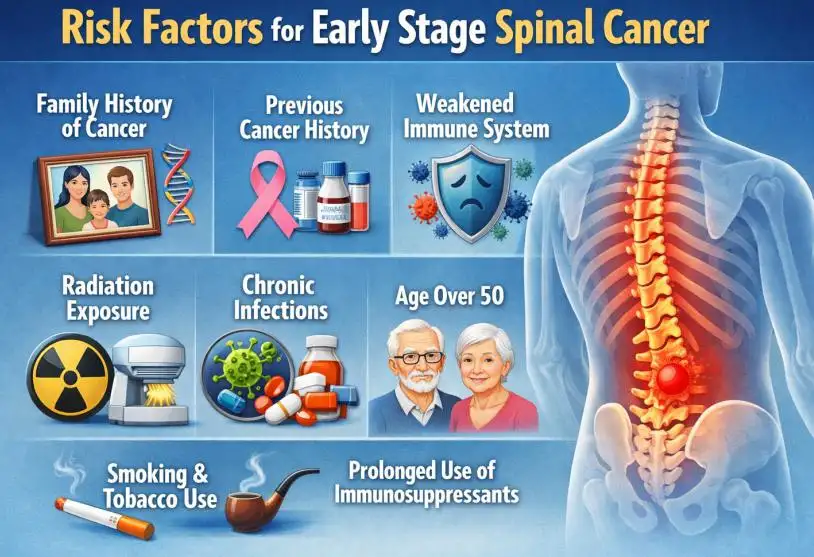
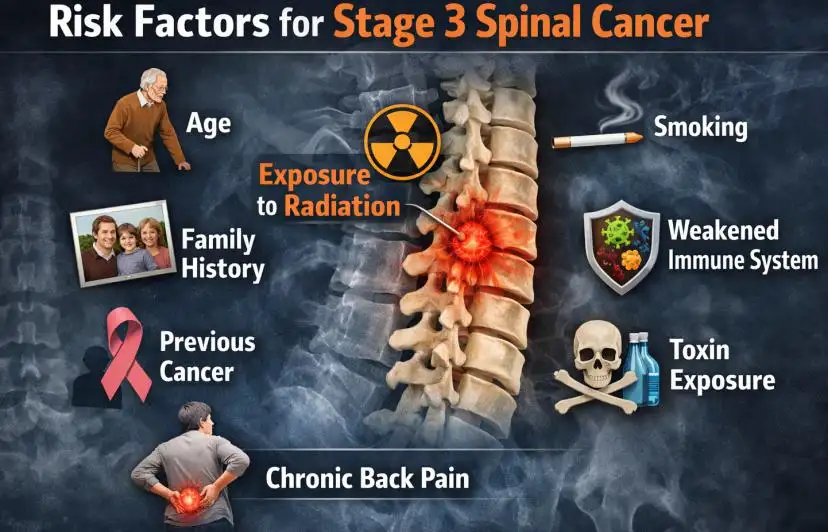
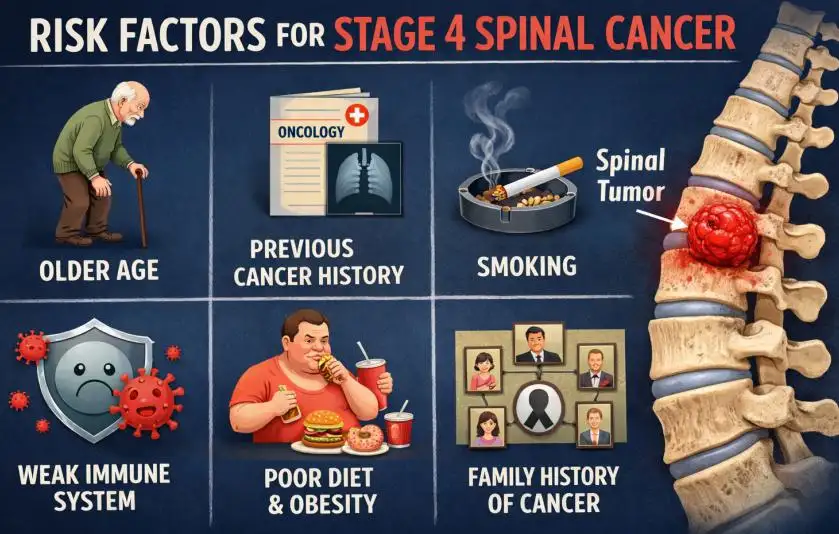
Understanding the risk factors for stage 4 spinal cancer helps identify individuals who may need closer medical monitoring. While spinal cancer itself is uncommon, several conditions and exposures may increase the risk.
Major Risk Factors
| Risk Factor | Explanation |
|---|---|
| Previous Cancer | Cancers such as lung, breast, prostate, and kidney often metastasize to the spine |
| Genetic Disorders | Conditions like neurofibromatosis increase tumor risk |
| Radiation Exposure | High levels of radiation may increase cancer risk |
| Weakened Immune System | People with compromised immunity may be more susceptible |
| Age | Risk increases with aging |
| Smoking | Associated with cancers that frequently spread to the spine |
| Environmental Toxins | Long-term exposure to carcinogens may contribute |
In many cases, stage 4 spinal cancer develops when cancer from another organ spreads through the bloodstream or lymphatic system to the spine.
Symptoms and Early Warning Signs
Symptoms of advanced spinal cancer can vary depending on tumor location and the extent of spread. However, some common warning signs include:
-
Persistent back or neck pain
-
Pain that worsens at night
-
Weakness in arms or legs
-
Numbness or tingling sensations
-
Difficulty walking
-
Loss of bladder or bowel control
-
Unexplained weight loss
-
Fatigue
These symptoms often develop gradually but can become severe as the tumor compresses nerves or the spinal cord.
Diagnosis
Diagnosing stage 4 spinal cancer requires a combination of imaging tests and laboratory examinations. Early diagnosis is essential to determine the extent of metastasis and guide treatment decisions.
Common diagnostic methods include:
| Diagnostic Test | Purpose |
|---|---|
| MRI Scan | Provides detailed images of the spinal cord and surrounding tissues |
| CT Scan | Helps identify bone damage and tumor spread |
| Biopsy | Confirms the presence and type of cancer |
| PET Scan | Detects cancer spread throughout the body |
| Blood Tests | Evaluates overall health and cancer markers |
Doctors may use multiple diagnostic tools to determine the stage and severity of spinal cancer.
Treatment Options
Treatment for stage 4 spinal cancer focuses on controlling tumor growth, relieving symptoms, and improving quality of life. The specific approach depends on tumor type, location, and the patient’s overall health.
Common treatment options include:
| Treatment | Description |
|---|---|
| Surgery | Removes tumors and relieves pressure on the spinal cord |
| Radiation Therapy | Uses high-energy rays to destroy cancer cells |
| Chemotherapy | Uses drugs to kill or slow cancer cell growth |
| Targeted Therapy | Focuses on specific genetic features of cancer cells |
| Immunotherapy | Stimulates the immune system to attack cancer |
| Palliative Care | Manages pain and improves comfort |
Often, doctors combine several treatments for the most effective results.
Prevention and Lifestyle Recommendations
While it may not always be possible to completely prevent spinal cancer, certain lifestyle choices can reduce cancer risk and support overall spinal health.
Preventive measures include:
-
Avoid smoking and tobacco use
-
Maintain a healthy diet rich in fruits and vegetables
-
Exercise regularly
-
Limit exposure to harmful chemicals
-
Attend regular medical screenings
-
Manage existing cancers carefully to prevent metastasis
Early detection and routine health checkups are important steps in reducing the risk of advanced cancer stages.
Prognosis and Survival Rates
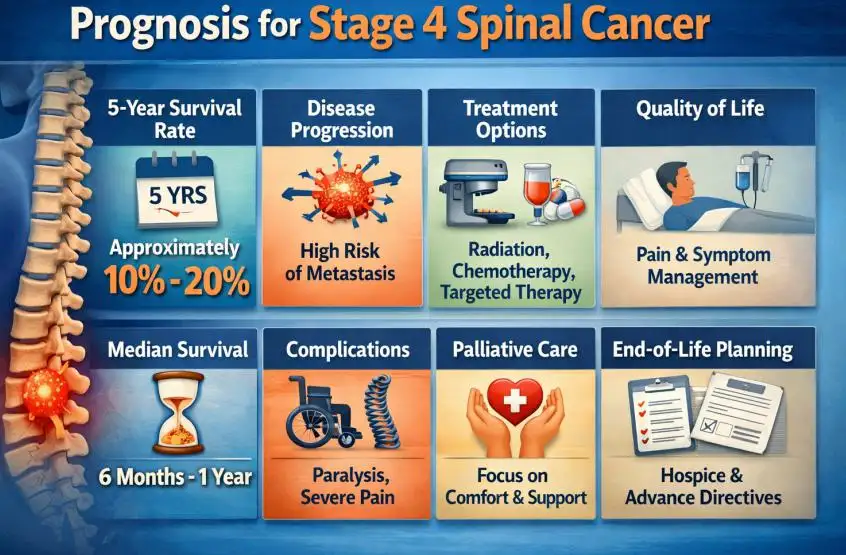
The prognosis for stage 4 spinal cancer varies widely depending on the underlying cancer type, overall health, and treatment response.
Several factors influence survival rates:
-
Type of primary cancer
-
Location and size of spinal tumors
-
Extent of metastasis
-
Patient age and general health
-
Treatment effectiveness
Although stage 4 cancer is considered advanced, modern treatments can significantly extend survival and improve quality of life for many patients.
Latest Research and Innovations
Medical research continues to improve the understanding and treatment of spinal cancer. Scientists and clinicians are exploring innovative therapies to improve patient outcomes.
Recent advancements include:
-
Precision medicine and genetic profiling
-
Advanced radiation techniques such as stereotactic radiosurgery
-
Improved spinal surgery technologies
-
Novel immunotherapy drugs
-
Targeted molecular therapies
These developments offer hope for better management of advanced spinal cancer in the future.
Coping and Support for Patients
Living with stage 4 spinal cancer can be emotionally and physically challenging. Patients often benefit from strong support networks and comprehensive care.
Helpful coping strategies include:
-
Seeking counseling or psychological support
-
Joining cancer support groups
-
Maintaining open communication with healthcare providers
-
Practicing stress management techniques
-
Engaging family and friends in the care process
Supportive care plays a crucial role in maintaining quality of life during treatment.
Conclusion
Understanding the risk factors for stage 4 spinal cancer is essential for improving awareness, prevention, and early intervention. Although this advanced stage presents significant challenges, ongoing medical advancements are improving treatment options and patient outcomes.
By recognizing symptoms early, managing risk factors, and seeking prompt medical attention, individuals can take proactive steps toward protecting their spinal health and overall well-being.
FAQ
1. What are the main risk factors for stage 4 spinal cancer?
The most common risk factors include previous cancers that metastasize to the spine, genetic conditions, exposure to radiation, smoking, and weakened immune systems.
2. Can stage 4 spinal cancer be cured?
A complete cure is rare at this stage, but treatments can control tumor growth, relieve symptoms, and extend survival.
3. Which cancers most commonly spread to the spine?
Cancers of the lung, breast, prostate, kidney, and thyroid are the most likely to metastasize to the spine.
4. How is stage 4 spinal cancer detected?
Doctors typically use MRI scans, CT scans, PET scans, and biopsies to diagnose and determine the stage of spinal cancer.
5. Is spinal cancer hereditary?
Most spinal cancers are not hereditary, but certain genetic disorders may increase the risk of developing spinal tumors.