Risk Factors for Early Stage Spinal Cancer: Symptoms, Causes, Diagnosis, and Prevention
Spinal cancer is a rare but serious condition that can affect the bones, nerves, or tissues surrounding the spine. When detected early, the chances of effective treatment and improved outcomes increase significantly. Understanding the risk factors for early stage spinal cancer is essential for recognizing potential warning signs and seeking timely medical care.
Although spinal tumors can develop without obvious causes, several medical, genetic, and environmental factors may increase a person’s risk. By learning about these factors and staying alert to early symptoms, individuals can take proactive steps to protect their spinal health and improve the likelihood of early diagnosis.
Overview
Early stage spinal cancer refers to tumors that develop in the spine but have not spread extensively to other parts of the body. These tumors may originate in the spine itself or spread from cancers in other organs.
In the early stages, spinal cancer may produce mild symptoms or remain unnoticed. However, identifying the risk factors for early stage spinal cancer and monitoring subtle changes in the body can help detect the disease before it progresses.
Spinal tumors may affect various structures, including vertebrae, spinal cord tissues, and surrounding nerves. Early detection often leads to better treatment options and improved survival outcomes.
Types of Spinal Cancer
Spinal tumors are generally classified into two main categories: primary and secondary tumors.
| Type | Description | Examples |
|---|---|---|
| Primary Spinal Tumors | Tumors that originate in the spine or spinal cord | Osteosarcoma, Chordoma, Meningioma |
| Secondary (Metastatic) Spinal Tumors | Tumors that spread to the spine from other cancers | Breast cancer metastasis, Lung cancer metastasis, Prostate cancer metastasis |
Primary spinal tumors are relatively rare, while metastatic spinal tumors are more common.
Causes and Risk Factors
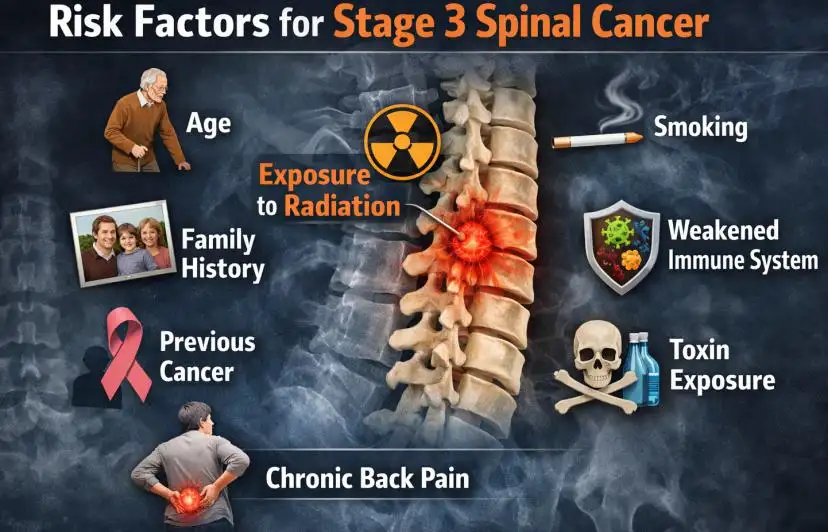
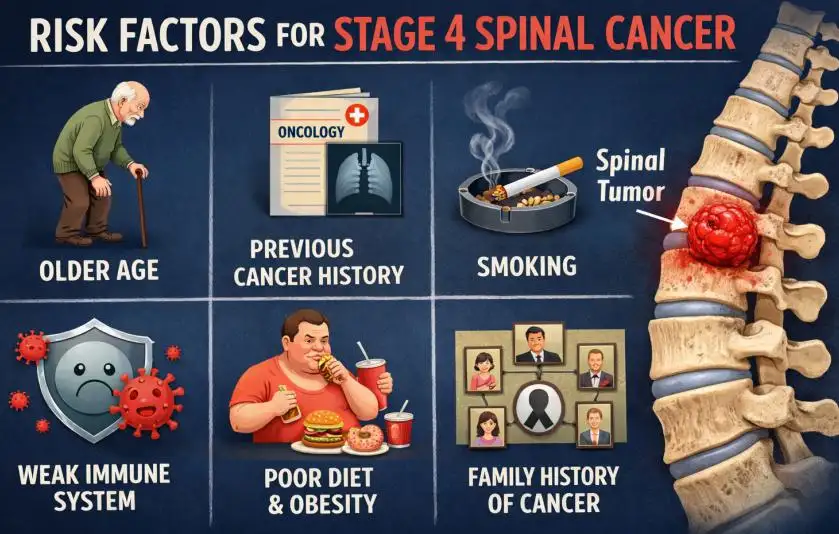
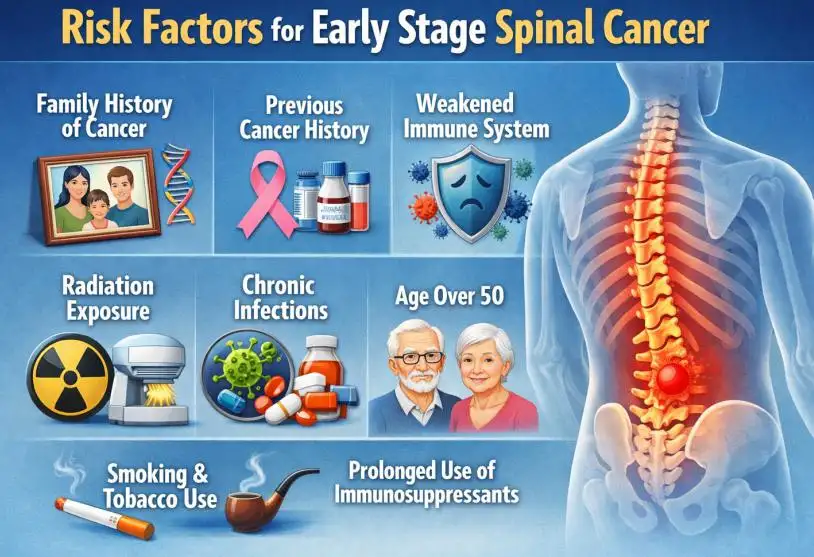
While the exact cause of spinal cancer is not always known, several factors may increase the likelihood of developing the disease. Recognizing these risk factors for early stage spinal cancer can help individuals and healthcare providers identify those who may benefit from closer monitoring.
| Risk Factor | Explanation |
|---|---|
| Genetic Disorders | Conditions such as neurofibromatosis can increase the risk of spinal tumors |
| Previous Cancer | Cancer from other organs can spread to the spine |
| Radiation Exposure | High levels of radiation exposure may increase cancer risk |
| Age | Risk increases with age, especially in middle-aged and older adults |
| Family History | A family history of certain cancers may increase susceptibility |
| Weakened Immune System | Conditions or treatments that suppress immunity may raise cancer risk |
Lifestyle factors such as smoking and prolonged exposure to harmful chemicals may also contribute indirectly to cancer development.
Symptoms and Early Warning Signs
Early stage spinal cancer symptoms can be subtle and easily mistaken for common back problems. However, persistent or unusual symptoms should always be evaluated by a healthcare professional.
Common early warning signs include:
-
Persistent back pain that does not improve with rest
-
Pain that worsens at night
-
Numbness or tingling in the arms or legs
-
Muscle weakness
-
Difficulty walking or maintaining balance
-
Unexplained weight loss
-
Loss of bladder or bowel control in advanced cases
Recognizing these symptoms alongside known risk factors for early stage spinal cancer can lead to earlier diagnosis.
Diagnosis
Diagnosing spinal cancer typically involves several medical tests designed to identify tumors and determine their stage.
| Diagnostic Method | Purpose |
|---|---|
| MRI Scan | Provides detailed images of the spinal cord and surrounding tissues |
| CT Scan | Helps detect bone abnormalities and tumor spread |
| X-Ray | Identifies structural changes in the spine |
| Biopsy | Confirms whether a tumor is cancerous |
| Blood Tests | Helps detect abnormalities linked to cancer |
Early diagnostic imaging plays a critical role in identifying tumors before they progress.
Treatment Options
Treatment for early stage spinal cancer depends on the type of tumor, its location, and the patient’s overall health.
Common treatment options include:
| Treatment | Description |
|---|---|
| Surgery | Removal of the tumor to relieve pressure on the spinal cord |
| Radiation Therapy | Uses high-energy beams to destroy cancer cells |
| Chemotherapy | Uses drugs to kill or slow cancer growth |
| Targeted Therapy | Focuses on specific cancer cell mechanisms |
| Rehabilitation | Helps restore mobility and strength after treatment |
In many cases, a multidisciplinary team of specialists works together to create the most effective treatment plan.
Prevention and Lifestyle Recommendations
Although it may not be possible to completely prevent spinal cancer, certain lifestyle habits can reduce overall cancer risk and support spinal health.
Recommended preventive steps include:
-
Avoid excessive radiation exposure
-
Maintain a healthy and balanced diet
-
Exercise regularly to strengthen the spine and muscles
-
Avoid smoking and excessive alcohol consumption
-
Schedule regular health check-ups
-
Seek medical advice for persistent back pain
Understanding the risk factors for early stage spinal cancer can also help individuals make informed decisions about their health.
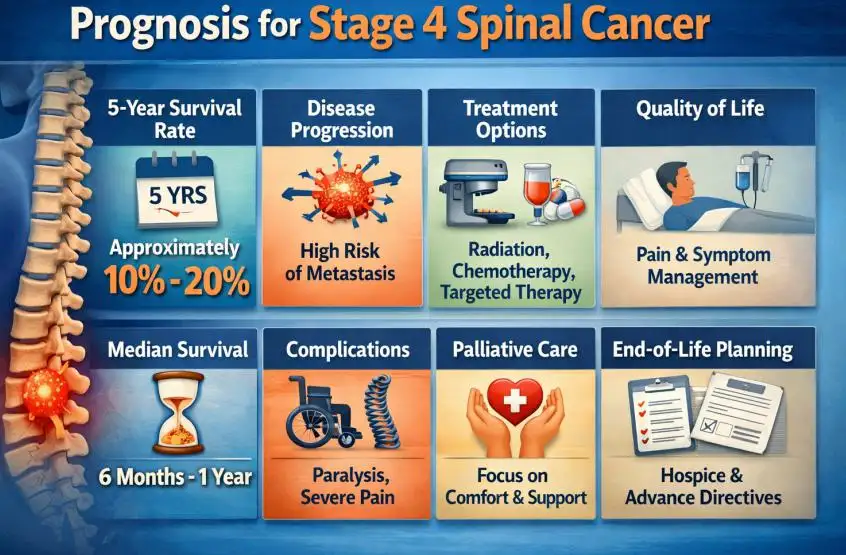
Prognosis and Survival Rates
The prognosis for spinal cancer varies depending on several factors, including the type of tumor, the stage at diagnosis, and the patient’s response to treatment.
Early stage spinal cancer generally has a more favorable outlook compared to advanced stages. Early detection allows for less aggressive treatments and increases the likelihood of successful outcomes.
| Stage | Estimated Outlook |
|---|---|
| Early Stage | Higher survival rates with timely treatment |
| Intermediate Stage | Treatment may control tumor growth |
| Advanced Stage | More complex treatment and lower survival rates |
Regular monitoring and early treatment greatly improve prognosis.
Latest Research and Innovations
Advances in medical research continue to improve the understanding and treatment of spinal cancer. Scientists are developing new approaches that aim to detect tumors earlier and treat them more effectively.
Some promising innovations include:
-
Advanced MRI imaging technologies
-
Immunotherapy treatments that stimulate the immune system to fight cancer
-
Precision medicine tailored to a patient’s genetic profile
-
Minimally invasive spinal surgery techniques
-
Artificial intelligence tools that assist in early tumor detection
These developments offer hope for better diagnosis and treatment outcomes in the future.
Coping and Support for Patients
A diagnosis of spinal cancer can be emotionally challenging for patients and their families. Coping with the disease requires both medical treatment and psychological support.
Helpful coping strategies include:
-
Joining cancer support groups
-
Seeking counseling or mental health support
-
Maintaining open communication with healthcare providers
-
Building a strong support network of family and friends
-
Practicing stress-reduction techniques such as meditation
Support systems play a vital role in improving quality of life during treatment and recovery.
Conclusion
Understanding the risk factors for early stage spinal cancer is a critical step in recognizing potential warning signs and seeking early medical attention. Although spinal cancer is rare, early detection can significantly improve treatment success and survival outcomes.
By staying informed about symptoms, maintaining a healthy lifestyle, and seeking regular medical evaluations, individuals can take proactive steps toward protecting their spinal health and overall well-being.
FAQ
1. What are the most common risk factors for early stage spinal cancer?
Common risk factors include genetic conditions, previous cancer diagnoses, radiation exposure, aging, family history of cancer, and weakened immune systems.
2. Can spinal cancer develop without risk factors?
Yes. Some individuals may develop spinal cancer without any known risk factors. This is why recognizing early symptoms is important.
3. Is back pain always a sign of spinal cancer?
No. Most back pain is caused by muscle strain or spinal conditions. However, persistent or severe pain that does not improve should be evaluated by a doctor.
4. How is early stage spinal cancer treated?
Treatment may include surgery, radiation therapy, chemotherapy, targeted therapy, or a combination of these approaches depending on the tumor type.
5. Can early stage spinal cancer be cured?
In many cases, early detection significantly improves the chances of successful treatment and long-term survival. Early diagnosis remains the key to better outcomes.