Prognosis for Stage 4 Spinal Cancer: Survival Rates, Treatment Options, and What Patients Should Expect
Stage 4 spinal cancer represents the most advanced stage of cancer affecting the spine, where the disease has typically spread beyond its original location to other parts of the body. For patients and families facing this diagnosis, understanding the prognosis for stage 4 spinal cancer is essential for making informed decisions about treatment, care, and quality of life. While the diagnosis can feel overwhelming, advances in medical research and treatment have improved outcomes and provided new hope for many patients.
This comprehensive guide explores the prognosis for stage 4 spinal cancer, including survival rates, symptoms, causes, treatment options, and the latest medical innovations. By understanding the condition in detail, patients and caregivers can better navigate the journey ahead and make decisions that support both health and well-being.
Overview
Stage 4 spinal cancer refers to cancer that has metastasized or spread to the spine from another primary tumor, or cancer that began in the spine and has spread to distant organs. At this stage, tumors may affect multiple vertebrae and surrounding tissues, including nerves and the spinal cord.
The prognosis for stage 4 spinal cancer depends on several factors, including the type of cancer, its location, how aggressively it spreads, and how well the patient responds to treatment.
Common characteristics of stage 4 spinal cancer include:
-
Advanced tumor growth in the spine
-
Spread to distant organs such as lungs, liver, or brain
-
Significant pain or neurological symptoms
-
Reduced spinal stability
Although stage 4 cancer is considered advanced, treatment can still help control symptoms, slow tumor growth, and improve quality of life.
Types
Spinal cancer can be classified into several types depending on its origin.
| Type | Description |
|---|---|
| Primary Spinal Tumors | Cancer that begins in the spinal cord, vertebrae, or surrounding tissues |
| Metastatic Spinal Cancer | Cancer that spreads to the spine from another organ |
| Intramedullary Tumors | Tumors that develop inside the spinal cord |
| Extramedullary Tumors | Tumors that develop outside the spinal cord but within the spinal canal |
| Vertebral Tumors | Tumors affecting the bones of the spine |
Metastatic tumors are the most common cause of stage 4 spinal cancer.
Causes and Risk Factors
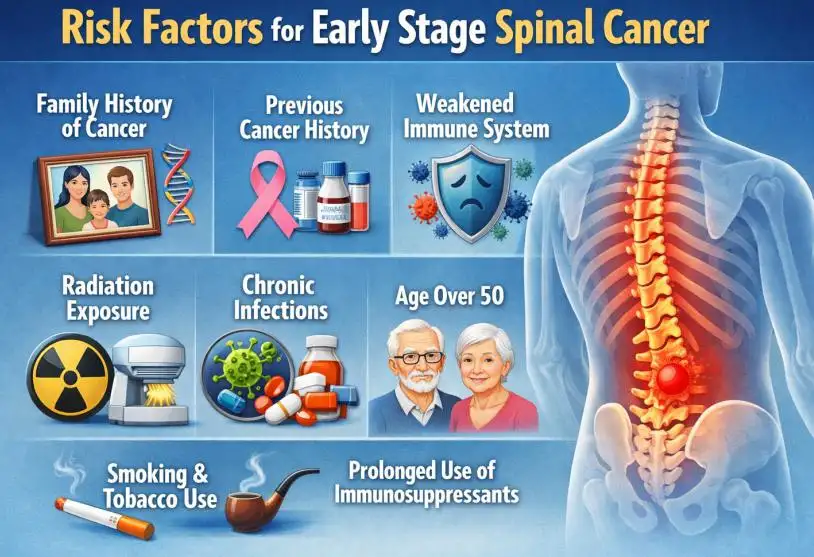
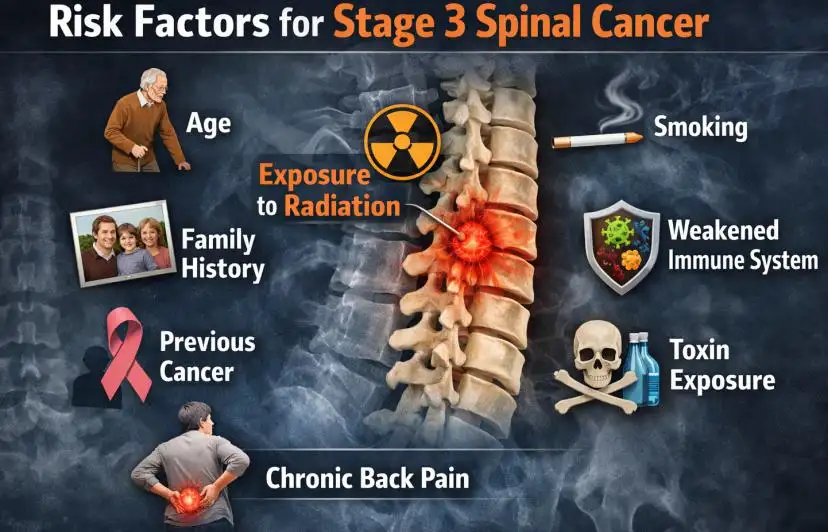
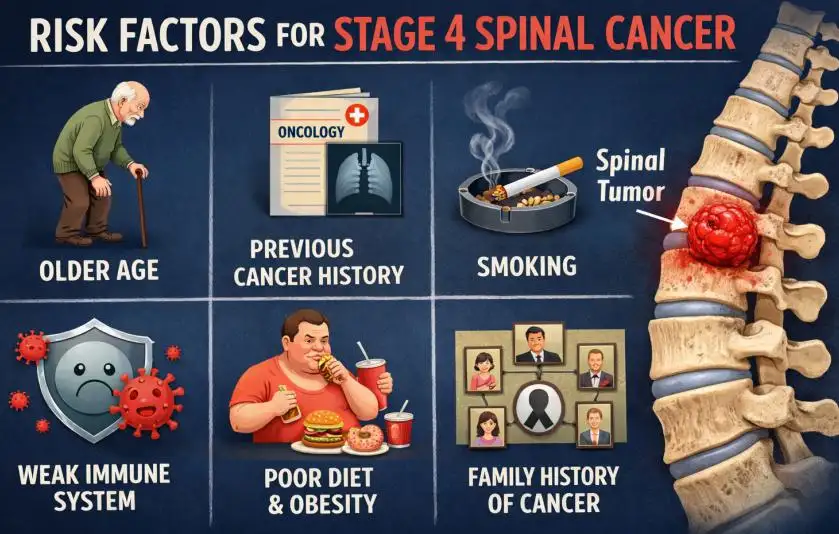
Spinal cancer can develop due to multiple underlying causes and risk factors. In many cases, stage 4 disease occurs when cancer spreads from another organ.
Common risk factors include:
-
Existing cancers such as breast, lung, or prostate cancer
-
Genetic predisposition
-
Exposure to radiation
-
Weakened immune system
-
Age-related cellular mutations
Lifestyle factors such as smoking and prolonged exposure to environmental toxins may also increase cancer risk.
Symptoms and Early Warning Signs
Symptoms of advanced spinal cancer often develop gradually and may worsen as tumors grow or spread.
Common symptoms include:
-
Persistent back pain that worsens over time
-
Numbness or tingling in the arms or legs
-
Muscle weakness
-
Difficulty walking or maintaining balance
-
Loss of bladder or bowel control
-
Unexplained weight loss and fatigue
Because these symptoms can resemble other spinal conditions, early evaluation by a medical professional is important.
Diagnosis
Diagnosing stage 4 spinal cancer involves several tests to determine tumor size, location, and whether the cancer has spread.
Doctors typically use the following diagnostic methods:
| Diagnostic Method | Purpose |
|---|---|
| MRI Scan | Provides detailed images of spinal tissues |
| CT Scan | Identifies bone damage and tumor spread |
| PET Scan | Detects metastatic cancer in the body |
| Biopsy | Confirms cancer type through tissue sampling |
| Blood Tests | Helps evaluate overall health and cancer markers |
Early and accurate diagnosis helps doctors develop an effective treatment plan.
Treatment Options
Although stage 4 spinal cancer is difficult to cure, various treatments can help manage the disease and improve quality of life.
Common treatment options include:
Surgery
Surgery may be performed to remove tumors, stabilize the spine, or relieve pressure on the spinal cord.
Radiation Therapy
Radiation therapy helps shrink tumors and relieve pain by targeting cancer cells with high-energy beams.
Chemotherapy
Chemotherapy uses drugs to destroy cancer cells or prevent them from spreading further.
Targeted Therapy
Targeted drugs attack specific molecular pathways involved in tumor growth.
Immunotherapy
Immunotherapy helps the body’s immune system recognize and fight cancer cells.
Doctors often combine several treatments to achieve the best possible outcomes.
Prevention and Lifestyle Recommendations
While not all cases of spinal cancer can be prevented, certain lifestyle habits may reduce cancer risk and improve overall health.
Recommended strategies include:
-
Avoid smoking and excessive alcohol consumption
-
Maintain a balanced diet rich in fruits and vegetables
-
Engage in regular physical activity
-
Attend routine medical checkups
-
Monitor existing cancers closely for signs of metastasis
Healthy lifestyle choices can also improve treatment tolerance and recovery.
Prognosis and Survival Rates
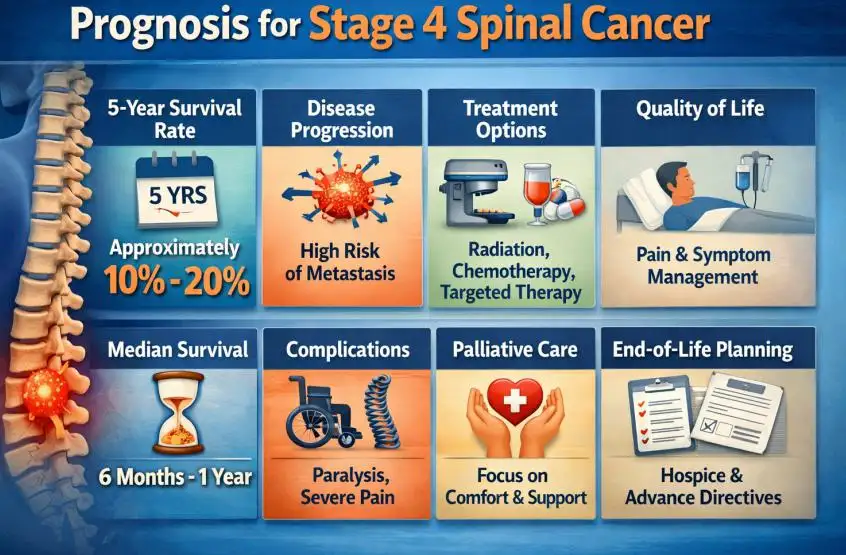
The prognosis for stage 4 spinal cancer varies significantly depending on several factors, including the primary cancer type, tumor location, and the patient's overall health.
| Factor | Impact on Prognosis |
|---|---|
| Primary Cancer Type | Some cancers respond better to treatment |
| Tumor Spread | Extensive metastasis reduces survival chances |
| Patient Age and Health | Younger and healthier patients often respond better |
| Treatment Response | Effective treatment improves survival outcomes |
In general, survival rates for stage 4 spinal cancer vary widely. Some patients may live several months, while others survive for years with proper treatment and supportive care.
Advances in targeted therapies and precision medicine are gradually improving the prognosis for stage 4 spinal cancer for many patients.
Latest Research and Innovations
Recent scientific developments are changing how advanced spinal cancers are treated.
Promising areas of research include:
-
Personalized cancer therapies based on genetic testing
-
Advanced radiation techniques such as stereotactic radiosurgery
-
Immunotherapy breakthroughs
-
Artificial intelligence for earlier detection and treatment planning
-
Minimally invasive spinal surgery
These innovations are helping doctors deliver more effective and less invasive treatments.
Coping and Support for Patients
Living with stage 4 spinal cancer can be physically and emotionally challenging. Support systems play a critical role in maintaining quality of life.
Helpful coping strategies include:
-
Joining cancer support groups
-
Seeking counseling or mental health support
-
Practicing stress management techniques
-
Staying connected with family and friends
-
Working with palliative care specialists
Palliative care focuses on symptom relief, emotional support, and improving daily comfort.
Conclusion
Understanding the prognosis for stage 4 spinal cancer is essential for patients, caregivers, and healthcare providers. Although this stage represents advanced disease, modern treatments can still slow cancer progression, relieve symptoms, and enhance quality of life.
With ongoing medical advancements and personalized treatment strategies, many patients today experience better outcomes than in the past. Early detection of metastasis, comprehensive care, and strong support systems remain key components in managing this challenging condition.
FAQ
1. What is the life expectancy for stage 4 spinal cancer?
Life expectancy varies depending on the type of cancer and treatment response. Some patients live several months, while others may survive multiple years with advanced therapies.
2. Can stage 4 spinal cancer be cured?
In most cases, stage 4 spinal cancer is not curable. However, treatments can control the disease, reduce symptoms, and extend survival.
3. Is stage 4 spinal cancer always metastatic?
Most cases involve cancer spreading to the spine from another organ, but some primary spinal tumors can also progress to stage 4.
4. What treatments help improve the prognosis for stage 4 spinal cancer?
Treatment combinations such as surgery, radiation therapy, chemotherapy, targeted therapy, and immunotherapy can help improve outcomes.
5. How can patients improve their quality of life?
Maintaining a healthy lifestyle, seeking emotional support, following medical advice, and working with palliative care teams can significantly improve quality of life for patients with advanced spinal cancer.