Prognosis for Stage 1 Spinal Cancer: Survival Rates, Treatment Options, and Early Detection

Spinal cancer is a rare but serious condition that affects the bones, nerves, or tissues of the spine. When detected at an early stage, particularly stage 1, the outlook for patients is significantly more favorable compared to advanced stages. Understanding the prognosis for stage 1 spinal cancer is essential for patients, caregivers, and healthcare professionals seeking clarity about treatment success and long-term outcomes.
Early detection plays a crucial role in improving survival rates and preserving quality of life. At stage 1, spinal tumors are typically small, localized, and have not spread to other parts of the body. This allows doctors to implement targeted treatments that can effectively control or remove the tumor. In this article, we will explore the causes, symptoms, diagnosis, treatment options, and survival expectations associated with stage 1 spinal cancer.
Overview
Stage 1 spinal cancer represents the earliest phase of tumor development within the spinal column. At this stage, the tumor remains confined to its original location and has not metastasized to nearby tissues or distant organs.
Because the cancer is localized, treatment options are usually more effective and less aggressive than those required in later stages. The prognosis for stage 1 spinal cancer is generally positive, especially when treatment begins promptly after diagnosis.
Spinal tumors can originate in different parts of the spine, including:
-
Vertebral bones
-
Spinal cord tissues
-
Surrounding nerves
-
Protective membranes (meninges)
Early medical intervention can significantly increase the chances of long-term remission and survival.
Types
Spinal cancer can be classified into several types based on where the tumor originates.
| Type of Spinal Tumor | Description |
|---|---|
| Primary Spinal Tumors | Tumors that originate directly in the spine or spinal cord |
| Secondary (Metastatic) Tumors | Cancer that spreads to the spine from other organs |
| Intramedullary Tumors | Tumors that grow inside the spinal cord |
| Extramedullary Tumors | Tumors located outside the spinal cord but within the spinal canal |
| Vertebral Tumors | Tumors affecting the bones of the spine |
Stage 1 spinal cancer is typically associated with small, localized primary tumors, which often respond well to treatment.
Causes and Risk Factors
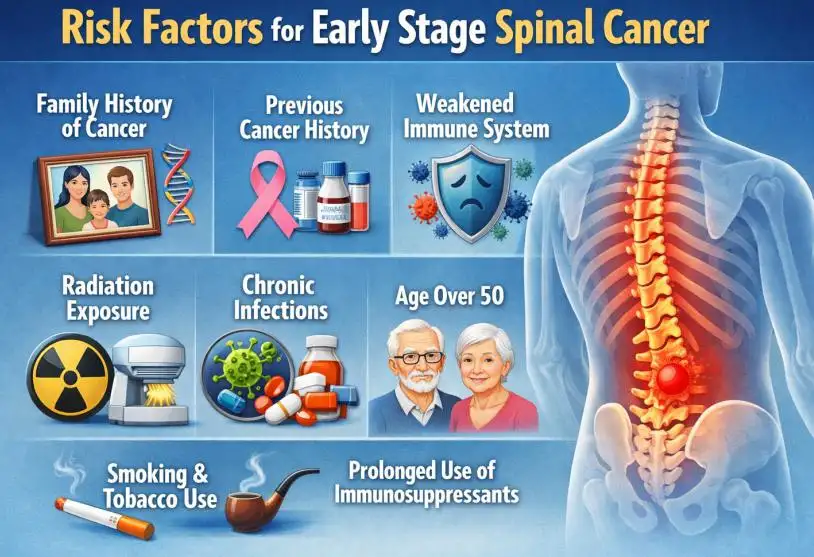
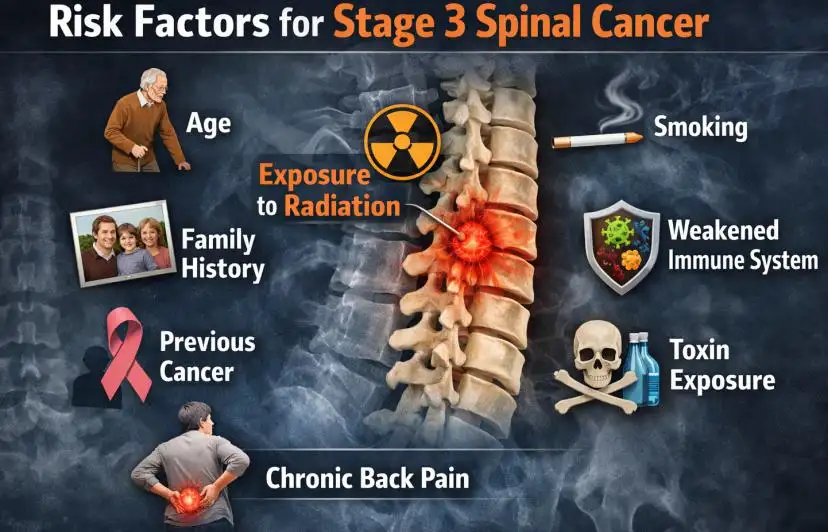
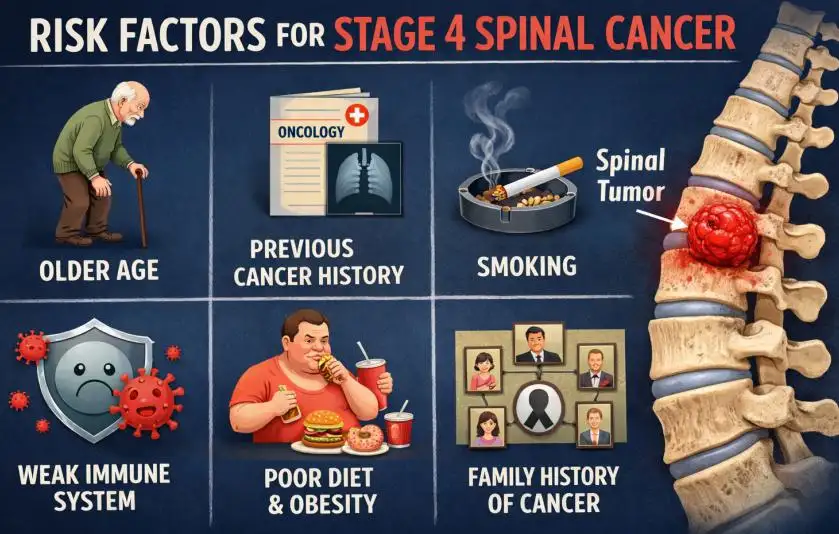
The exact cause of spinal cancer remains unclear, but several factors may increase the risk of developing tumors in the spine.
| Risk Factor | Explanation |
|---|---|
| Genetic mutations | Changes in DNA that trigger abnormal cell growth |
| Family history of cancer | Certain inherited conditions may increase risk |
| Exposure to radiation | Previous radiation therapy can increase the likelihood of tumor formation |
| Weak immune system | Reduced immune defenses may allow abnormal cells to grow |
| Certain genetic disorders | Conditions such as neurofibromatosis can increase risk |
While these risk factors may contribute to the development of spinal tumors, many patients diagnosed with stage 1 spinal cancer have no clear identifiable cause.
Symptoms and Early Warning Signs
In the early stages, spinal cancer symptoms may be subtle and easily mistaken for common back problems. However, recognizing early warning signs can help ensure prompt diagnosis and treatment.
Common symptoms include:
-
Persistent back or neck pain
-
Pain that worsens at night
-
Mild numbness or tingling in limbs
-
Weakness in arms or legs
-
Reduced mobility or stiffness
-
Unexplained fatigue
Because symptoms can mimic other conditions, medical evaluation is essential when pain persists for an extended period.
Diagnosis
Diagnosing spinal cancer involves a combination of medical history evaluation, imaging tests, and laboratory analysis.
Doctors may use the following diagnostic tools:
| Diagnostic Method | Purpose |
|---|---|
| MRI scan | Provides detailed images of spinal tissues |
| CT scan | Detects bone abnormalities |
| X-rays | Helps identify structural changes in vertebrae |
| Biopsy | Confirms whether the tumor is cancerous |
| Blood tests | Helps evaluate overall health and detect markers |
A biopsy remains the most definitive method for confirming spinal cancer and determining its stage.
Treatment Options
Treatment for stage 1 spinal cancer focuses on removing or controlling the tumor while preserving spinal function.
Common treatment approaches include:
| Treatment | Description |
|---|---|
| Surgery | Removal of the tumor while protecting the spinal cord |
| Radiation therapy | Uses high-energy beams to destroy cancer cells |
| Chemotherapy | Medications that target rapidly dividing cancer cells |
| Targeted therapy | Drugs that attack specific molecular markers in cancer cells |
| Rehabilitation therapy | Helps restore mobility and strength after treatment |
Surgery is often the primary treatment for stage 1 spinal cancer, especially when the tumor can be safely removed.
Prevention and Lifestyle Recommendations
Although spinal cancer cannot always be prevented, certain lifestyle habits may help reduce overall cancer risk and improve spinal health.
Recommended strategies include:
-
Maintaining a healthy body weight
-
Avoiding tobacco products
-
Limiting exposure to radiation and harmful chemicals
-
Exercising regularly to support spinal strength
-
Eating a balanced diet rich in antioxidants
-
Seeking early medical evaluation for persistent back pain
Regular health checkups can also improve the chances of early detection.
Prognosis and Survival Rates
The prognosis for stage 1 spinal cancer is generally favorable compared to later stages because the tumor remains localized.
Several factors influence survival outcomes:
-
Tumor type and location
-
Patient age and overall health
-
Success of surgical removal
-
Response to therapy
-
Early diagnosis
Approximate survival expectations may vary:
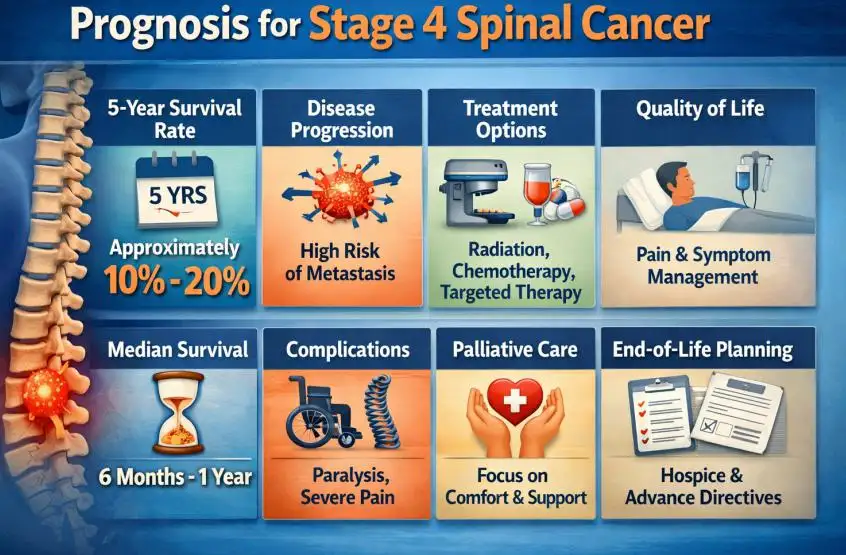
| Stage | General Prognosis |
|---|---|
| Stage 1 | High survival rate and strong treatment success |
| Stage 2 | Moderate to good prognosis |
| Stage 3 | Lower survival rate due to local spread |
| Stage 4 | Advanced disease with limited survival outlook |
Patients diagnosed at stage 1 often have significantly better long-term outcomes, particularly when treatment is initiated early.
Latest Research and Innovations
Advances in medical science continue to improve the management of spinal tumors.
Recent innovations include:
-
Minimally invasive spinal tumor surgery
-
Robotic-assisted surgical techniques
-
Precision radiation therapy
-
Immunotherapy treatments
-
Genetic testing for targeted therapy
Researchers are also exploring personalized medicine approaches that tailor treatment plans based on each patient's genetic profile.
These developments offer hope for even better outcomes in the future.
Coping and Support for Patients
Receiving a spinal cancer diagnosis can be emotionally challenging. Patients often experience anxiety, uncertainty, and stress during treatment.
Support strategies may include:
-
Psychological counseling
-
Cancer support groups
-
Physical therapy programs
-
Pain management specialists
-
Family and caregiver support networks
Maintaining emotional well-being is an important part of the healing process. Many patients find comfort in connecting with others who have faced similar experiences.
Conclusion
The prognosis for stage 1 spinal cancer is generally encouraging, especially when the disease is diagnosed early and treated promptly. Because the tumor is localized, treatment options such as surgery and radiation therapy often achieve positive results with good long-term survival rates.
Early recognition of symptoms, timely diagnosis, and access to modern medical treatments significantly improve outcomes. By staying informed, seeking regular medical care, and adopting healthy lifestyle habits, patients can increase their chances of successful recovery and maintain a better quality of life.
FAQ
1. What is the survival rate for stage 1 spinal cancer?
Survival rates are generally high for stage 1 spinal cancer because the tumor is localized and has not spread to other organs. Many patients respond well to treatment and achieve long-term remission.
2. Can stage 1 spinal cancer be cured?
In some cases, stage 1 spinal cancer can be successfully treated and potentially cured, particularly when the tumor is completely removed through surgery.
3. How fast does spinal cancer progress?
The growth rate varies depending on the tumor type. Some spinal tumors grow slowly, while others may progress more rapidly if left untreated.
4. What is the first symptom of spinal cancer?
Persistent back pain that does not improve with rest is often one of the earliest symptoms. Pain may become more noticeable at night or during physical activity.
5. Is stage 1 spinal cancer dangerous?
While any form of cancer is serious, stage 1 spinal cancer is considered the most treatable stage, and early treatment significantly improves survival outcomes.