How Long Does Chemo Treatment for Breast Cancer Take? A Complete Guide for Patients and Families
When someone is diagnosed with breast cancer, one of the first and most pressing questions that often arises is how long does chemo treatment for breast cancer take. Chemotherapy is a common and powerful treatment option, but its duration can vary widely depending on several medical and personal factors. Understanding the timeline can help patients and families prepare mentally, physically, and emotionally for the journey ahead.
This article provides a clear, comprehensive, and patient-friendly explanation of chemotherapy for breast cancer. From treatment duration and types to prognosis, lifestyle recommendations, and the latest research, this guide is designed to actively involve you as a reader and help you make informed decisions together with your healthcare team.
Overview of Chemotherapy for Breast Cancer
Chemotherapy for breast cancer is a systemic treatment that uses anti-cancer drugs to destroy cancer cells throughout the body. It may be given before surgery (neoadjuvant), after surgery (adjuvant), or as the main treatment for advanced or metastatic breast cancer.
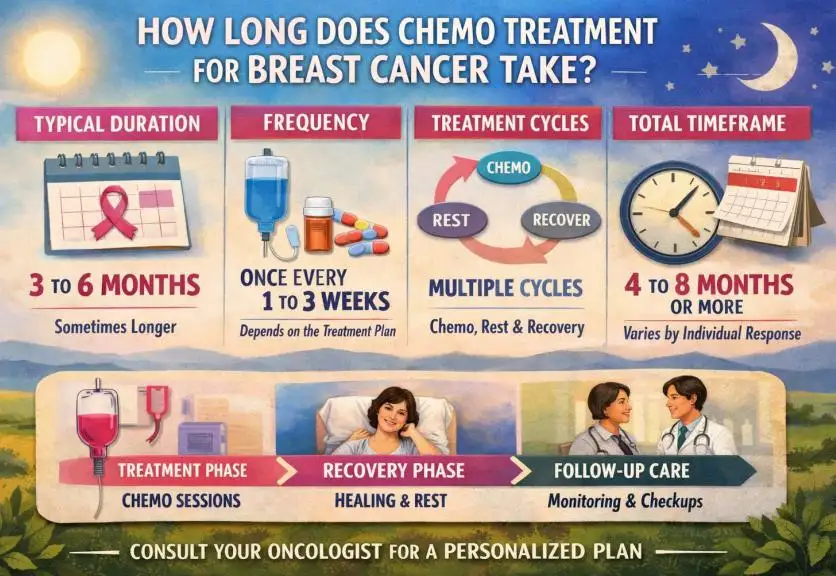
So, how long does chemo treatment for breast cancer take in general? Most chemotherapy regimens last between 3 to 6 months, but some may be shorter or longer depending on the specific treatment plan.
General Chemotherapy Timeline
| Treatment Phase | Typical Duration |
|---|---|
| Each chemo session | 1–6 hours |
| Interval between sessions | 1–3 weeks |
| Total treatment course | 3–6 months (sometimes longer) |
Types of Chemotherapy for Breast Cancer
Different chemotherapy types and schedules significantly influence how long treatment lasts.
Common Chemotherapy Approaches
| Type of Chemotherapy | When It’s Used | Typical Duration |
|---|---|---|
| Neoadjuvant chemotherapy | Before surgery | 3–6 months |
| Adjuvant chemotherapy | After surgery | 3–6 months |
| Metastatic chemotherapy | Advanced cancer | Ongoing or long-term |
| Dose-dense chemotherapy | Aggressive approach | Shorter cycles, similar total duration |
The choice of type depends on tumor size, stage, hormone receptor status, and overall health.
Causes and Risk Factors of Breast Cancer
Breast cancer develops due to genetic mutations that cause abnormal cell growth. While chemotherapy does not address causes directly, understanding risk factors helps contextualize treatment decisions.
Common Risk Factors
| Category | Examples |
|---|---|
| Genetic | BRCA1 or BRCA2 mutations |
| Hormonal | Early menstruation, late menopause |
| Lifestyle | Obesity, alcohol consumption |
| Medical history | Prior radiation therapy |
| Age | Risk increases with age |
Symptoms and Early Warning Signs
Early detection often leads to less intensive treatment and may influence how long chemotherapy lasts.
Common Symptoms
-
A lump in the breast or underarm
-
Changes in breast shape or size
-
Nipple discharge or inversion
-
Skin dimpling or redness
-
Persistent breast pain
If symptoms are detected early, chemotherapy duration may be shorter or, in some cases, unnecessary.
Diagnosis
Accurate diagnosis determines the chemotherapy plan and duration.
Diagnostic Steps
| Test | Purpose |
|---|---|
| Mammogram | Detects abnormal breast tissue |
| Ultrasound | Evaluates breast lumps |
| Biopsy | Confirms cancer diagnosis |
| MRI or CT scan | Determines cancer spread |
| Genetic testing | Guides personalized treatment |
Treatment Options for Breast Cancer
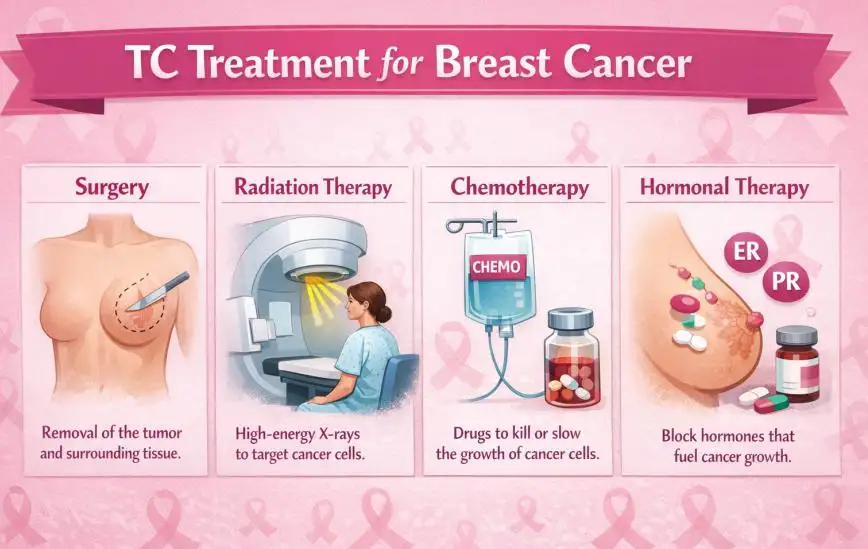
Chemotherapy is often combined with other treatments to improve outcomes.
Main Treatment Options
| Treatment | Role in Care |
|---|---|
| Surgery | Removes the tumor |
| Chemotherapy | Kills cancer cells systemically |
| Radiation therapy | Targets remaining cancer cells |
| Hormone therapy | Treats hormone-positive cancers |
| Targeted therapy | Attacks specific cancer markers |
The combination of treatments affects how long does chemo treatment for breast cancer take within the overall care plan.
Prevention and Lifestyle Recommendations
While chemotherapy treats cancer, lifestyle choices can support treatment effectiveness and recovery.
Healthy Lifestyle Tips
-
Maintain a balanced, nutrient-rich diet
-
Engage in gentle physical activity
-
Manage stress through mindfulness or counseling
-
Avoid smoking and limit alcohol
-
Follow medical advice closely
These habits may not shorten chemotherapy directly but can reduce side effects and improve tolerance.
Prognosis and Survival Rates
Prognosis varies based on cancer stage, biology, and response to treatment.
Approximate 5-Year Survival Rates
| Breast Cancer Stage | Survival Rate |
|---|---|
| Stage I | ~99% |
| Stage II | ~86–93% |
| Stage III | ~72% |
| Stage IV | ~30% |
Patients often ask how long does chemo treatment for breast cancer take alongside questions about survival. Both depend heavily on early detection and personalized treatment.
Latest Research and Innovations
Advances in breast cancer treatment are improving outcomes and sometimes reducing chemotherapy duration.
Recent Innovations
-
Personalized chemotherapy based on genetic testing
-
Immunotherapy for specific breast cancer subtypes
-
Targeted drugs with fewer side effects
-
Improved supportive care to manage fatigue and nausea
These developments aim to make treatment more effective and patient-centered.
Coping and Support for Patients
Chemotherapy can be physically and emotionally challenging. Support systems play a vital role.
Helpful Support Strategies
-
Join breast cancer support groups
-
Seek counseling or psycho-oncology services
-
Communicate openly with family and friends
-
Discuss side effect management with doctors
Knowing what to expect about how long chemo treatment for breast cancer takes can ease anxiety and improve emotional resilience.
Conclusion
So, how long does chemo treatment for breast cancer take? In most cases, chemotherapy lasts between 3 and 6 months, but the exact duration depends on cancer stage, treatment type, and individual response. Understanding the process empowers patients to face treatment with clarity and confidence.
By combining medical guidance, healthy lifestyle choices, and emotional support, patients can navigate chemotherapy more effectively and focus on recovery and long-term well-being.
FAQ
1. How long does chemo treatment for breast cancer take on average?
Most chemotherapy regimens last 3–6 months, though some cases may require longer treatment.
2. Is chemotherapy given every day?
No. Chemotherapy is usually given in cycles, with rest periods of 1–3 weeks between sessions.
3. Can chemotherapy duration change during treatment?
Yes. Doctors may adjust the schedule based on side effects or treatment response.
4. Does early-stage breast cancer require shorter chemotherapy?
Often yes. Early detection may result in fewer cycles or alternative treatments.
5. Can someone work during chemotherapy?
Many patients can work part-time, depending on side effects and job demands, but this varies individually.