Locally Advanced Breast Cancer: Symptoms, Diagnosis, Treatment, and Survival Guide
Locally advanced breast cancer is a serious but treatable stage of breast cancer that requires comprehensive medical attention. If you or a loved one has received this diagnosis, understanding what it means can help reduce uncertainty and empower you to make informed decisions. While it is more extensive than early-stage disease, it has not spread to distant organs, which makes aggressive treatment potentially effective.
In this guide, you will learn everything you need to know about locally advanced breast cancer, from its causes and symptoms to diagnosis, treatment options, survival rates, and the latest medical innovations. By the end, you’ll have a clear understanding of how this condition is managed and what steps you can take to support recovery and long-term health.
Overview
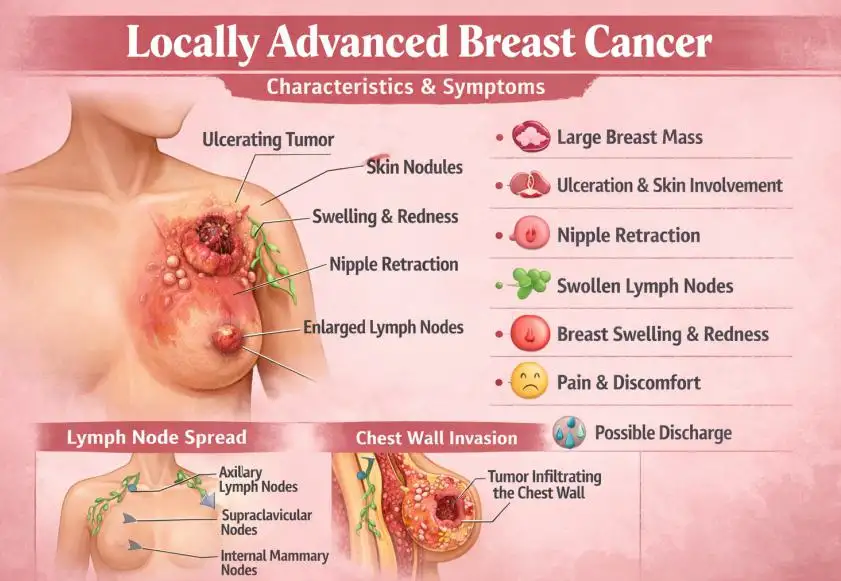
Locally advanced breast cancer (LABC) typically refers to Stage III breast cancer. At this stage, the cancer has spread beyond the original tumor in the breast to nearby lymph nodes or surrounding tissues such as the chest wall or skin, but it has not spread to distant organs like the lungs, liver, or bones.
According to the staging system developed by the American Joint Committee on Cancer (AJCC), Stage III breast cancer is divided into subcategories (IIIA, IIIB, and IIIC) based on tumor size, lymph node involvement, and tissue invasion.
Key characteristics of locally advanced breast cancer include:
-
Tumor larger than 5 cm in some cases
-
Cancer spread to multiple lymph nodes
-
Involvement of the skin or chest wall
-
Inflammatory changes in aggressive forms
Despite being advanced locally, many patients respond well to multimodal treatment.
Types of Locally Advanced Breast Cancer
Locally advanced breast cancer can vary depending on tumor biology and staging.
1. Stage IIIA
-
May involve large tumors with lymph node spread
-
No direct invasion of chest wall or skin
2. Stage IIIB
-
Tumor has spread to the chest wall or skin
-
May include ulceration or swelling
3. Stage IIIC
-
Extensive lymph node involvement (including above or below the collarbone)
4. Inflammatory Breast Cancer (Often Stage IIIB or IIIC)
A rare but aggressive form characterized by redness, swelling, and thickened skin.
Biological Subtypes
| Subtype | Hormone Receptors | HER2 Status | Treatment Implications |
|---|---|---|---|
| HR-positive | Estrogen/Progesterone positive | May be positive or negative | Hormone therapy effective |
| HER2-positive | Variable | Positive | Targeted HER2 therapy beneficial |
| Triple-negative | Negative | Negative | Chemotherapy main option |
Understanding the subtype helps doctors tailor treatment precisely.
Causes and Risk Factors
The exact cause of locally advanced breast cancer is not fully understood, but several risk factors increase the likelihood of developing breast cancer in general.
Common Risk Factors
-
Age over 50
-
Family history of breast or ovarian cancer
-
Genetic mutations such as BRCA1 and BRCA2
-
Obesity
-
Hormone replacement therapy
-
Late menopause or early menstruation
-
Lack of physical activity
Sometimes, locally advanced breast cancer develops when early-stage cancer goes undetected or untreated.
Symptoms and Early Warning Signs
Recognizing symptoms early can significantly impact treatment success.
Common Symptoms
-
Large breast lump
-
Swelling of part or all of the breast
-
Skin redness or warmth
-
Thickened or dimpled skin (peau d’orange appearance)
-
Nipple retraction
-
Persistent breast pain
-
Enlarged lymph nodes under the arm or near the collarbone
If you notice these symptoms, consult a healthcare professional promptly for evaluation.
Diagnosis
Diagnosing locally advanced breast cancer involves multiple steps to confirm the stage and biological characteristics.
Diagnostic Tests
-
Clinical breast examination
-
Mammography
-
Breast ultrasound
-
MRI
-
Core needle biopsy
-
PET or CT scans for staging
Staging Overview
| Stage | Tumor Size | Lymph Node Involvement | Distant Spread |
|---|---|---|---|
| IIIA | Any size | 4–9 nodes | No |
| IIIB | Any size | Possible | No |
| IIIC | Any size | 10+ nodes | No |
Accurate staging ensures that treatment is appropriately planned.
Treatment Options
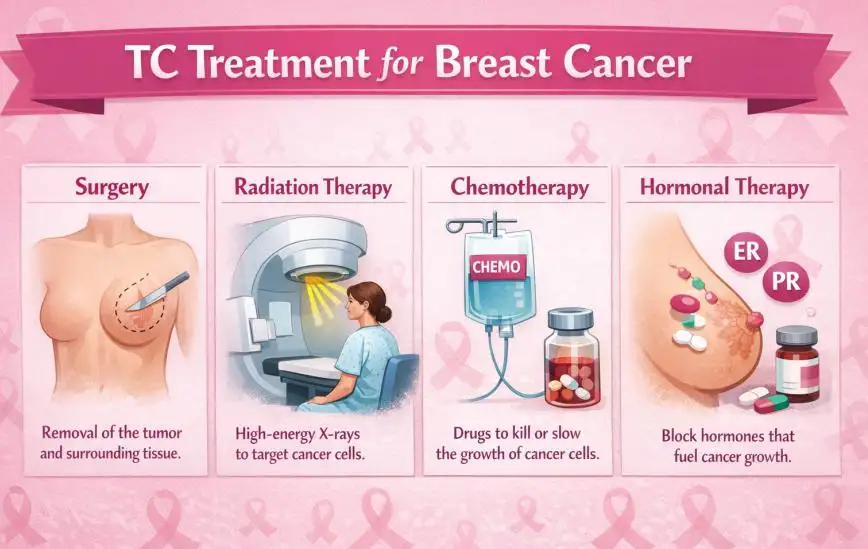
Treatment for locally advanced breast cancer is typically aggressive and multimodal.
1. Neoadjuvant Chemotherapy
Chemotherapy is often given before surgery to shrink the tumor.
2. Surgery
-
Mastectomy
-
Breast-conserving surgery (in selected cases)
-
Axillary lymph node dissection
3. Radiation Therapy
Used after surgery to eliminate remaining cancer cells.
4. Hormone Therapy
For hormone receptor-positive cancers.
5. Targeted Therapy
For HER2-positive tumors.
6. Immunotherapy
Emerging option for certain triple-negative breast cancers.
Treatment plans are individualized based on tumor biology, overall health, and patient preferences.
Prevention and Lifestyle Recommendations
While you cannot completely prevent breast cancer, certain lifestyle choices may reduce risk and improve outcomes.
Preventive Measures
-
Maintain healthy body weight
-
Exercise regularly
-
Limit alcohol consumption
-
Avoid smoking
-
Attend routine screening mammograms
-
Consider genetic counseling if high risk
Healthy habits also support recovery during and after treatment.
Prognosis and Survival Rates
The prognosis for locally advanced breast cancer has improved significantly due to advancements in therapy.
According to the American Cancer Society, the 5-year relative survival rate for Stage III breast cancer is approximately 72%, though this varies based on subtype and response to treatment.
Factors influencing prognosis:
-
Tumor subtype
-
Response to chemotherapy
-
Number of affected lymph nodes
-
Overall health
Early and comprehensive treatment greatly improves survival chances.
Latest Research and Innovations
Medical research continues to enhance outcomes for patients with locally advanced breast cancer.
Promising Developments
-
Personalized medicine based on genomic profiling
-
New antibody-drug conjugates
-
Advanced immunotherapy combinations
-
Improved surgical techniques
-
Precision radiation therapy
Clinical trials offer access to cutting-edge therapies and may be worth discussing with your oncologist.
Coping and Support for Patients
A diagnosis of locally advanced breast cancer can be emotionally overwhelming. Seeking support is essential for both mental and physical well-being.
Helpful Resources
-
Oncology support groups
-
Counseling or psychotherapy
-
Patient navigation programs
-
Family and community support
Organizations such as the Breastcancer.org provide educational resources and community forums.
Remember, you are not alone, support networks play a crucial role in recovery.
Conclusion
Locally advanced breast cancer is a serious diagnosis, but it is treatable with modern, comprehensive care. By understanding the disease, recognizing symptoms early, and working closely with your healthcare team, you can take proactive steps toward effective treatment and recovery.
Ongoing research continues to improve survival rates and quality of life, offering hope for better outcomes. If you suspect symptoms or have been diagnosed, timely medical evaluation and a personalized treatment plan are essential.
FAQ
1. What stage is locally advanced breast cancer?
It typically refers to Stage III breast cancer, including stages IIIA, IIIB, and IIIC.
2. Can locally advanced breast cancer be cured?
Many patients achieve long-term remission, especially with early aggressive treatment.
3. Is chemotherapy always required?
In most cases, yes especially as neoadjuvant therapy before surgery.
4. How long does treatment last?
Treatment may last several months to over a year, depending on the therapy plan.
5. Does locally advanced breast cancer spread to other organs?
By definition, it has not spread to distant organs, but without treatment, it may progress.