Prognosis and Treatment of Stage 4 Gastric Cancer: Comprehensive Guide to Advanced Stomach Cancer Care
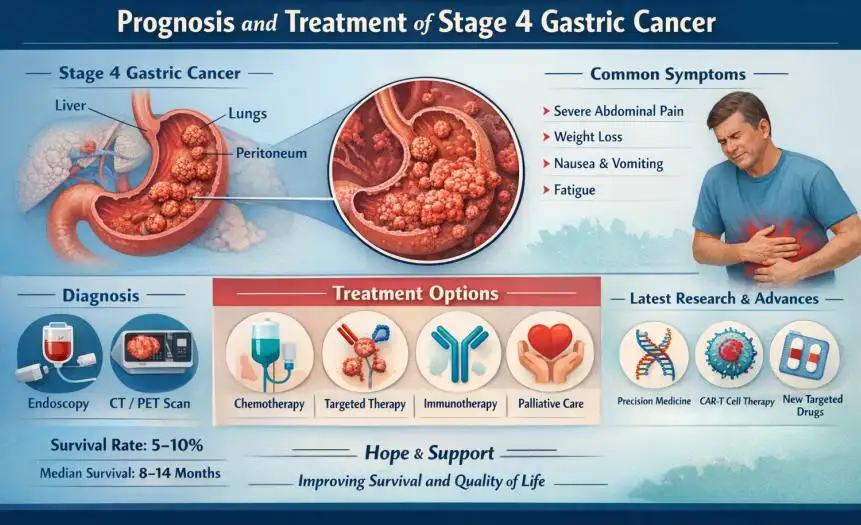
Prognosis and treatment of stage 4 gastric cancer is a critical topic for patients, families, and healthcare providers dealing with advanced stomach cancer. At this stage, the cancer has spread beyond the stomach to distant organs such as the liver, lungs, or peritoneum. While this diagnosis can feel overwhelming, advancements in medical science have significantly improved treatment strategies and supportive care.
Understanding the prognosis and treatment of stage 4 gastric cancer helps patients make informed decisions about therapy options, lifestyle adjustments, and supportive care. This guide explores the causes, symptoms, diagnosis, treatment options, and latest research developments that are shaping the future of advanced gastric cancer management.
Overview
Stage 4 gastric cancer, also known as metastatic stomach cancer, represents the most advanced stage of stomach cancer. In this stage, cancer cells spread to distant organs through the bloodstream or lymphatic system.
Although stage 4 gastric cancer is generally not considered curable, many treatments can slow disease progression, relieve symptoms, and extend survival. Treatment focuses on improving quality of life while controlling tumor growth.
Gastric Cancer Staging Overview
| Stage | Description |
|---|---|
| Stage 1 | Cancer limited to the inner layers of the stomach |
| Stage 2 | Cancer spreads deeper into stomach wall and nearby lymph nodes |
| Stage 3 | Cancer spreads to more lymph nodes or nearby organs |
| Stage 4 | Cancer spreads to distant organs (metastasis) |
Types
Different types of gastric cancer can reach stage 4. Identifying the type helps doctors determine the most effective treatment plan.
Common Types of Gastric Cancer
| Type | Description |
|---|---|
| Adenocarcinoma | The most common type, originating from glandular cells |
| Diffuse Gastric Cancer | Cancer spreads throughout the stomach wall |
| Gastrointestinal Stromal Tumor (GIST) | Rare tumor from connective tissue cells |
| Neuroendocrine Tumors | Develop from hormone-producing cells |
| Lymphoma of the Stomach | Cancer arising from immune system cells |
Each type may respond differently to chemotherapy, targeted therapy, or immunotherapy.
Causes and Risk Factors
The exact cause of gastric cancer is not always known, but several factors significantly increase the risk.
Major Risk Factors
| Risk Factor | Explanation |
|---|---|
| Helicobacter pylori infection | Long-term infection increases stomach inflammation |
| Smoking | Tobacco chemicals damage stomach lining |
| Diet high in salted or smoked foods | Preserved foods increase cancer risk |
| Family history | Genetic predisposition can increase susceptibility |
| Chronic gastritis | Long-term stomach inflammation |
| Age over 60 | Risk increases with age |
Lifestyle factors and genetic conditions can also contribute to the development of gastric cancer.
Symptoms and Early Warning Signs
Stage 4 gastric cancer often produces more noticeable and severe symptoms because the disease has spread to other organs.
Common Symptoms
| Symptom | Description |
|---|---|
| Persistent stomach pain | Often located in the upper abdomen |
| Unexplained weight loss | Significant weight loss without dieting |
| Loss of appetite | Feeling full quickly when eating |
| Nausea and vomiting | Sometimes with blood |
| Fatigue | Due to anemia or cancer progression |
| Difficulty swallowing | Especially when cancer affects the upper stomach |
Because early gastric cancer symptoms are subtle, the disease is often diagnosed at a later stage.
Diagnosis
Diagnosing stage 4 gastric cancer requires several medical tests to confirm the presence and spread of cancer.
Common Diagnostic Methods
| Diagnostic Test | Purpose |
|---|---|
| Endoscopy | Allows doctors to examine the stomach lining |
| Biopsy | Confirms cancer by analyzing tissue samples |
| CT Scan | Detects tumor size and spread |
| PET Scan | Identifies metastasis in distant organs |
| Blood Tests | Evaluate overall health and tumor markers |
| Laparoscopy | Direct visualization of abdominal organs |
Accurate staging is essential to determine the most effective treatment strategy.
Treatment Options
The prognosis and treatment of stage 4 gastric cancer depend on multiple factors such as the patient's health, tumor biology, and metastasis locations. Although surgery is rarely curative at this stage, several treatments can help manage the disease.
Primary Treatment Approaches
| Treatment | Purpose |
|---|---|
| Chemotherapy | Shrinks tumors and slows cancer growth |
| Targeted Therapy | Attacks specific cancer cell proteins |
| Immunotherapy | Helps the immune system fight cancer |
| Radiation Therapy | Reduces tumor size and relieves symptoms |
| Palliative Surgery | Relieves complications like obstruction |
Doctors often combine treatments to improve outcomes.
Targeted Therapy Examples
| Drug Type | Target |
|---|---|
| HER2 inhibitors | HER2-positive tumors |
| VEGF inhibitors | Tumor blood vessel formation |
| PD-1 inhibitors | Immune checkpoint proteins |
These treatments represent important advances in gastric cancer care.
Prevention and Lifestyle Recommendations
While stage 4 gastric cancer cannot be prevented once diagnosed, lifestyle changes can support treatment and improve overall health.
Helpful Lifestyle Strategies
| Recommendation | Benefit |
|---|---|
| Balanced diet rich in fruits and vegetables | Supports immune function |
| Avoid smoking | Reduces further health risks |
| Maintain healthy weight | Improves treatment tolerance |
| Regular medical monitoring | Detects complications early |
| Stress management | Supports emotional wellbeing |
Nutrition and supportive care play an important role during treatment.
Prognosis and Survival Rates
The prognosis and treatment of stage 4 gastric cancer vary depending on factors such as tumor genetics, treatment response, and overall health.
Average Survival Statistics
| Factor | Typical Outcome |
|---|---|
| 5-year survival rate | Approximately 5–10% |
| Median survival with treatment | 8–14 months |
| Survival improvement with targeted therapy | Increasing in recent studies |
Although survival rates may seem discouraging, individual outcomes can differ significantly. Some patients respond well to new therapies and live longer than expected.
Latest Research and Innovations
Modern cancer research is continuously improving the prognosis and treatment of stage 4 gastric cancer.
Promising Medical Advances
| Innovation | Description |
|---|---|
| Precision medicine | Treatments based on tumor genetics |
| Immunotherapy combinations | Enhanced immune response |
| CAR-T cell therapy | Engineered immune cells targeting tumors |
| Liquid biopsy | Non-invasive cancer monitoring |
| New targeted drugs | Improved survival outcomes |
Clinical trials are offering new hope for patients with advanced gastric cancer.
Coping and Support for Patients
Living with stage 4 gastric cancer is emotionally and physically challenging. Strong support systems can significantly improve quality of life.
Support Strategies
| Type of Support | Benefit |
|---|---|
| Psychological counseling | Helps manage stress and anxiety |
| Cancer support groups | Connects patients with others facing similar challenges |
| Palliative care teams | Focus on symptom management and comfort |
| Family involvement | Provides emotional and practical support |
Patients should not face the journey alone, professional and community support can make a significant difference.
Conclusion
Understanding the prognosis and treatment of stage 4 gastric cancer empowers patients and families to make informed healthcare decisions. Although this stage of gastric cancer presents serious challenges, modern treatment options such as chemotherapy, targeted therapy, and immunotherapy continue to improve patient outcomes.
Ongoing research, early supportive care, and personalized treatment plans offer hope for extending survival and enhancing quality of life. With medical innovation advancing rapidly, the outlook for patients with advanced gastric cancer continues to evolve.
FAQ
1. What is stage 4 gastric cancer?
Stage 4 gastric cancer is the most advanced stage of stomach cancer where the disease has spread to distant organs such as the liver, lungs, or abdominal lining.
2. Can stage 4 gastric cancer be cured?
In most cases, stage 4 gastric cancer is not curable. However, treatments can slow disease progression, reduce symptoms, and improve quality of life.
3. What is the life expectancy for stage 4 gastric cancer?
Life expectancy varies widely, but the average survival time ranges from 8 to 14 months with treatment. Some patients live longer with advanced therapies.
4. What treatments are available for stage 4 gastric cancer?
Common treatments include chemotherapy, immunotherapy, targeted therapy, radiation therapy, and palliative care.
5. Is immunotherapy effective for stage 4 gastric cancer?
Yes, immunotherapy has shown promising results for certain patients, especially those with specific genetic markers or immune-related tumor characteristics.