Prognosis for Stage 4 Cervical Cancer: Survival Rates, Treatment Options, and What Patients Should Know
Receiving a diagnosis of advanced cancer can feel overwhelming, especially when trying to understand what lies ahead. The prognosis for stage 4 cervical cancer is often one of the first concerns for patients and their families, as it helps provide a general outlook on survival, treatment response, and quality of life. While statistics may seem discouraging at first, it is important to remember that prognosis varies widely from person to person.
Today, advances in medical treatments, improved supportive care, and ongoing research are offering new hope even in advanced stages. This article explains the prognosis for stage 4 cervical cancer in a clear and balanced way, helping you understand survival rates, treatment possibilities, and practical steps that may improve outcomes and well-being.
Overview of Stage 4 Cervical Cancer
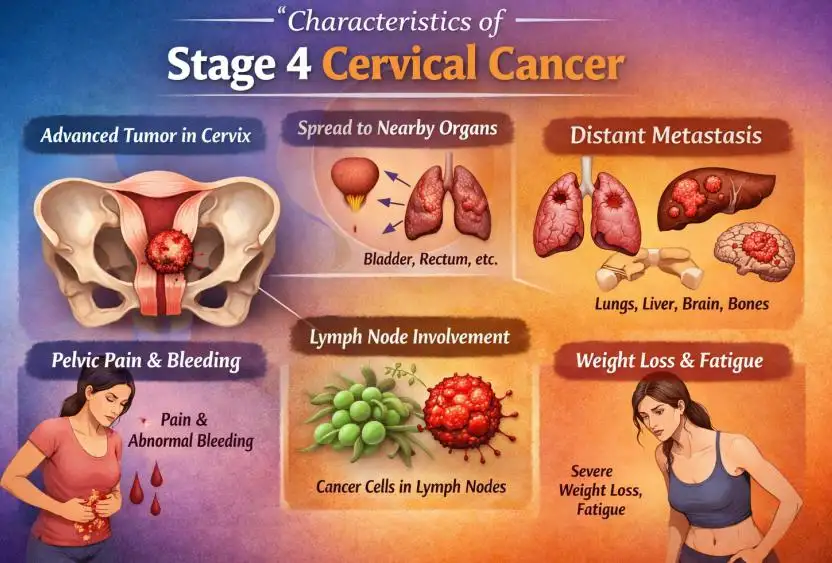
Stage 4 cervical cancer is considered advanced cancer, meaning the disease has spread beyond the cervix to nearby organs or distant parts of the body. Doctors often refer to this spread as metastasis.
Stage 4 cervical cancer is divided into two subtypes:
| Stage | Description |
|---|---|
| Stage IVA | Cancer has spread to nearby organs such as the bladder or rectum |
| Stage IVB | Cancer has spread to distant organs such as lungs, liver, bones, or distant lymph nodes |
At this stage, treatment focuses on controlling disease progression, relieving symptoms, prolonging survival, and maintaining quality of life.
Types of Cervical Cancer
Understanding the type of cervical cancer can influence treatment decisions and overall prognosis.
Squamous Cell Carcinoma
This is the most common type, originating from the thin cells lining the outer part of the cervix.
Adenocarcinoma
Develops in glandular cells that produce mucus in the cervical canal.
Other Rare Types
These include adenosquamous carcinoma and neuroendocrine tumors, which may behave differently and require specialized treatment approaches.
Causes and Risk Factors
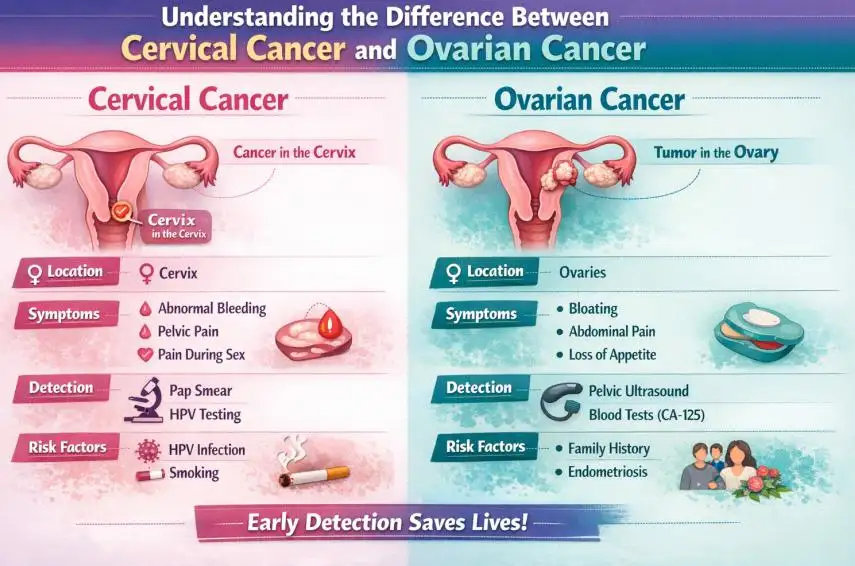
The primary cause of cervical cancer is persistent infection with high-risk types of human papillomavirus (HPV). However, several factors increase the risk of developing advanced disease:
-
Persistent HPV infection
-
Lack of regular cervical screening
-
Smoking
-
Weakened immune system
-
Early sexual activity or multiple sexual partners
-
Long-term use of oral contraceptives
-
Limited access to healthcare services
In many cases, stage 4 cervical cancer develops because early-stage disease produces few or no symptoms.
Symptoms and Early Warning Signs
Symptoms often become more noticeable as cervical cancer advances. Common signs include:
-
Abnormal vaginal bleeding
-
Pelvic pain or lower back pain
-
Pain during intercourse
-
Unusual vaginal discharge
-
Difficulty urinating or bowel changes
-
Unexplained weight loss
-
Fatigue or weakness
-
Swelling in the legs
Because symptoms may resemble other conditions, medical evaluation is essential for accurate diagnosis.
Diagnosis
Diagnosing stage 4 cervical cancer typically involves several tests to determine the extent of spread:
-
Pelvic examination
-
Pap smear and HPV testing
-
Biopsy to confirm cancer type
-
Imaging tests such as CT scan, MRI, or PET scan
-
Blood tests to assess overall health
Accurate staging helps doctors create a personalized treatment plan and estimate prognosis more reliably.
Treatment Options
Treatment for stage 4 cervical cancer is usually individualized. The goal may be disease control rather than cure, although some patients respond very well to therapy.
Chemotherapy
Used to slow cancer growth or shrink tumors.
Radiation Therapy
Helps control local tumors and relieve symptoms.
Targeted Therapy
Targets specific cancer cell pathways to improve treatment effectiveness.
Immunotherapy
Stimulates the immune system to recognize and attack cancer cells, showing promising results in some advanced cases.
Palliative Care
Focuses on symptom relief, pain management, and improving quality of life alongside active treatment.
Prevention and Lifestyle Recommendations
Although stage 4 cervical cancer cannot be prevented after diagnosis, certain lifestyle practices may support treatment and overall health:
-
Maintain a balanced, nutrient-rich diet
-
Stay physically active as tolerated
-
Avoid smoking
-
Manage stress through counseling or relaxation techniques
-
Attend all scheduled medical appointments
-
Follow recommended treatment plans closely
For prevention in the general population, HPV vaccination and regular screening remain the most effective strategies.
Prognosis and Survival Rates
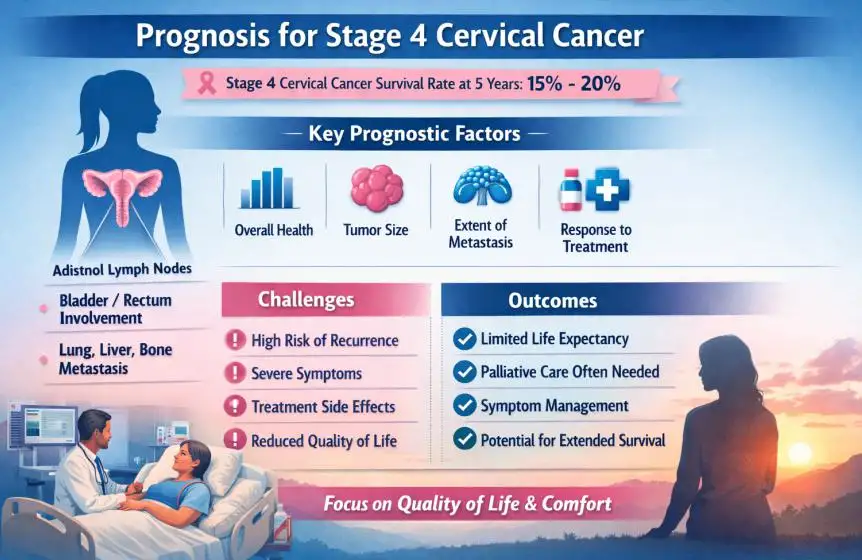
The prognosis for stage 4 cervical cancer depends on multiple factors, including the extent of metastasis, overall health, response to treatment, and cancer biology.
In general, the five-year survival rate for stage 4 cervical cancer is estimated to be around 15–20%. However, these figures represent averages across large populations and cannot predict an individual outcome. Some patients respond well to treatment and live significantly longer than expected.
The table below provides a simplified comparison:
| Cancer Stage | Approximate 5-Year Survival Rate |
|---|---|
| Stage I | 80–90% |
| Stage II | 60–70% |
| Stage III | 30–40% |
| Stage IV | 15–20% |
Factors influencing prognosis include:
-
Location and number of metastases
-
Tumor type and biology
-
Age and overall health
-
Access to advanced treatments
-
Response to therapy
Latest Research and Innovations
Research in advanced cervical cancer continues to evolve, offering new possibilities for improved outcomes. Current areas of innovation include:
-
Immunotherapy combinations that enhance immune response
-
Targeted therapies designed for specific tumor mutations
-
Improved radiation techniques for better precision
-
AI-assisted treatment planning to optimize radiation dosing
-
Clinical trials exploring personalized medicine approaches
While these developments are still evolving, they represent meaningful progress in improving survival and quality of life for patients with advanced disease.
Coping and Support for Patients
Living with stage 4 cervical cancer involves both physical and emotional challenges. Support systems play a critical role in coping with diagnosis and treatment.
Helpful support strategies include:
-
Counseling or psychological support
-
Joining cancer support groups
-
Open communication with healthcare providers
-
Family and caregiver involvement
-
Palliative care teams focusing on comfort and dignity
Emotional well-being is an essential part of cancer care and can positively influence overall quality of life.
Conclusion
The prognosis for stage 4 cervical cancer can be difficult to face, but it is important to understand that survival statistics are only general estimates. Every patient’s journey is unique. Advances in treatment, personalized care plans, and supportive therapies continue to improve outcomes and offer hope even in advanced stages.
Staying informed, maintaining open communication with healthcare professionals, and focusing on both medical and emotional support can make a meaningful difference in navigating this challenging diagnosis.
FAQ
1. What is the life expectancy for stage 4 cervical cancer?
Life expectancy varies widely depending on treatment response, overall health, and how far the cancer has spread. Some patients live several years beyond diagnosis, especially with modern therapies.
2. Can stage 4 cervical cancer be cured?
A cure is less common at this stage, but treatment can control the disease, relieve symptoms, and extend survival. Some patients achieve long-term remission.
3. What affects the prognosis for stage 4 cervical cancer?
Key factors include cancer spread, tumor type, overall health, and response to treatment.
4. Is treatment still beneficial in stage 4 cervical cancer?
Yes. Treatment can slow disease progression, reduce symptoms, and improve quality of life.
5. Are survival rates improving?
Yes. Advances in immunotherapy, targeted therapy, and supportive care are gradually improving outcomes for many patients.