Understanding the Difference Between Cervical Cancer and Ovarian Cancer: Symptoms, Causes, and Key Facts
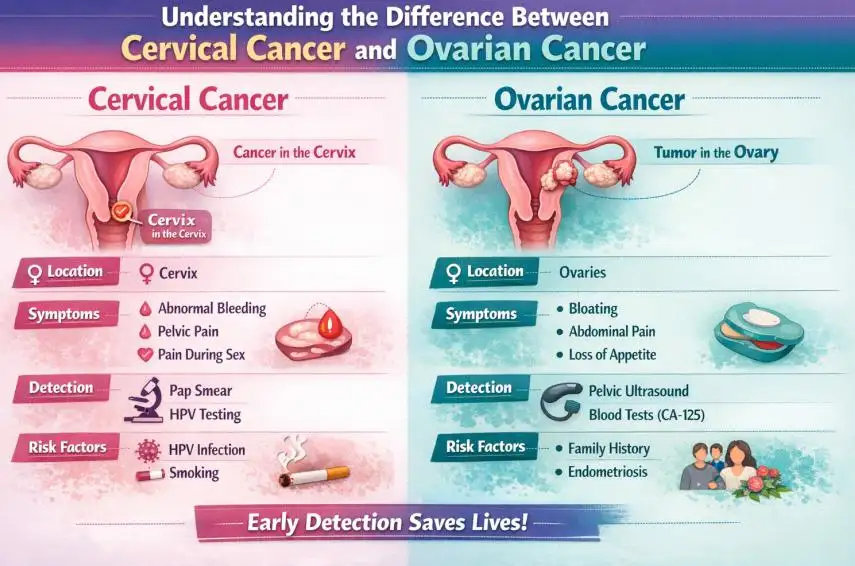
Understanding the difference between cervical cancer and ovarian cancer is essential for women’s health awareness. Although both diseases affect the female reproductive system, they develop in different organs, present different symptoms, and require different approaches to diagnosis and treatment. Because early detection greatly improves treatment outcomes, knowing the distinctions between these two cancers can help individuals recognize warning signs sooner and seek medical attention promptly.
Many people mistakenly believe that cervical cancer and ovarian cancer are similar because they both involve the reproductive organs. However, these cancers differ in how they develop, their risk factors, and their symptoms. In this article, we will explore the key aspects of understanding the difference between cervical cancer and ovarian cancer, including their causes, symptoms, diagnosis, treatment options, and preventive measures.
Overview
Cervical cancer and ovarian cancer are two major types of gynecologic cancers that affect women worldwide. While both originate in the reproductive system, they develop in different areas and behave differently in terms of progression and detection.
Cervical cancer develops in the cervix, which is the lower part of the uterus connecting to the vagina. In contrast, ovarian cancer originates in the ovaries, the organs responsible for producing eggs and hormones such as estrogen and progesterone.
Key Differences Between Cervical Cancer and Ovarian Cancer
| Aspect | Cervical Cancer | Ovarian Cancer |
|---|---|---|
| Location | Cervix (lower uterus) | Ovaries |
| Main Cause | Human papillomavirus (HPV) infection | Genetic mutations and unknown factors |
| Early Detection | Often detectable with screening (Pap smear) | Often detected at later stages |
| Common Age Group | 30–50 years | 50 years and older |
| Prevention | HPV vaccination and regular screening | No specific screening test |
Understanding the difference between cervical cancer and ovarian cancer helps healthcare providers determine the most effective treatment and prevention strategies.
Types
Types of Cervical Cancer
Cervical cancer mainly occurs in two forms:
Squamous Cell Carcinoma
This is the most common type and develops in the thin, flat cells lining the outer cervix.
Adenocarcinoma
This type begins in the glandular cells that line the cervical canal.
Types of Ovarian Cancer
Ovarian cancer has several subtypes depending on the cells where the cancer begins.
Epithelial Tumors
These are the most common and develop on the outer surface of the ovaries.
Germ Cell Tumors
These start in the cells that produce eggs and usually affect younger women.
Stromal Tumors
These develop in the connective tissue cells responsible for producing hormones.
Causes and Risk Factors
Understanding the difference between cervical cancer and ovarian cancer also involves recognizing their unique causes and risk factors.
Cervical Cancer Causes and Risk Factors
| Risk Factor | Explanation |
|---|---|
| HPV Infection | The most significant cause of cervical cancer |
| Early sexual activity | Increased exposure to HPV |
| Multiple sexual partners | Higher risk of HPV infection |
| Smoking | Weakens immune response |
| Weakened immune system | Makes HPV infection more likely to progress |
Ovarian Cancer Causes and Risk Factors
| Risk Factor | Explanation |
|---|---|
| Family history | Higher risk with BRCA1 or BRCA2 gene mutations |
| Age | Risk increases after menopause |
| Hormone therapy | Long-term estrogen therapy may increase risk |
| Endometriosis | Associated with certain ovarian cancers |
| Obesity | Linked to higher cancer risk |
Symptoms and Early Warning Signs
Symptoms can vary significantly between the two diseases, which is another important aspect of understanding the difference between cervical cancer and ovarian cancer.
Cervical Cancer Symptoms
-
Abnormal vaginal bleeding
-
Bleeding after intercourse
-
Pelvic pain
-
Unusual vaginal discharge
-
Pain during intercourse
These symptoms often appear in later stages, although screening tests can detect precancerous changes earlier.
Ovarian Cancer Symptoms
-
Persistent bloating
-
Abdominal or pelvic pain
-
Feeling full quickly when eating
-
Frequent urination
-
Unexplained weight loss
Ovarian cancer symptoms are often subtle and may be mistaken for digestive issues, making early diagnosis more challenging.
Diagnosis
Doctors use different diagnostic methods depending on the suspected cancer type.
Cervical Cancer Diagnosis
| Test | Purpose |
|---|---|
| Pap smear | Detects abnormal cervical cells |
| HPV test | Identifies high-risk HPV strains |
| Colposcopy | Examines cervix with magnification |
| Biopsy | Confirms cancer diagnosis |
Ovarian Cancer Diagnosis
| Test | Purpose |
|---|---|
| Pelvic exam | Checks for abnormalities |
| Ultrasound | Visualizes ovaries and tumors |
| CA-125 blood test | Measures cancer-related protein |
| CT or MRI scan | Determines cancer spread |
Treatment Options
Treatment strategies depend on the cancer type, stage, and overall patient health.
Cervical Cancer Treatments
Common treatment options include:
-
Surgery (removal of abnormal tissue or cervix)
-
Radiation therapy
-
Chemotherapy
-
Targeted therapy
-
Immunotherapy
Early-stage cervical cancer may be treated effectively with surgery alone.
Ovarian Cancer Treatments
Ovarian cancer treatment typically involves:
-
Surgery to remove tumors and affected organs
-
Chemotherapy
-
Targeted therapy (such as PARP inhibitors)
-
Hormone therapy in certain cases
Because ovarian cancer is often detected late, treatment usually requires a combination of therapies.
Prevention and Lifestyle Recommendations
While not all cancers can be prevented, several steps may reduce the risk.
Cervical Cancer Prevention
| Prevention Method | Benefit |
|---|---|
| HPV vaccination | Protects against high-risk HPV strains |
| Regular Pap tests | Detects precancerous cells |
| Safe sexual practices | Reduces HPV exposure |
| Avoid smoking | Supports immune health |
Ovarian Cancer Prevention
| Prevention Method | Benefit |
|---|---|
| Genetic counseling | Helps assess hereditary risk |
| Healthy lifestyle | Maintains hormone balance |
| Regular medical checkups | Detects abnormalities earlier |
| Oral contraceptives | May reduce ovarian cancer risk |
Prognosis and Survival Rates
The outlook for patients varies significantly depending on the type of cancer and how early it is detected.
| Cancer Type | 5-Year Survival Rate (Approximate) |
|---|---|
| Cervical Cancer (early stage) | 90% or higher |
| Cervical Cancer (advanced stage) | 15–40% |
| Ovarian Cancer (early stage) | 90% |
| Ovarian Cancer (advanced stage) | 30–50% |
Understanding the difference between cervical cancer and ovarian cancer highlights the importance of early detection and screening.
Latest Research and Innovations
Medical research continues to improve prevention, diagnosis, and treatment for gynecologic cancers.
Recent innovations include:
-
Advanced HPV vaccines covering more virus strains
-
Genetic testing for hereditary cancer risks
-
Targeted therapies that attack cancer-specific mutations
-
Immunotherapy treatments that stimulate the immune system
-
AI-assisted diagnostic imaging for earlier detection
These advancements offer hope for better survival rates and improved quality of life for patients.
Coping and Support for Patients
A cancer diagnosis can be emotionally and physically challenging. Support systems play a vital role in recovery and long-term well-being.
Helpful support strategies include:
-
Joining cancer support groups
-
Seeking counseling or psychological therapy
-
Maintaining open communication with healthcare providers
-
Practicing stress-management techniques such as meditation
-
Building a strong support network of family and friends
Patients should also focus on nutrition, physical activity, and emotional well-being throughout their treatment journey.
Conclusion
Understanding the difference between cervical cancer and ovarian cancer is crucial for improving awareness, early detection, and prevention. While both cancers affect the female reproductive system, they differ significantly in their location, causes, symptoms, and treatment approaches.
Cervical cancer is strongly linked to HPV infection and can often be detected early through screening programs. Ovarian cancer, on the other hand, tends to develop silently and is often diagnosed at later stages. By staying informed, maintaining regular health screenings, and adopting a healthy lifestyle, women can take proactive steps to protect their reproductive health.
FAQ
1. What is the main difference between cervical cancer and ovarian cancer?
The main difference is the location where the cancer develops. Cervical cancer forms in the cervix, while ovarian cancer develops in the ovaries.
2. Which cancer is harder to detect early?
Ovarian cancer is generally harder to detect early because its symptoms are vague and there is no widely used screening test.
3. Can cervical cancer be prevented?
Yes. Cervical cancer can often be prevented through HPV vaccination, regular Pap smears, and safe sexual practices.
4. Are ovarian cancer symptoms easy to recognize?
Not always. Symptoms such as bloating or abdominal discomfort can be subtle and may be mistaken for digestive problems.
5. Who is most at risk for ovarian cancer?
Women over the age of 50, those with a family history of ovarian cancer, and individuals with BRCA gene mutations have a higher risk.