Stage 1 Spinal Cancer: Early Symptoms, Diagnosis, Treatment, and Survival Guide
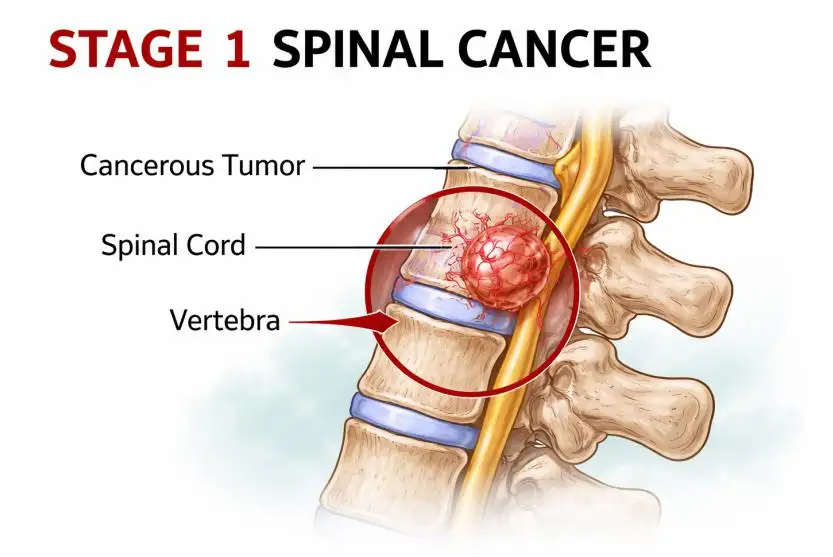
Stage 1 spinal cancer is considered the earliest stage of a malignant tumor that develops in or around the spine. At this stage, the tumor is typically small and confined to its original location, meaning it has not yet spread to nearby tissues or distant organs. Because it is detected early, treatment outcomes are often significantly better compared to more advanced stages.
Understanding stage 1 spinal cancer is crucial for early detection and effective treatment. Many people ignore early warning signs such as persistent back pain or nerve-related symptoms, assuming they are caused by common musculoskeletal issues. However, recognizing the symptoms and seeking medical evaluation promptly can dramatically improve prognosis and quality of life.
Overview
Stage 1 spinal cancer refers to a tumor that originates in the spine or surrounding structures and remains localized. The spine consists of vertebrae, spinal cord, nerves, and supportive tissues. Cancer can develop in any of these components.
Early-stage spinal cancer is often treatable because the tumor is still contained. Doctors typically classify spinal tumors based on their origin and whether they are primary (starting in the spine) or secondary (spread from another part of the body).
Early detection plays a vital role in preventing complications such as nerve damage, spinal instability, or paralysis.
| Key Feature | Description |
|---|---|
| Stage | Stage 1 (localized tumor) |
| Spread | No distant metastasis |
| Tumor Size | Usually small and confined |
| Treatment Outlook | Often favorable if treated early |
| Survival Chances | Generally higher than later stages |
Types
Spinal cancer can develop in several forms depending on where it originates.
| Type | Description |
|---|---|
| Primary Spinal Tumors | Begin directly in the spine or spinal cord |
| Metastatic Spinal Tumors | Spread to the spine from cancers in other organs |
| Intramedullary Tumors | Grow inside the spinal cord |
| Intradural-Extramedullary Tumors | Grow inside the spinal covering but outside the spinal cord |
| Extradural Tumors | Develop in vertebrae or surrounding bone |
In stage 1 spinal cancer, the tumor is generally localized regardless of its type.
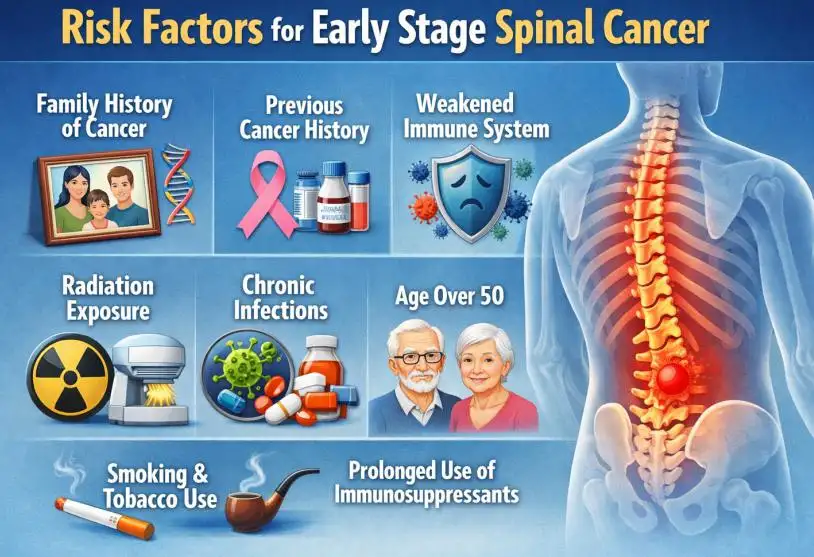
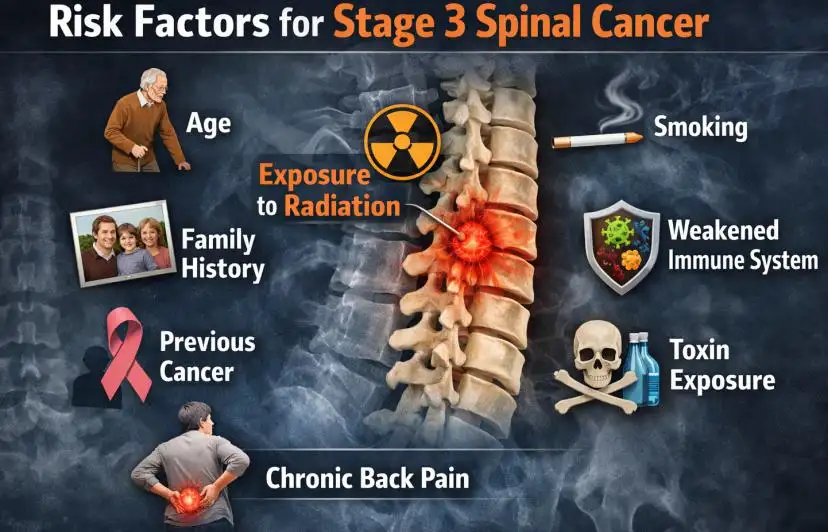
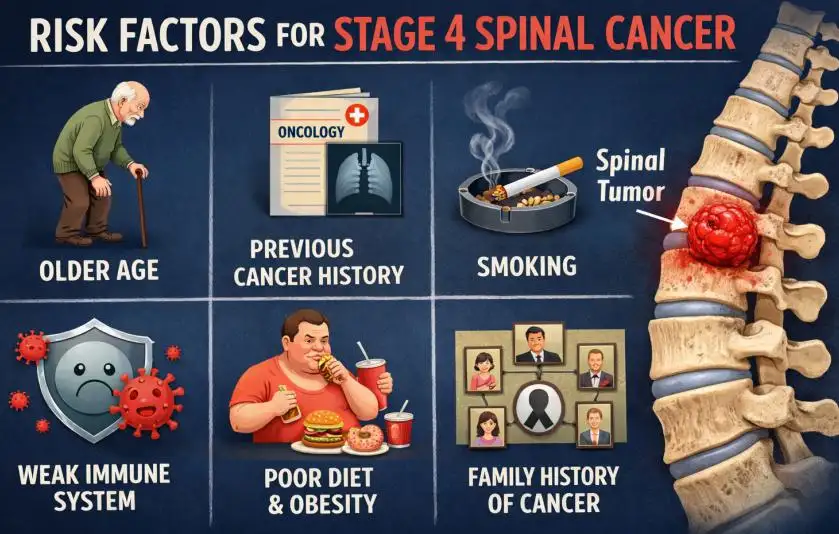
Causes and Risk Factors
The exact cause of spinal cancer is not always known, but several factors may increase the risk of developing tumors in the spine.
| Risk Factor | Explanation |
|---|---|
| Genetic mutations | Changes in DNA may trigger abnormal cell growth |
| Family history | Certain inherited conditions increase risk |
| Previous cancer | Cancer from other organs can spread to the spine |
| Radiation exposure | High radiation exposure may increase tumor risk |
| Weakened immune system | Reduces the body's ability to fight abnormal cells |
Although these factors increase risk, many patients diagnosed with stage 1 spinal cancer have no obvious cause.
Symptoms and Early Warning Signs
Symptoms of stage 1 spinal cancer can be subtle and often resemble common back problems. Early detection depends on recognizing persistent or unusual symptoms.
Common early symptoms include:
-
Persistent back pain that does not improve with rest
-
Pain that worsens at night
-
Tingling or numbness in arms or legs
-
Muscle weakness
-
Reduced mobility or stiffness
-
Difficulty walking or maintaining balance
| Symptom | Possible Reason |
|---|---|
| Localized back pain | Tumor pressing on bone or nerves |
| Numbness | Nerve compression |
| Weakness | Spinal cord pressure |
| Balance problems | Neurological involvement |
If these symptoms persist for several weeks, medical evaluation is recommended.
Diagnosis
Diagnosing stage 1 spinal cancer requires a combination of imaging tests and medical evaluation.
Doctors typically use the following diagnostic tools:
| Diagnostic Method | Purpose |
|---|---|
| MRI scan | Detailed images of spinal cord and soft tissues |
| CT scan | Shows bone structure and tumor location |
| X-ray | Detects structural abnormalities |
| Biopsy | Confirms whether the tumor is cancerous |
| Blood tests | Helps evaluate overall health |
Early diagnosis allows doctors to determine the tumor stage and create an effective treatment plan.
Treatment Options
Treatment for stage 1 spinal cancer focuses on removing or controlling the tumor while preserving spinal function.
Common treatment options include:
| Treatment | Description |
|---|---|
| Surgery | Removal of the tumor |
| Radiation therapy | Targets and destroys cancer cells |
| Chemotherapy | Uses drugs to kill cancer cells |
| Targeted therapy | Focuses on specific cancer cell mutations |
| Rehabilitation therapy | Helps restore mobility and strength |
In many cases, surgery combined with radiation therapy offers the best results for early-stage spinal tumors.
Prevention and Lifestyle Recommendations
While it is not always possible to prevent spinal cancer, certain lifestyle habits may help reduce cancer risk and support spinal health.
Recommended lifestyle practices include:
-
Maintaining a healthy weight
-
Regular physical activity
-
Avoiding smoking
-
Limiting exposure to harmful radiation
-
Eating a balanced diet rich in antioxidants
-
Managing chronic health conditions
These habits help strengthen the immune system and improve overall health.
Prognosis and Survival Rates
The prognosis for stage 1 spinal cancer is generally favorable compared to later stages. Because the tumor is still localized, treatment can often remove or control the cancer effectively.
| Factor | Impact on Prognosis |
|---|---|
| Early diagnosis | Significantly improves survival |
| Tumor type | Some tumors respond better to treatment |
| Patient age | Younger patients often recover faster |
| Treatment success | Complete tumor removal improves outcomes |
Many patients diagnosed at stage 1 can achieve long-term remission and maintain a good quality of life.
Latest Research and Innovations
Medical research continues to improve treatment strategies for spinal cancer. Several innovative approaches are being explored.
Emerging developments include:
-
Precision medicine based on genetic tumor profiling
-
Advanced minimally invasive spinal surgery
-
Proton beam radiation therapy
-
Immunotherapy treatments
-
AI-assisted imaging for early tumor detection
These innovations aim to improve survival rates and reduce treatment side effects.
Coping and Support for Patients
A diagnosis of spinal cancer can be emotionally challenging for patients and their families. Support systems play a crucial role in recovery and well-being.
Helpful coping strategies include:
-
Seeking counseling or psychological support
-
Joining cancer support groups
-
Communicating openly with healthcare providers
-
Practicing stress management techniques
-
Maintaining social connections
Family support and professional guidance can greatly improve the patient’s emotional resilience.
Conclusion
Stage 1 spinal cancer represents the earliest stage of a tumor affecting the spine, offering the best opportunity for successful treatment. Because the cancer remains localized, medical interventions such as surgery, radiation therapy, and targeted treatments can often achieve positive outcomes.
Early recognition of symptoms, prompt medical diagnosis, and comprehensive treatment planning are essential for improving survival rates. By staying informed, adopting healthy lifestyle habits, and seeking appropriate medical care, patients can significantly increase their chances of recovery and long-term health.
FAQ
1. What is stage 1 spinal cancer?
Stage 1 spinal cancer is the earliest stage of spinal cancer where the tumor is small and confined to its original location without spreading to other parts of the body.
2. Is stage 1 spinal cancer curable?
In many cases, stage 1 spinal cancer can be treated successfully, especially if the tumor is detected early and removed surgically.
3. What are the first signs of spinal cancer?
Early signs may include persistent back pain, numbness, weakness in the limbs, and difficulty walking or maintaining balance.
4. How is spinal cancer detected?
Doctors typically use imaging tests such as MRI or CT scans along with a biopsy to confirm the presence of spinal cancer.
5. Can spinal cancer be prevented?
While there is no guaranteed prevention, maintaining a healthy lifestyle, avoiding smoking, and seeking medical care for persistent symptoms may help reduce risk and improve early detection.