Stage 3 Cervical Cancer Treatment: Comprehensive Guide to Symptoms, Diagnosis, and Modern Treatment Options
Cervical cancer remains one of the most common cancers affecting women worldwide. While early detection often leads to highly successful treatment outcomes, some patients are diagnosed at more advanced stages, including stage 3. Understanding Stage 3 Cervical Cancer Treatment is essential for patients, families, and caregivers who are navigating this challenging diagnosis.
Stage 3 cervical cancer means the cancer has spread beyond the cervix into surrounding tissues but has not reached distant organs. Although this stage is more complex to treat, modern medical advancements have significantly improved treatment strategies and survival outcomes. This guide explains everything you need to know about stage 3 cervical cancer, including symptoms, causes, diagnosis, and the most effective treatment options available today.
Overview
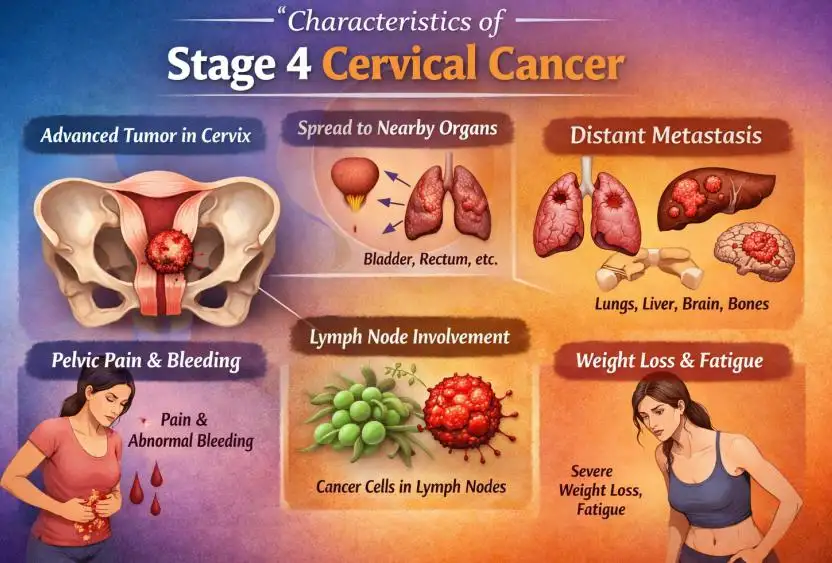
Stage 3 cervical cancer is categorized as a locally advanced stage of cervical cancer. At this stage, cancer has typically spread to the lower part of the vagina, pelvic wall, or may cause kidney-related complications due to blocked ureters.
Doctors typically classify this stage using the FIGO staging system. Understanding the extent of the disease helps medical teams determine the most appropriate Stage 3 Cervical Cancer Treatment plan.
Stage 3 Cervical Cancer Subtypes
| Substage | Description |
|---|---|
| Stage 3A | Cancer has spread to the lower third of the vagina but not to the pelvic wall |
| Stage 3B | Cancer has spread to the pelvic wall and may block the ureters, causing kidney problems |
| Stage 3C1 | Cancer has spread to nearby pelvic lymph nodes |
| Stage 3C2 | Cancer has spread to para-aortic lymph nodes |
These substages help oncologists tailor treatment approaches and predict outcomes.
Types
Cervical cancer can develop in different types of cells within the cervix. The type of cancer influences treatment decisions and prognosis.
Common Types of Cervical Cancer
| Type | Description |
|---|---|
| Squamous Cell Carcinoma | The most common type, originating in the thin cells lining the cervix |
| Adenocarcinoma | Develops in mucus-producing glandular cells of the cervix |
| Adenosquamous Carcinoma | A rare form containing both squamous and glandular cancer cells |
| Small Cell Carcinoma | Rare but aggressive form of cervical cancer |
Most cases of stage 3 cervical cancer involve squamous cell carcinoma.
Causes and Risk Factors
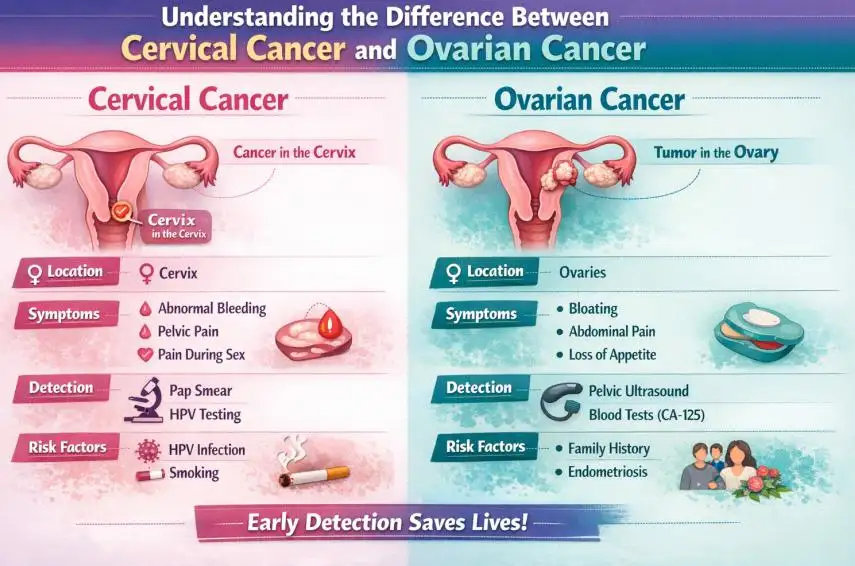
The primary cause of cervical cancer is persistent infection with high-risk strains of the Human Papillomavirus (HPV). However, several additional risk factors may increase the likelihood of developing the disease.
Major Risk Factors
| Risk Factor | Explanation |
|---|---|
| Persistent HPV infection | High-risk HPV types such as HPV-16 and HPV-18 cause most cervical cancers |
| Smoking | Weakens the immune system and damages cervical cells |
| Weakened immune system | Increases vulnerability to HPV infections |
| Multiple sexual partners | Raises the likelihood of HPV exposure |
| Early sexual activity | Longer exposure period to HPV |
| Long-term oral contraceptive use | May slightly increase risk when used for many years |
HPV vaccination and routine screening significantly reduce the risk of developing cervical cancer.
Symptoms and Early Warning Signs
Stage 3 cervical cancer may produce more noticeable symptoms than earlier stages. However, symptoms can vary between individuals.
Common Symptoms
| Symptom | Description |
|---|---|
| Abnormal vaginal bleeding | Bleeding between periods, after intercourse, or after menopause |
| Pelvic pain | Persistent discomfort in the lower abdomen |
| Pain during intercourse | Also known as dyspareunia |
| Unusual vaginal discharge | May be watery, bloody, or foul-smelling |
| Swelling of the legs | May occur due to lymph node involvement |
| Urinary problems | Difficulty urinating due to ureter obstruction |
If these symptoms occur, medical evaluation should be sought immediately.
Diagnosis
Diagnosing stage 3 cervical cancer involves a combination of physical exams, imaging tests, and biopsies.
Diagnostic Procedures
| Test | Purpose |
|---|---|
| Pap smear | Detects abnormal cervical cells |
| HPV testing | Identifies high-risk HPV infection |
| Colposcopy | Allows close examination of the cervix |
| Cervical biopsy | Confirms the presence of cancer cells |
| CT scan or MRI | Determines the spread of cancer |
| PET scan | Detects lymph node or distant involvement |
Accurate diagnosis helps doctors determine the most effective Stage 3 Cervical Cancer Treatment plan.
Treatment Options
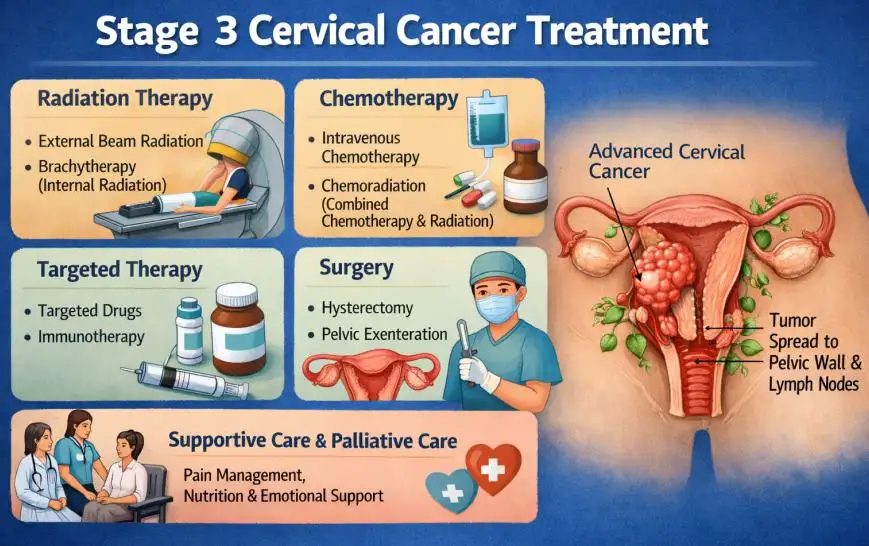
Treating stage 3 cervical cancer typically requires a combination of therapies. The goal is to destroy cancer cells, control tumor growth, and prevent further spread.
Standard Treatment Approaches
| Treatment | Description |
|---|---|
| Radiation Therapy | High-energy radiation used to destroy cancer cells |
| Chemotherapy | Anti-cancer drugs that enhance the effectiveness of radiation |
| Concurrent Chemoradiation | Combination of chemotherapy and radiation, considered the standard treatment |
| Brachytherapy | Internal radiation placed near the tumor |
| Targeted Therapy | Drugs that target specific cancer cell pathways |
Most Common Treatment Strategy
The most widely recommended Stage 3 Cervical Cancer Treatment is concurrent chemoradiotherapy, which combines external radiation therapy with chemotherapy drugs such as cisplatin.
This approach improves survival rates and enhances treatment effectiveness.
Prevention and Lifestyle Recommendations
Although not all cervical cancer cases can be prevented, several strategies significantly reduce the risk.
Prevention Strategies
| Prevention Method | Benefit |
|---|---|
| HPV vaccination | Protects against high-risk HPV strains |
| Regular Pap tests | Detects precancerous changes early |
| Safe sexual practices | Reduces HPV transmission |
| Quit smoking | Strengthens immune system |
| Healthy diet | Supports overall immune health |
Routine screening remains one of the most powerful tools for cervical cancer prevention.
Prognosis and Survival Rates
Survival outcomes for stage 3 cervical cancer depend on several factors, including tumor size, lymph node involvement, and response to treatment.
Estimated Survival Rates
| Stage | 5-Year Survival Rate |
|---|---|
| Stage 3A | Around 50–60% |
| Stage 3B | Around 40–50% |
| Stage 3C | Around 35–45% |
Advances in Stage 3 Cervical Cancer Treatment continue to improve these survival statistics.
Early treatment and consistent follow-up care are critical factors that influence long-term outcomes.
Latest Research and Innovations
Medical research is continuously improving cervical cancer therapies.
Emerging Treatments
| Innovation | Description |
|---|---|
| Immunotherapy | Boosts the body's immune system to attack cancer cells |
| Targeted molecular therapy | Targets genetic mutations in cancer cells |
| Precision medicine | Personalized treatment based on tumor genetics |
| Advanced radiation techniques | More precise radiation delivery with fewer side effects |
Clinical trials are exploring new combinations of therapies that may further improve treatment outcomes.
Coping and Support for Patients
A diagnosis of stage 3 cervical cancer can be emotionally overwhelming. Psychological and social support play a crucial role in recovery.
Helpful Support Strategies
| Support Method | Benefit |
|---|---|
| Counseling | Helps patients cope with emotional stress |
| Support groups | Connects patients with others facing similar experiences |
| Nutritional support | Improves strength during treatment |
| Physical therapy | Helps maintain mobility and energy |
| Family involvement | Provides emotional stability and motivation |
Many hospitals also offer survivorship programs designed to help patients adjust after treatment.
Conclusion
Stage 3 cervical cancer is a serious but treatable condition. With advancements in modern medicine, Stage 3 Cervical Cancer Treatment now offers improved survival rates and better quality of life for many patients. Early detection, accurate diagnosis, and comprehensive treatment strategies such as chemoradiotherapy play critical roles in managing the disease effectively.
Patients facing this diagnosis should work closely with oncology specialists to develop a personalized treatment plan. With medical support, lifestyle adjustments, and emotional care, many women continue to live meaningful and fulfilling lives during and after treatment.
FAQ
1. What is the most effective Stage 3 Cervical Cancer Treatment?
The standard and most effective treatment is concurrent chemoradiation, which combines radiation therapy with chemotherapy drugs to maximize cancer cell destruction.
2. Can stage 3 cervical cancer be cured?
While stage 3 cervical cancer is advanced, many patients respond well to treatment. Some patients achieve long-term remission or cure depending on individual circumstances.
3. How long does treatment for stage 3 cervical cancer last?
Treatment typically lasts 5 to 8 weeks, depending on the specific therapy plan and patient response.
4. Is surgery used for stage 3 cervical cancer?
Surgery is rarely the primary treatment at this stage because the cancer has spread beyond the cervix. Radiation and chemotherapy are usually more effective.
5. What is the life expectancy after stage 3 cervical cancer treatment?
Life expectancy varies widely depending on health condition, response to treatment, and lymph node involvement. Many patients live for years after successful treatment.