Thyroid Cancer Stage 1: Symptoms, Diagnosis, Treatment, and Survival Rate Explained
Hearing the words thyroid cancer can feel overwhelming. However, if you’ve been diagnosed with thyroid cancer stage 1, there is encouraging news. This early stage is typically highly treatable and often associated with an excellent prognosis. Understanding what this diagnosis means empowers you to make informed decisions and approach treatment with confidence.
In this comprehensive guide, we’ll walk you through everything you need to know about thyroid cancer stage 1, from its definition and types to treatment options, survival rates, and the latest medical innovations. Whether you're a patient, caregiver, or simply seeking reliable health information, this article will provide clarity and practical guidance.
Overview of Thyroid Cancer Stage 1
Thyroid cancer begins in the thyroid gland, a butterfly-shaped organ located at the base of your neck. The thyroid plays a crucial role in regulating metabolism, heart rate, and body temperature through hormone production.
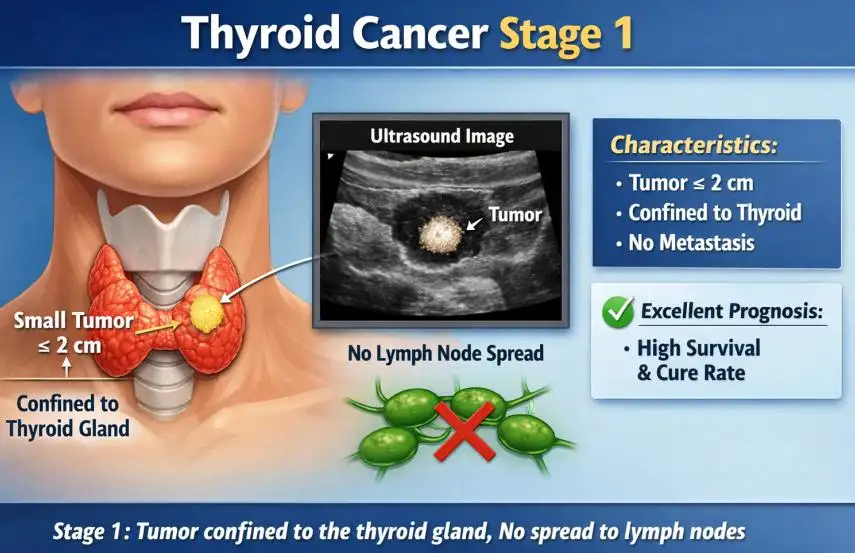
Thyroid cancer stage 1 represents the earliest stage of the disease. At this stage:
-
The tumor is confined to the thyroid gland.
-
It has not spread to lymph nodes or distant organs.
-
The tumor size may vary depending on age and cancer type.
Staging is commonly determined using the TNM system (Tumor, Node, Metastasis). For many patients under 55 years old, stage 1 often means the cancer has not spread beyond the thyroid.
TNM Characteristics of Stage 1
| Component | Description in Stage 1 |
|---|---|
| T (Tumor) | Tumor may be any size but limited to the thyroid |
| N (Nodes) | No regional lymph node involvement |
| M (Metastasis) | No distant spread |
Types of Thyroid Cancer in Stage 1
Several types of thyroid cancer can be diagnosed at stage 1. The most common include:
1. Papillary thyroid cancer
-
Most common type (about 80% of cases)
-
Grows slowly
-
Excellent prognosis in early stages
2. Follicular thyroid cancer
-
Second most common type
-
Slightly more likely to spread than papillary type
-
Still highly treatable in stage 1
3. Medullary thyroid cancer
-
Develops from C cells in the thyroid
-
May be associated with genetic syndromes
4. Anaplastic thyroid cancer
-
Rare and aggressive
-
Uncommon to be diagnosed at stage 1
Most cases of thyroid cancer stage 1 involve papillary or follicular types, which respond very well to treatment.
Causes and Risk Factors
The exact cause of thyroid cancer is not always known, but several risk factors may increase your chances of developing it.
Common Risk Factors
-
Radiation exposure to the head or neck
-
Family history of thyroid cancer
-
Genetic mutations (such as RET mutations)
-
Female gender
-
Iodine imbalance
-
Certain inherited syndromes
While having risk factors does not guarantee you will develop thyroid cancer stage 1, awareness allows for earlier screening and detection.
Symptoms and Early Warning Signs
One reason thyroid cancer stage 1 is often discovered incidentally is that symptoms can be subtle or absent.
Possible Symptoms
-
Small lump or nodule in the neck
-
Swelling in the neck
-
Hoarseness or voice changes
-
Difficulty swallowing
-
Mild neck discomfort
In many cases, thyroid nodules are found during routine physical exams or imaging tests for unrelated conditions.
Diagnosis
Early and accurate diagnosis is critical for successful treatment.
Common Diagnostic Methods
| Test | Purpose |
|---|---|
| Physical exam | Detects thyroid nodules |
| Ultrasound | Determines nodule size and characteristics |
| Fine-needle aspiration (FNA) biopsy | Confirms cancer cells |
| Blood tests | Evaluates thyroid hormone levels |
| CT or MRI (if needed) | Checks for spread |
A biopsy is the most definitive way to confirm thyroid cancer stage 1.
Treatment Options
The good news is that thyroid cancer stage 1 is highly treatable. Treatment depends on tumor size, type, and patient factors.
1. Surgery
-
Lobectomy: Removal of one thyroid lobe
-
Total thyroidectomy: Removal of the entire thyroid
Surgery is the primary treatment for most patients.
2. Radioactive Iodine Therapy
Used after surgery in some cases to destroy remaining thyroid tissue or microscopic cancer cells.
3. Thyroid Hormone Therapy
Patients who undergo total thyroidectomy require lifelong thyroid hormone replacement. This therapy also helps suppress cancer recurrence.
4. Active Surveillance
In very small, low-risk tumors, doctors may recommend monitoring instead of immediate surgery.
Prevention and Lifestyle Recommendations
There is no guaranteed way to prevent thyroid cancer, but you can reduce risks and support recovery.
Healthy Lifestyle Tips
-
Maintain adequate iodine intake
-
Avoid unnecessary radiation exposure
-
Schedule regular medical checkups
-
Stop smoking
-
Eat a balanced diet rich in fruits and vegetables
-
Stay physically active
After treatment, regular follow-ups are essential to monitor hormone levels and detect recurrence early.
Prognosis and Survival Rates
One of the most reassuring aspects of thyroid cancer stage 1 is its outstanding prognosis.
5-Year Survival Rates
| Type | 5-Year Survival Rate |
|---|---|
| Papillary | Nearly 100% |
| Follicular | Over 98% |
| Medullary | Around 98% (localized) |
Early-stage thyroid cancer has one of the highest survival rates among all cancers. With proper treatment, many patients live full, healthy lives.
Latest Research and Innovations
Advancements in thyroid cancer management continue to improve outcomes.
Emerging Developments
-
Molecular testing for personalized treatment
-
Targeted therapies for specific gene mutations
-
Improved imaging techniques
-
Minimally invasive surgical approaches
-
Risk-based treatment strategies to avoid overtreatment
Precision medicine is helping tailor therapy specifically for individuals diagnosed with thyroid cancer stage 1, minimizing side effects while maintaining effectiveness.
Coping and Support for Patients
Even with a favorable prognosis, a cancer diagnosis can be emotionally challenging.
Practical Support Strategies
-
Join thyroid cancer support groups
-
Seek counseling if needed
-
Maintain open communication with your healthcare team
-
Educate yourself about your condition
-
Lean on family and friends for emotional support
Remember, you are not alone. With early-stage disease, most patients regain normal routines quickly after treatment.
Conclusion
A diagnosis of thyroid cancer stage 1 can be frightening, but it is important to remember that this is the earliest and most treatable stage of the disease. With early detection, appropriate treatment, and regular follow-up care, the outlook is overwhelmingly positive.
By understanding your diagnosis, exploring treatment options, and adopting a healthy lifestyle, you take an active role in your recovery journey. If you or a loved one has been diagnosed with thyroid cancer stage 1, consult a qualified healthcare provider to develop a personalized treatment plan.
FAQ About Thyroid Cancer Stage 1
1. Is thyroid cancer stage 1 curable?
Yes. Most cases, especially papillary and follicular types, are highly curable with surgery and appropriate follow-up care.
2. Does stage 1 thyroid cancer require chemotherapy?
Chemotherapy is rarely used. Surgery and sometimes radioactive iodine therapy are standard treatments.
3. How fast does stage 1 thyroid cancer grow?
Many types grow slowly, particularly papillary thyroid cancer.
4. Will I need lifelong medication?
If your entire thyroid is removed, you will need lifelong thyroid hormone replacement therapy.
5. Can thyroid cancer stage 1 come back?
Recurrence is uncommon but possible. Regular follow-up appointments help detect any changes early.