Wilms Tumor Symptoms: Early Signs, Causes, Diagnosis, and Treatment
Wilms tumor is one of the most common kidney cancers in children, typically affecting those under the age of five. Because the disease often develops silently in its early stages, recognizing Wilms tumor symptoms as soon as possible is crucial for early diagnosis and successful treatment. Parents and caregivers play an essential role in noticing unusual changes in a child’s body or behavior that could indicate a potential health problem.
Although the diagnosis of childhood cancer can be frightening, medical advances have significantly improved survival rates for children with Wilms tumor. Understanding the warning signs, risk factors, and treatment options can help families seek timely medical care and improve outcomes. In this article, we will explore Wilms tumor symptoms in detail, along with causes, diagnosis methods, treatment approaches, and supportive care options.
Overview
Wilms tumor, also known as nephroblastoma, is a rare kidney cancer that primarily affects children. It usually develops in one kidney, though in some cases both kidneys may be involved. This cancer arises from immature kidney cells that fail to develop normally during fetal growth.
Most cases are diagnosed between the ages of 3 and 4, and the condition becomes less common after age 6. Fortunately, with early detection and modern treatment methods such as surgery, chemotherapy, and radiation therapy, the majority of children diagnosed with Wilms tumor can achieve excellent recovery outcomes.
The table below summarizes key facts about Wilms tumor.
| Aspect | Description |
|---|---|
| Medical Name | Nephroblastoma |
| Common Age Group | Children under 5 years old |
| Primary Location | Kidneys |
| Occurrence | Usually one kidney, rarely both |
| Treatment Success | High survival rate with early treatment |
Types
Wilms tumor is generally classified based on the appearance of cancer cells under a microscope. The two primary types include:
| Type | Characteristics | Prognosis |
|---|---|---|
| Favorable Histology | Cancer cells appear less aggressive and respond well to treatment | Excellent survival rates |
| Unfavorable Histology (Anaplastic) | Cells appear abnormal and more aggressive | Requires more intensive treatment |
Approximately 90% of Wilms tumor cases fall under the favorable histology category, which is associated with better treatment outcomes.
Causes and Risk Factors
The exact cause of Wilms tumor is not always known, but it is believed to be related to genetic mutations that occur during kidney development before birth. These mutations cause cells to grow uncontrollably and form tumors.
Several factors may increase a child's risk of developing Wilms tumor:
| Risk Factor | Explanation |
|---|---|
| Genetic mutations | Changes in genes responsible for kidney development |
| Family history | Rare cases run in families |
| Congenital syndromes | Conditions such as WAGR syndrome or Denys-Drash syndrome |
| Birth abnormalities | Certain developmental differences in the urinary or reproductive system |
| Age | Most cases occur before age 5 |
While these factors may increase risk, many children diagnosed with Wilms tumor have no identifiable risk factors.
Symptoms and Early Warning Signs
Recognizing Wilms tumor symptoms early can help ensure prompt medical evaluation and treatment. Many children with Wilms tumor appear healthy at first, and symptoms may develop gradually.
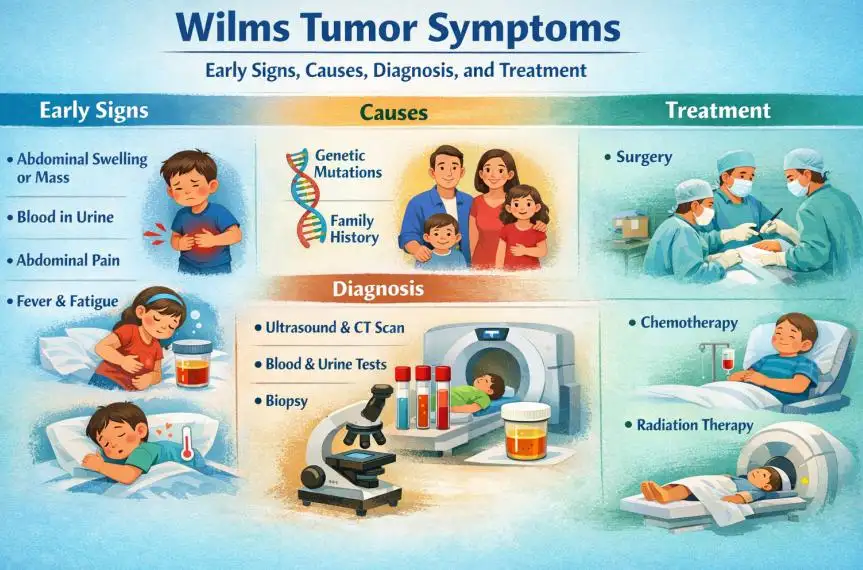
Common Wilms tumor symptoms include:
| Symptom | Description |
|---|---|
| Abdominal swelling or lump | Often the most noticeable sign |
| Abdominal pain | Mild to moderate discomfort |
| Fever | Persistent or unexplained fever |
| Blood in urine | May appear pink, red, or brown |
| High blood pressure | Caused by kidney involvement |
| Loss of appetite | Reduced interest in food |
| Nausea or vomiting | Digestive discomfort |
| Fatigue | Reduced energy levels |
The most common early sign is a firm swelling in the abdomen that parents may notice while bathing or dressing their child. If any of these Wilms tumor symptoms appear, it is important to consult a pediatrician immediately.
Diagnosis
If a doctor suspects Wilms tumor based on symptoms and physical examination, several diagnostic tests may be performed.
| Diagnostic Test | Purpose |
|---|---|
| Ultrasound | Detects abnormal kidney masses |
| CT Scan | Provides detailed imaging of the tumor |
| MRI | Evaluates tumor spread and tissue involvement |
| Blood tests | Checks overall health and kidney function |
| Urine tests | Detects blood or abnormal substances |
| Biopsy (sometimes) | Confirms cancer type |
Early diagnosis plays a vital role in determining the stage of the tumor and planning appropriate treatment.
Treatment Options
Treatment for Wilms tumor depends on several factors, including the stage of the cancer, tumor type, and the child’s overall health.
| Treatment Method | Description |
|---|---|
| Surgery | Removal of the affected kidney or tumor |
| Chemotherapy | Uses medications to destroy cancer cells |
| Radiation therapy | Targets cancer cells with high-energy radiation |
| Targeted therapy | Focuses on specific cancer cell pathways |
In most cases, doctors combine surgery and chemotherapy to achieve the best results. Treatment plans are carefully tailored to each child to maximize effectiveness while minimizing side effects.
Prevention and Lifestyle Recommendations
Since Wilms tumor develops due to genetic changes during early development, there is no guaranteed way to prevent it. However, early detection and regular pediatric checkups are essential.
Helpful recommendations include:
-
Attend routine pediatric examinations
-
Monitor for unusual abdominal swelling in young children
-
Seek medical advice if symptoms appear
-
Genetic counseling for families with inherited risk conditions
Healthy lifestyle habits also support overall child development and immune health.
Prognosis and Survival Rates
The outlook for children with Wilms tumor is generally very positive, especially when diagnosed early. Advances in treatment have greatly improved survival rates.
| Stage | Survival Rate |
|---|---|
| Stage I | Over 95% |
| Stage II | Around 90–95% |
| Stage III | Around 85–90% |
| Stage IV | Approximately 75–85% |
| Stage V (both kidneys) | Varies depending on treatment response |
These statistics demonstrate the importance of recognizing Wilms tumor symptoms early and seeking prompt medical care.
Latest Research and Innovations
Ongoing medical research continues to improve treatment strategies and outcomes for Wilms tumor patients. Scientists are currently exploring new therapies and diagnostic techniques, including:
-
Precision medicine targeting specific genetic mutations
-
Improved imaging technologies for earlier detection
-
Reduced chemotherapy intensity to limit long-term side effects
-
Immunotherapy approaches to strengthen the body's defense against cancer
These innovations aim to make treatments safer and more effective while improving quality of life for survivors.
Coping and Support for Patients
A cancer diagnosis can be emotionally challenging for both children and their families. Support systems are essential during treatment and recovery.
Helpful coping strategies include:
| Support Type | Benefits |
|---|---|
| Pediatric oncology counseling | Helps children understand treatment |
| Parent support groups | Emotional support and shared experiences |
| Child life specialists | Reduce anxiety during medical procedures |
| Educational support | Helps children continue learning during treatment |
Strong emotional support and open communication with healthcare providers can make a significant difference in the treatment journey.
Conclusion
Wilms tumor is a rare but treatable childhood cancer, and recognizing Wilms tumor symptoms early can greatly improve outcomes. Symptoms such as abdominal swelling, pain, fever, or blood in the urine should never be ignored, especially in young children.
Thanks to modern medical advances, most children diagnosed with Wilms tumor recover successfully with proper treatment. By understanding the causes, symptoms, diagnostic methods, and treatment options, parents and caregivers can take proactive steps toward early detection and effective care.
FAQ
1. What is the most common Wilms tumor symptom?
The most common symptom is abdominal swelling or a noticeable lump in the child’s belly.
2. At what age does Wilms tumor usually occur?
Wilms tumor most commonly affects children between 3 and 4 years old, though it can occur in younger or older children.
3. Can Wilms tumor be cured?
Yes. With early diagnosis and modern treatment methods, most children with Wilms tumor can be successfully treated.
4. Is Wilms tumor hereditary?
Most cases are not hereditary, but some may be linked to genetic syndromes or inherited mutations.
5. When should parents see a doctor?
Parents should seek medical evaluation if a child shows persistent abdominal swelling, pain, fever, or blood in the urine, which could indicate possible Wilms tumor symptoms.